Reflections and Moving Forward

My studies have taken priority over the manuscript buried on my hard drive. On that note there’s a novel on the way, but it’s at such a stage currently that I’m not ready to talk about a release date. I’m starting my spring break after class this afternoon, and while I plan on getting ahead of my studies, I intend to invest a good bit of the break on my book. Please forgive me if I start rambling about my #TinFoilHat in the coming months.

The scope of my literary experience has expanded significantly since publishing The Blue Moon Catastrophe. The study of literature has enabled me to consider my options, and still all I want to do is write fiction. On the business side I’ve gotten acquainted with social networking while scrutinizing the field of self publishing, and I’m still feeling my way around.

In spite of this growth I still take pride when reflecting on my first novel. It’s a mystery/thriller that includes a bit of satire on the follies of the hospitality industry. I always imagined that I’d write on my time working in hospitality, but not until after that time had passed. The danger of such a project made it fun, as I feared it could’ve compromised my employment. Maybe I’m crazy, but I don’t expect a fiction disclaimer to protect a lower level management job.

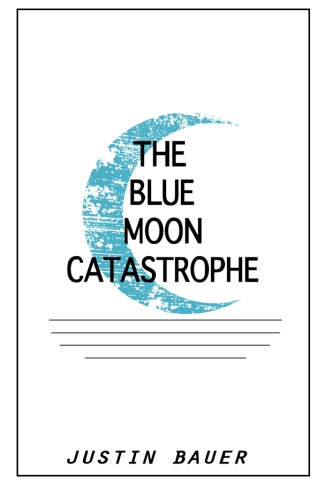
Now I know I’ll need to produce more, and more often if I’m to forge a career in such a disposable marketplace. I don’t entertain the idea of instant success, as I know it’ll take a few consistent novels before any ground can be established beneath my feet. On that note I figure I’m little more than a nonentity in the field. I’ve looked into the right time to offer a free book promotion, and based on the numerous variables that applied to me now is not the that time. Such advice has been wasted on me. I’d like to offer an ebook version of The Blue Moon Catastrophe for free today through Sunday on Amazon.

BlueMoonBookCover

The Price of Admission

The following is an essay I wrote last semester for English 3398: Writing for English Majors

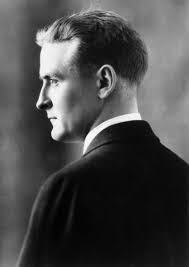
A coincidence occurred at the beginning of the semester that has left me obsessing over a particular philosophy applied to the various writing practices and prose of F. Scott Fitzgerald. A new novel by my favorite contemporary author had arrived from England on the first day of classes, and yet obligations to assigned reading would cause deviation from visions of instant gratification. It was wrongly assumed that college level students studying English would have read The Great Gatsby by this point in their academic careers. My first reading of Gatsby was a rushed and hasty experience that pleasantly aided me in avoiding my professor’s ruining of the novel at our second class meeting, when he spoiled the fact that the character for which the novel was titled dies! While there would be plenty of time for rereading the material for the purpose of deeper analysis the semester was fresh and the workload had not yet kicked into full gear. If I could get through Gatsby in a day I could surely consume a quick four hundred pages over the following weekend. In John Niven’s most recent novel Straight White Male, the main character is himself an author by the name of Kennedy Marr, who happened to speak of Fitzgerald’s name no less than three times. It is the final mentioning of the book in which Marr observed in passing, “what Fitzgerald called the price of admission,” (Niven, 328).

Throughout the entirety of his literary career Fitzgerald sought a greater grail than that of Gatsby’s imagination, for such dreams were part of the process. The practice of crafting a level of prose that made a piece of writing not only sellable but a work of art was the professional attitude and philosophy that drove Fitzgerald’s creative ambitions. When looking into this price of admission I came to find it referenced on a singular occasion in Bruccoli’s A Life in Letters. The context related to the craft of writing on the standards of a professional level and was directed to a friend of the family who had submitted her manuscript to Fitzgerald in seeking his advice. His reaction was less than comforting as he was honest and informed Ms. Turnbull, “I’m afraid the price for doing professional work is a good deal higher than you are prepared to pay at present. You’ve got to sell your heart, your strongest reactions, not the little minor things that only touch you lightly,” (Bruccoli, 368). He writes of these minor things as practices of an amateur as he continues, “you have not yet developed the tricks of interesting people on paper, when you have none of the technique which it takes time to learn. When, in short, you have only your emotions to sell, (Bruccoli, 368). Fitzgerald goes on to tell Turnbull about investing in the weight of specific experiences in confessing, “In ‘This Side of Paradise’ I wrote about a love affair that was still bleeding as fresh as the skin wound on a haemophile,” (Bruccoli, 368). The truth behind criticism can be excruciating when it acknowledges the failures of strategy, and the lack of anything published by a Frances Turnbull suggests the submission of defeat.

A little more than nineteen years prior to the letter to Ms. Turnbull, Fitzgerald wrote a letter to his editor concerning the first draft of a manuscript that would go on to be This Side of Paradise. Such confidence was revealed in this short letter as Fitzgerald made abstract inquires of possible publication dates in spite of the fact that Mr. Perkins hadn’t, “even seen the book,” (Bruccoli, 28). Even considering the good nature of the working relationship between Fitzgerald and Perkins the gesture of such inquiries seems intrusive and unwarranted, yet it was the confidence in his craft that merited Fitzgerald’s motivations for doing so. Such confidence is never omitted from the inconsistency of man, as Fitzgerald quickly turned around and wrote his second novel, The Beautiful and the Damned, and broke with the routine of regularly crafting prose. In between the drafts and publication Fitzgerald took a break from his work to indulge in the leisure of the free time afforded him. In a letter to Perkins, Fitzgerald explained the psychological consequences of an ambitious man in the midst of a period of sloth, “because I’ve loafed for 5 months + I want to get to work,” (Bruccoli, 48). Not keeping up with any regular practice will damage one’s craft, and for Fitzgerald not keeping up with the craft put him, “in this particularly obnoxious and abominable gloom,” (Bruccoli, 48). The shortcoming of his gloom resulted in the deteriorating of his confidence as he wrote, “I haven’t the energy to use ink-ink the ineffable destroyer of thought, that fades an emotion into that slatternly thing, a written down mental excretion. What ill-spelled rot!” (Bruccoli, 48). This confession reveals the profoundness of Fitzgerald’s obsession and dedication to the craft in the reflections of momentary failure. In spite of his first two novels the philosophy of the price was in a state of development to this point.

From failure to the grindstone, Fitzgerald progressed in his approach to Gatsby. One lesson I’ve learned as a developing writer is to never be married to the manuscript as is. Writing is rewriting, and such is included in this price of admission. Through the revisions of editing Fitzgerald admits that regardless of how much time the process may consume, “I cannot let it go out unless it has the very best I’m capable of,” (Bruccoli, 65). For the sake of getting work done I’ve become acquainted with the mantra of, ‘don’t get it right, get it writ,’ and maybe that’s relevant for the vigorous constructing of a first draft. But Fitzgerald’s longevity can be contributed to his taking the time to get it right in spite of deadlines. If he were to have pushed the work and conformed to the commercial styling of authors that pump out a novel every year Fitzgerald may have considered himself, “dead with those who think they can trick the world with the hurried and the second rate,” (Bruccoli, 183).

Second rate was not of Fitzgerald’s fashion as he revealed the formula in his letter to Ms. Turnbull, “You’ve got to sell your heart, your strongest reactions,” (Bruccoli, 368). On selling his heart to Gatsby, Fitzgerald described in a letter to Zelda how difficult it actually was to apply the developing philosophy, “I thought then that things came easily- I forgot how I’d dragged the great Gatsby out of the pit of my stomach in a time of misery,” (Bruccoli, 187). Focusing on negative memories in a time of misery seemingly creates a vicious cycle, but Fitzgerald included his strongest reaction to the bitterness of a previous romance in the form of Tom Buchanan’s polo ponies as the woman he coveted, “married a man with a string of polo ponies. Fitzgerald never forgot Ginevra King-he saved all her letters-and Jay Gatsby’s timeless love for Daisy Fay, who also married a man with a string of polo ponies, undoubtedly had its roots in his memory of her,” (Miller, 5). This example of a simple truth from Fitzgerald’s life seems transparent at first glance, but it’s inclusion in The Great Gatsby reveals the selling of Fitzgerald’s own heart.

Following Gatsby Fitzgerald strove to outdo his previous effort, “Gatsby was far from perfect in many ways but all in all it contains such prose as has never been written in America before. From that I take heart. From that I take heart and hope that some day I can combine the verve Paradise, the unity of the Beautiful + Damned and the lyric quality of Gatsby, its aesthetic soundness, into something worthy of the admiration of those few,” (Bruccoli, 112). Fitzgerald’s confidence contained parallels with Gatsby’s dream in that it was all about the chase and the moment. Once obtained, it is fleeting and holding onto the moment is impossible. Fitzgerald’s personal satisfaction with his work was a fleeting sensation, and it was only the prospect of outdoing himself that he remained wholly dedicated to chasing a dreamlike vision that he could never quite grasp. “That, anyhow, is the price of admission,” (Bruccoli, 369).

Image

Why I’m an English Major

I’ve got a music degree that’s displayed in the cheapest of frames on the wall in my basement. Can’t say I do much with it. Occasionally I still make music for myself, but I no longer partake of the idea that a career in the industry is for me. The market is over saturated as it is, and more music schools are coming into existence than are necessary to fill the potentially available careers. I haven’t even played the drums since last May. In that regard I don’t feel like the person I’ve come to know as myself, and yet the distance has permitted adequate reflection that I’ll expose in the near future.

Instead of chasing that musical dream full time I went back to the monotonous routine of a day job. Once or twice I joined bands on a whim and did bits of drumming for local musical theatre companies, but nothing concrete formed. Those are the fleeting moments I still dream about. But I went back to school, and between that pursuit and the day job, I am left with little time to consider music. I blame no one but myself in that regard.

This March I’ll have been in the hospitality industry for five solid years. It has afforded me the opportunity to study on the clock, and obtain the coveted ‘experience’ demanded by the majority of employers offering entry level positions. I’ve been promoted to assistant manager, and the place supplied the foundation for the setting of my first novel, The Blue Moon Catastrophe.

You’re going to school for another degree in the arts? Why would you go back for yet another worthless degree? In a time when there’s a slipping enrollment in the humanities is the desire to become an educator applicable? Novelist pipe dreams? Both academia and fiction publishing are over saturated fields: you’ve been down that road with music! From a realistic point of view there is little hope, a fact of which I’m well aware.

Have I learned nothing? Some would call this madness, and I’m somewhat inclined to agree with them. Above all else I desire to become a better writer. Some would argue that the practice of writing alone should suffice, but the serious study of literature will contribute to the goal as well. I’m an English major because I want to take my lifelong enthusiasm for reading and apply it to a better understanding of… everything. I’m an English major because I want to produce better novels. I am an English major by choice and stand by my passion.

I think Fitzgerald best summarized the union of hope and realistic expectations with the famous lines, “Gatsby believed in the green light, the orgastic future that year by year recedes before us. It eluded us then, but that’s no matter—tomorrow we will run faster, stretch out our arms farther. . . . And then one fine morning—
So we beat on, boats against the current, borne back ceaselessly into the past.”

Some men think, and therefore are… I write, and know not.

When Tension Reaches the Surface

Earlier this year when Trent Reznor announced the return of Nine Inch Nails I thought about the embodiment of a lineup that consisted of six people instead of the typical five piece act. The addition of an extra person could drastically change the dynamics of the show and I was excited by that potential. Shortly after the announcement bass player Eric Avery departed citing the overwhelming circumstances of having been on the road extensively leading up to the project. I was surprised to read that his replacement would be Robin Finck, the lead guitarist who has consistently been part of the lineup since 1994, minus the With Teeth Tour. With two lead guitar players in the group I saw the departure of Adrian Belew coming before it was revealed. To my dismay Josh Eustis was reassigned to the position of the rhythm guy switching between bass, guitar, and keyboard duties as Nine Inch Nails kicked off their summer festival run as a five piece act.

A full arena tour was scheduled to follow the festival shows with a stop in Cleveland on October 5th. Going back to school I’ve had to cut my hours at work, and couldn’t afford to go. The week of the show my girlfriend decided to snag a couple of tickets as an early birthday present for me. Thank you, Lydia! You’re the best.

With the Cleveland show being one of the early stops on the Tension 2013 North American Tour it came as a shock to me that the lineup would again be revamped. The addition of bass player Pino Palladino who played on a good number of tracks on the new album Hesitation Marks freed up Josh Eustis to focus on other aspects of the show, and solidified the act as a six piece. The stars aligned as I got exactly what I wanted. The icing on the cake came in the form of Sharlotte Gibson and Lisa Fischer whose soulful backup singing was something new for NIN and a welcome addition.

From the moment the band took the stage it was a roller coaster ride in the exercise of emotional expression. The full sound of having a live bass player on every song eliminated the majority of backing bass tracks for the set minus the opening song, Copy of A. Palladino’s mastery of the instrument enabled a style and groove from NIN that I hadn’t heard before. From there the band fleshed out a good portion of the new album collected with the back catalog that hit every album except for the instrumental Ghosts Vol. I-IV. Even though Ilan Rubin was the drummer during the 2009 Wave Goodbye Tour, it was my first time seeing him with the band. His drumming brought forth a chaotic interpretation of the beats accompanied with wild fills that were nailed with such precision that I can finally admit he is a suitable replacement for Josh Freese. Rubin also played the piano parts on March of the Pigs and Find My Way. The other new addition, Josh Eustis switched between guitar, synthesizers, hand percussion, and even broke out the sax on While I’m Still Here. With this being my seventh time seeing Nine Inch Nails in a live setting, the most consistent member besides Reznor has been Alessandro Cortini, the synthesizer extraordinaire who used to serve up backing guitars switch out the guitars for auxiliary percussion on a number of songs. Finck’s showmanship was revealed through his ability to move while playing solos on The Wretched and Burn. Reznor still has the ability to lead a crowd through the emotions of songs that can go from the soothing texture of A Warm Place straight into the destructive rage of Somewhat Damaged. In surprising news no instruments were harmed in the making of last night’s show, and Closer was omitted from the set list (which I didn’t mind as I’ve seen them perform that song on six other occasions). The full sound of the band when accompanied by Gibson and Fischer brought a level of soul and depth that some may have found to be lacking in the mechanical hum of a typical NIN show of previous times. What a refreshing revamp of the band and sound!

While the selections of the back catalog always make for an interesting experience the new material stood out most to me, as I’ve familiarized myself with the album over the past month and some change. The wall of sound at the ends of Disappointed, Find My Way, and Black Noise consisted of a trace like quality that reminds one of peace. The Nine Inch Nails live experience is unlike any other concert event going on right now, and I saw Gwar earlier this week.

1380358_10151703469996365_1454238070_n


Set List

  • Copy of A
  • 1,000,000
  • Terrible Lie
  • March of the Pigs
  • Piggy
  • All Time Low
  • Disappointed
  • Came Back Haunted
  • Find My Way
  • The Frail
  • The Wretched
  • Into the Void
  • Survivalism
  • Running
  • A Warm Place
  • Somewhat Damaged
  • Wish
  • Burn
  • The Hand that Feeds
  • Head Like a Hole

Encore

  • Even Deeper
  • In This Twilight
  • While I’m Still Here/Black Noise
  • Hurt

Ohio Author Reinvents Shock

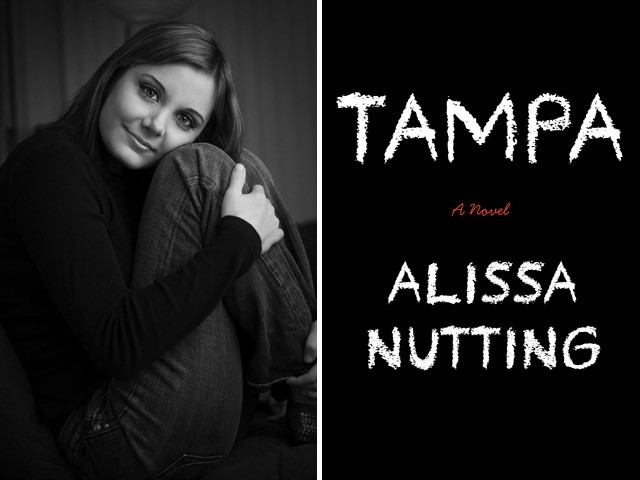
It’s one of those things I can’t help but praise no matter how dirty it makes me feel. Tampa is the debut novel of Ohio author Alissa Nutting, and her prose shines through the dark clouds that hover over the theme of the book. So well written that there where moments where I had to set the book down to breathe and comprehend what I had just read, in addition a multitude of others that caused sudden guilty laughter. 

Following the misadventures of protagonist Celeste Price, Tampa focuses on a first year eighth grade English teacher who sought out the job in education for the sole purpose of having sex with her meticulously selected male students. Her obsession with flawless youth drives her to not only seek out fourteen year old boys, but to pamper herself in such an extreme manner to offset the effects of aging in any way possible. Price is brought to you in first person and is my favorite type of character in that she has no rehabilitating qualities. There is literally zero effort to create empathy for the character as Price is an unapologetic and blatant sociopath. Her willingness to lie and manipulate every person she encounters for the purposes of satisfying her sexual appetite is so utterly disturbing that I felt a gravity pull me in as I binged through this book.

Unconventional and illegal sexual preferences aside, Celeste Price possesses an evil that I haven’t found in a character since Stephen Stelfox.


Image


Irony and the Rolling Stone

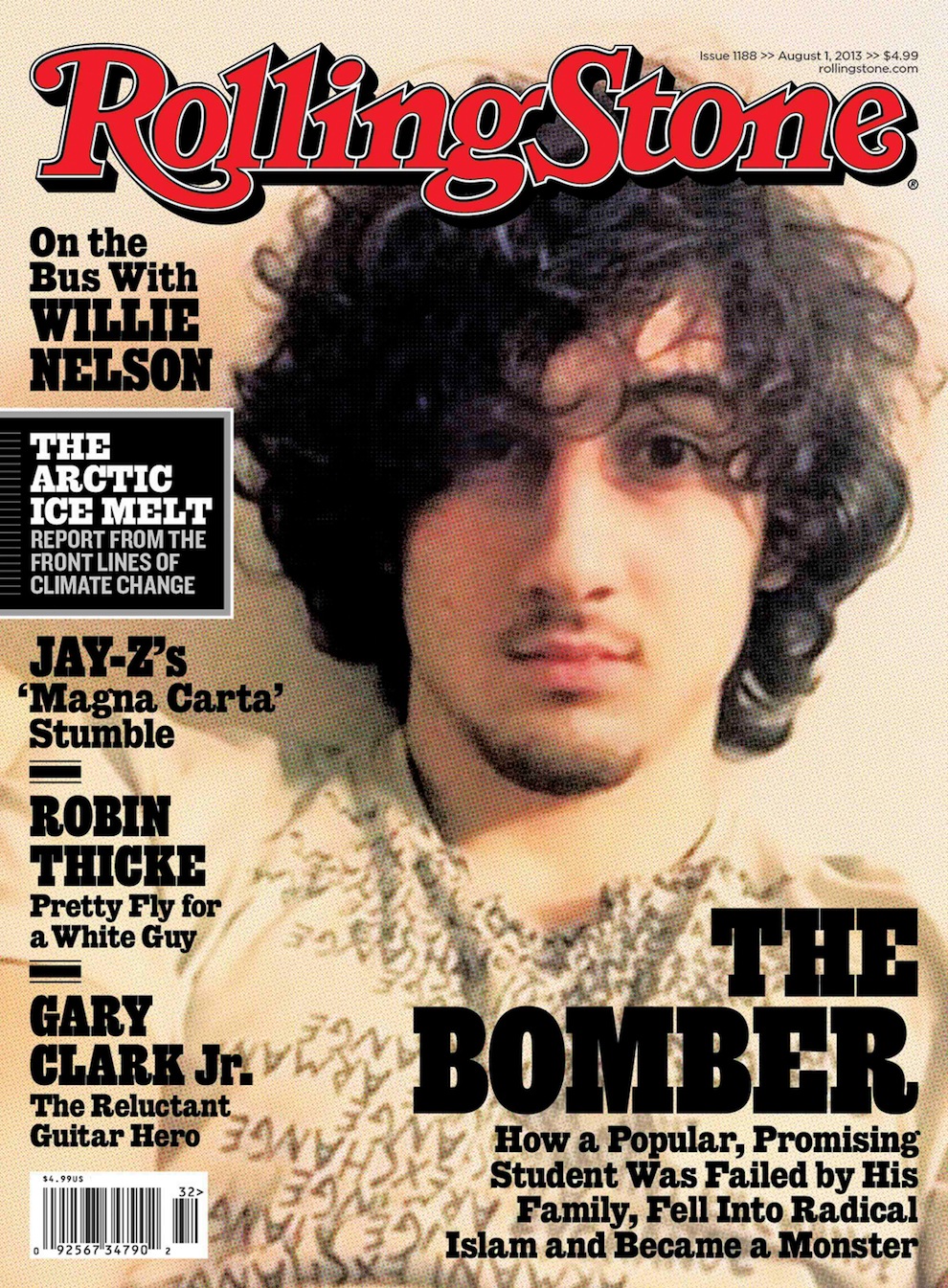
Controversy was bound to appear as a misguided attempt to push magazines with the current issue of Rolling Stone featuring Jahar Tsarnaev on the cover. Following the backlash, the magazine stands by their decision to put the most appealing photograph of the surviving Boston Marathon bomber on their cover instead of a music artist, actor, or hell I’d settle for a Kardashian. When one is concerned with only the moving of units, I understand completely why they opted not to have Jay-Z or Willie Nelson (both artists had articles dedicated to them within the issue) gracing the cover. At this point, the top people at Rolling Stone are most likely euphoric in that they’re at least being talked about.

I have a subscription to Rolling Stone and was excited that the controversy had taken to the internet before my copy had arrived in the mail. Since then I’ve heard a number of friends express outright disgust to apathy and I can hardly blame them in holding such opinions. I even had a guest overlook the issue, figuring the shaggy hair covering those pixilated eyes had simply belonged to another singer/songwriter/John Mayer type until I brought it up for the sake of conversation. Seeing as how I’m not one to take the moral high ground, I’ll leave it to Marilyn Manson.

“A lot of people forget or never realize that I started my band as a criticism of these very issues of despair and hypocrisy. The name Marilyn Manson has never celebrated the sad fact that America puts killers on the cover of Time magazine, giving them as much notoriety as our favorite movie stars. From Jesse James to Charles Manson, the media, since their inception, have turned criminals into folk heroes. They just created two new ones when they plastered those dip-shits Dylan Klebold and Eric Harris’ pictures on the front of every newspaper. Don’t be surprised if every kid who gets pushed around has two new idols.”

As an angry kid who got pushed around when Columbine happened, I’ll be the first to admit that I in fact, had two new idols for a short period of time. Maturity would change that, but middle school was a trying time.

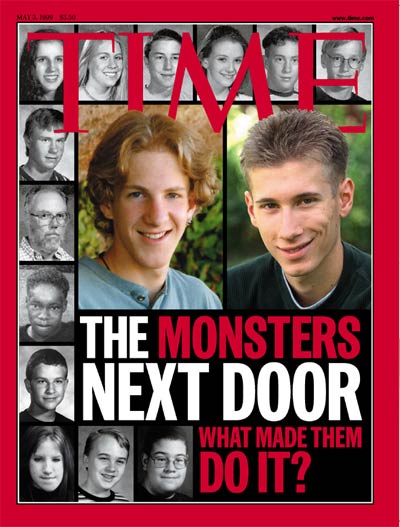
I’m reminded of the Columbine shooters getting their pictures on the cover of Time Magazine. I’m reminded of the intimidating images of an armed to the teeth Seung-Hui Cho being plastered everywhere following the massacre at Virgina Tech (from pictures and videos that he shot and personally mailed to NBC with the intent of obtaining such notoriety). I was surprised and relieved to find that the Sandy Hook shooter was only on the cover of tabloids. Marilyn Manson was (and is still) right in that the media glorifies those with the most blood on their hands. The definition of irony rests within the article they published in 1999, and the cover of the current issue. The greatest concern of this particular incident of homicidal glorification is that instead of an otherwise pointless school shooting, the motives behind Jahar’s crimes were that of religious extremism. I personally fear that his sort of behavior coupled with the embrace of the media frenzy will again influence and enable disenfranchised youth with a more extensive list of excuses. ImageImage

Here’s a link to Manson’s article in case you were wanting to read further.

http://www.rollingstone.com/culture/news/columbine-whose-fault-is-it-19990624

Vacationing in New York, Reading of Chicago

Just got back from Albany, New York in time to catch the 4th of July fireworks in my home town. Besides learning of my welt inducing allergic reaction to mosquito bites and the occasional airline delay, I must say that the entire trip was a fantastic overflow of comedic warmth, good food, and vodka.

My lady-friend of nearly five years has family residing in upstate New York (Ithaca and Albany). This was the third year in a row that they’ve invited me into their home where I was given better treatment than most boyfriends deserve. While the rain put our outdoor activities on hold, it offered the chance to simply relax and catch up on some historical reading.

It should come as no surprise that I enjoy murder stories with the backdrop of a hotel, and while I did read up on H. H. Holmes and watch a couple of documentaries on his twisted endeavors before writing my novel, I hadn’t yet taken the time to read The Devil in the White City. While I typically enjoy fiction, this historical piece is quite telling of the setting and scenario in which Holmes committed his crimes in his ‘castle’ of a hotel during the Chicago World’s Fair of 1893. The historical context did slow down the reading during the scenes of architectural complications, yet it shed light on numerous pieces of noteworthy cultural relevance. The depth was unlike any visual documentary I’ve stumbled upon and is well worth the read.


Adrian Belew Announces Departure from Nine Inch Nails

The day that the new single Came Back Haunted is released is the same day that guitarist Adrian Belew announced his departure from the lineup. I found it difficult to comprehend a NIN tour with two live guitarists as Robin Finck returned to the band after the departure of Jane’s Addiction’s bassist, Eric Avery.

I’m curious to see if Trent and company will seek out a replacement of sorts, as this is the first time out that the lineup consisted of six people instead of five (or four during the Wave Goodbye tour).

Reader Beware, You’re in for Nostalgia

The author who had sparked my love of reading in the second grade has finally gotten around to producing a novel for adults. R. L. Stine’s Red Rain seems like a nostalgic tour of a place forgotten, as his writing is so familiar, and yet something is different as the idea of horror has changed with maturity. Graphic violence, sexual situations, and the occasional cluster of curse words define the main difference as Stine’s style does not seem to have changed much since the last time I picked up one of his books fifteen+ years ago. Even while approaching close to 400 pages, Red Rain is a quick, easy, and fun read. 

It’s quite fitting to note that the author who has made his career writing horror novels for children would have evil children headline as the topic of his first horror novel for adults. On the Acknowledgements page, Stine expresses that he was influenced by the film adaptation of Stephen King’s Children of the Corn, which becomes somewhat obvious over the course of the story.

In the aftermath of a deadly hurricane, travel blogger Lea Sutter adopts twin boys on a whim. Seems a a bit of a stretch, but that does get cleared up as things progress. Lea’s husband, Mark and two biological children aren’t quite as enthused by the new additions to their family, but they try to make the best of it until the twins bring out the worst in them.

Murders are committed and evidence suggests Mark is the culprit. Things spiral out of control even further as the town’s children go missing overnight.

I’ll spoil no more than that. Enjoy.

Image