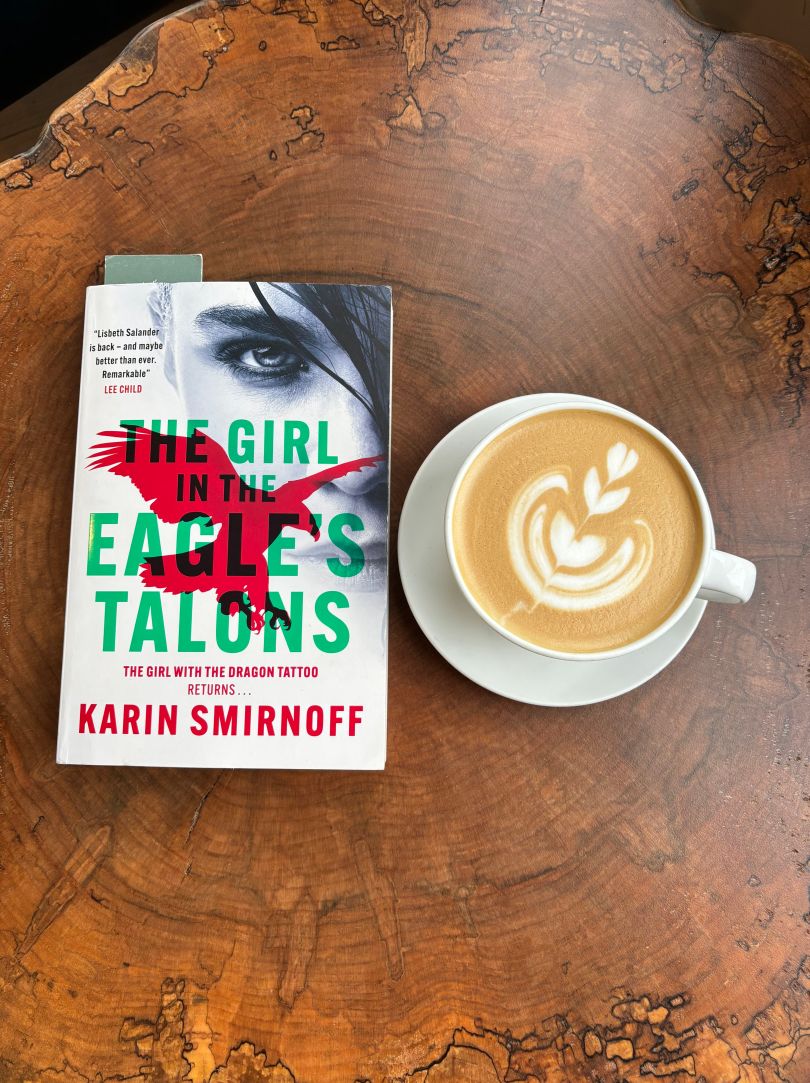
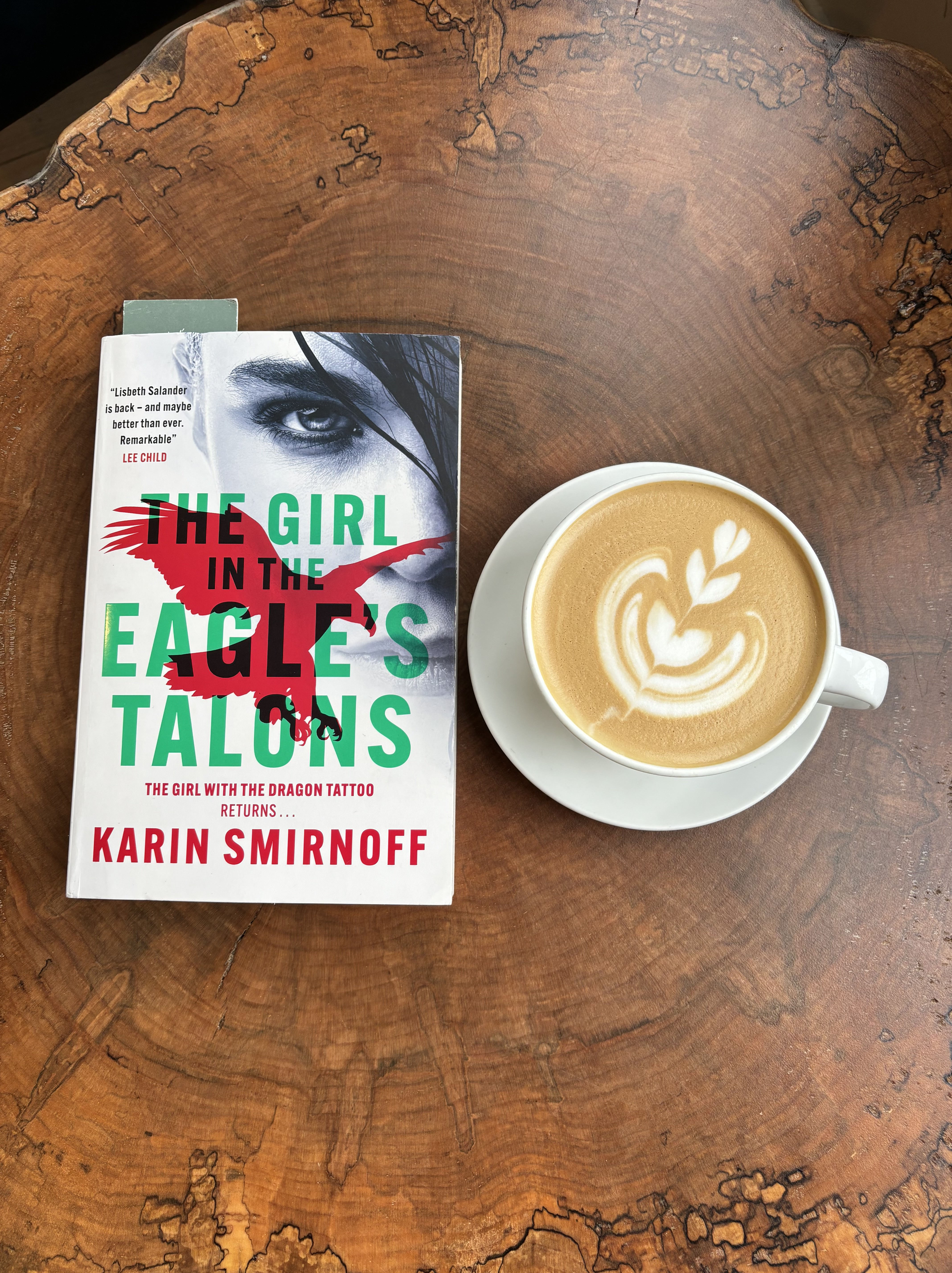
The Girl in the Eagle’s Talons:Rambling Review

    The Millennium Series has reached book seven with The Girl in the Eagle’s Talons. A new author has taken the reigns, and Karin Smirnoff has gone beyond my expectations with her first contribution.

            Stieg Larsson’s initial vision for the series ran the course of ten novels, for which he had outlined. He turned in the initial trilogy to the publisher and died shortly thereafter. David Lagercrantz took up the series and ran a trilogy of his own, contributing more quality work that veered away from Larsson’s outlines. Karin Smirnoff offers a fresh take that maintains the quality storytelling while exploring critical analysis of characters that has resulted in growth. Lisbeth Salander has been seemed so human on the page, as Larsson and Lagercrantz sought to make her more of an enigma. Smirnoff’s interpretation of Salander has graced her with a personality (especially in her dialog, both internal and with other people) that had been lacking in previous novels for the sake of maintaining a persona shrouded in mystery.

            There are bits of humor where I hadn’t noticed any in previous novels. Smirnoff uses her narrative voice to amplify the internal dialog of whoever is on the page in a given moment/scene. When an unruly man presents violent intent, Lisbeth intervenes to protect a friend and makes an observation…SIDE NOTE-I’m sitting in my living room…end of the night…knee deep in reading this book. I’m wearing the singular pair of sweatpants I own…the only pair I’ve ever owned-a gift I’ve had for less than a month…when I come across this line, “thank you God for making sweatpants the uniform of men with defective genes” (178). These thoughts are peppered throughout the novel and add to the narrative quality that brings these characters to life.

            This more expressive Salander may be the result of a familial relationship where her bloodline isn’t out to kill her. Svala is a thirteen year old on the edge of being submitted to the foster care system in Sweden. Lisbeth is contacted and tasked with caring for the girl temporarily while the situation gets sorted out. It become clear Svala is in danger, and they’ve more in common than Lisbeth initially wants to admit. Lisbeth acknowledges that the relationship has upended her situation. “Before, she only had herself. Having another person in your life pushes other things to one side” (172).

            Another relationship that gets a closer examination than before is that of Mikael Blomkvist and his daughter, Pernilla. Blomkvist has always been a distant lackluster father. His excuse is the same as it was for all the women in his life-that his work as a journalist was blatantly more important. He’s a grandfather now, and his publication is no longer in print…this identity crisis allows him to make room in his life for other people, but it seems a little late to mend these bridges, as Pernilla struggles to accommodate an absent father who suddenly cares…if only a little bit more than before. Old hurt is made new once the action of the story puts stress on these characters, and I’m here for it.

    The quality of the narrative voice is what makes this novel. While analyzing the motives of a would-be volunteered killer the narrative voice reflects a self-awareness that still chooses to do wrong, as Peder Sandberg considers that, “An individual always has choices. The destructive ones present themselves most readily because they do not require mutual understanding…whereas unconditional love, altruism and general compassion are acquired, and also take more energy” (324). Another favorite observation focuses on a vulnerable moment with Svala. It’s shown to a voyeuristic audience the way she cries, “In silence so nobody can hear. A valve that opens, lets the excess pressure hiss out and then closes again” (124). These excursions through the thoughts other people can’t quite express is a highlight of this book. A cleaner tasked with killing for hire, has a crisis of conscience as he, “pours himself another drop of whisky and gathers his words. He has never said them out loud. But they have always been playing, like a record that never ends” (279). Whether it’s a matter of choice, sorrow, or selective words, there’s a performative aspect to the things people can’t do in front of others that is shown in a way that reveals the humanity of everyone who is subject of this narrative voice.

            I fell in love with the characters and story world. It’s kept me coming back, and I tend to prefer standalone novels. I’ll occasionally check out a sequel or series, but this is the only series of this length I’ve read, and will continue to read…especially if Smirnoff continues to be at the helm. This is a fun read, full of quality.
The Girl Who Lived Twice: Book Review

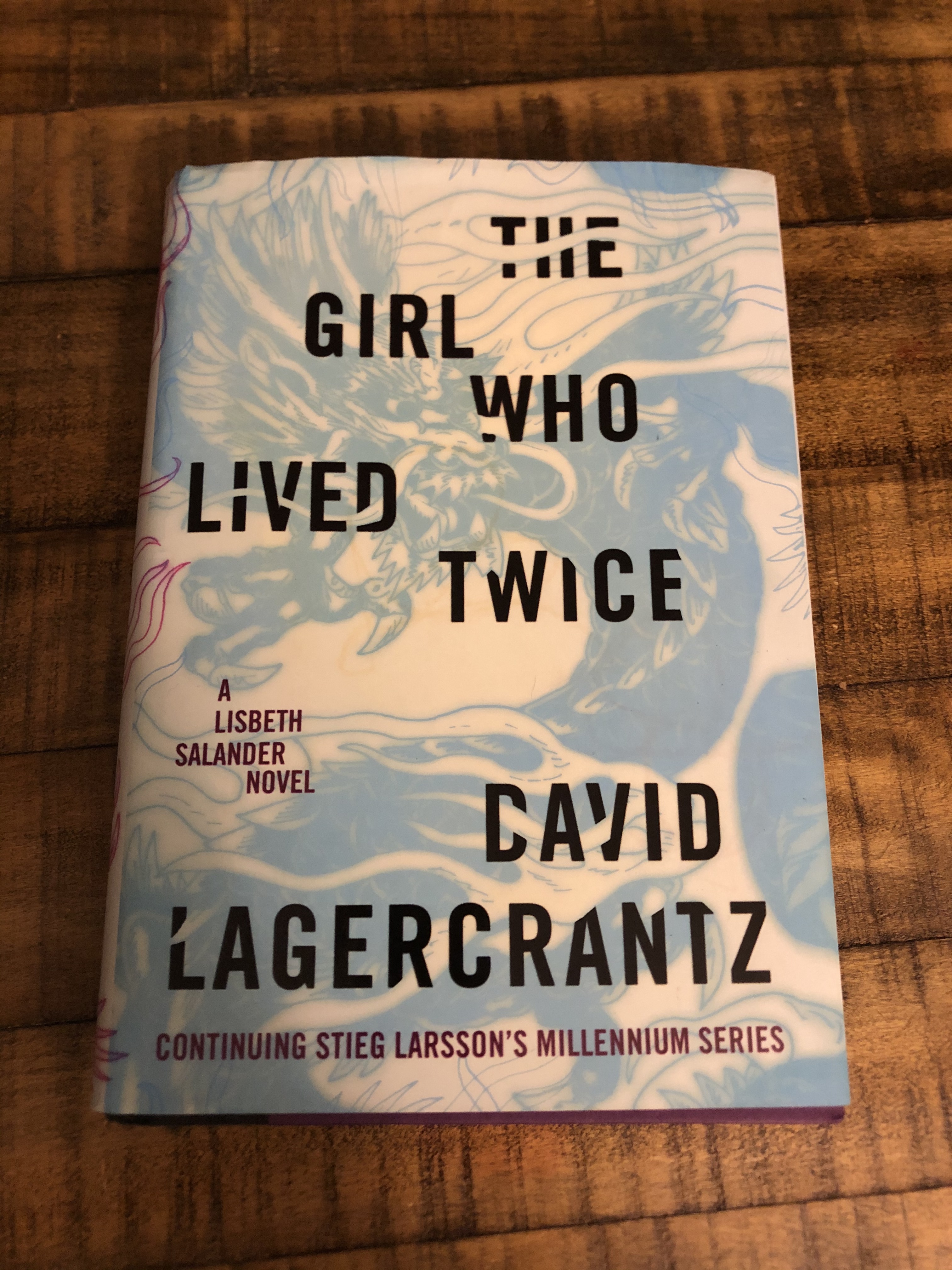
The Girl Who Lived Twice by David Lagercrantz is the sixth installment in the Millennium Series. While I’ve enjoyed the Lagercrantz contributions to the Stieg Larsson trilogy, this novel brings the larger story arch full circle that has left me satisfied. Lagercrantz has proven himself to be worthy of carrying this torch. I’ve stated before that I’ll continue to read as long as Lagercrantz writes the series, and with this book he succeeds in establishing his name with the greater story world. It’s his series, now.

In the novel, Lisbeth Salander gives chase to ghosts of the past while they simultaneously haunt her. Her twin sister, Camilla, remains Lisbeth’s rival. Bad blood simmers until violence emerges at the surface. The potential for chaos spills over and into the life of her friend, Mikael Blomkvist, and forces that are out to destroy them bring them together again.

Blomkvist spends his time chasing a story about a climb up Mt. Everest where life was lost some dozen years prior to. A homeless man who used to be a Sherpa had wanted to tell his story, but madness and murder brought only questions to Blomkvist.

Themes of a haunting past as it complicates the present is central to the novel, and only by breaking those ties are we capable of moving on and reclaiming ourselves. This story plays with such elements in ways that kept me turning the pages and missing out on sleep.

The side characters that have been central to the previous five novels are pretty well left on the sidelines this time around. Berger and Bublanski exist and contribute within the confines of their established roles, but they’re much further in the background compared to earlier stories. Erika Berger is in the middle of a divorce, but beyond that surface detail there’s little of her, and Bublanski is there to serve his purpose as a police officer, and little else. If there’s anything I thought the novel could’ve used more of, it’s the secondary characters.

Other side characters are brought forward to reveal more about Camilla’s world, and the intricacies of her criminal network. Hackers and a hit man loyal to the memory of Camilla’s father fill the spaces left vacant by those who’ve made more regular appearances.

That’s the long and short of it; I enjoyed this book. I’ve enjoyed this series. Without spoiling anything, this would be a fine place to end the series, or pivot to some new direction. I’m hoping for the later, as the central cast of characters keeps me coming back. It’d be nice to see Larsson’s initial vision of ten novels through to the end, though the path there is much different with Lagercrantz at the helm.

IMG_7143

Dark Places: Book Review

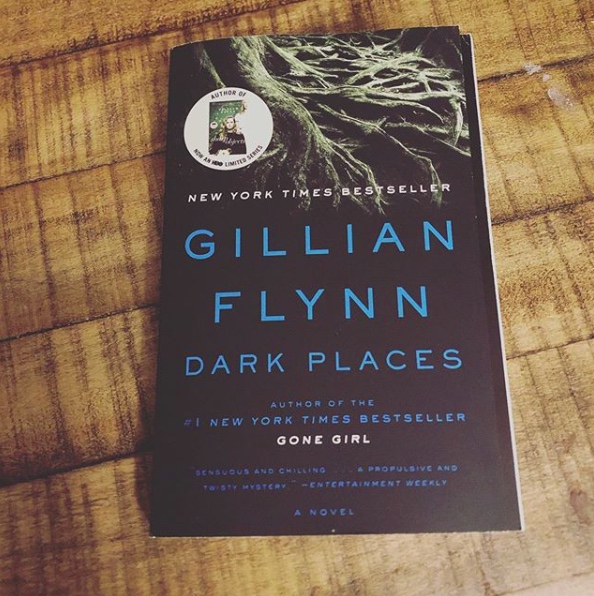
Dark Places is a dark novel. I came for the bleak style-backed up with substance I’ve come to expect from Gillian Flynn, and I was entertained. Libby Day survives the traumatic murder of her mother and sisters by her brother, and half of our time is spent with her present-day narrative, twenty plus years after the killings. Every other chapter bounces in time between Libby’s modern misanthropy to the day her family was violently torn from the world. Old assumptions are reexamined in the pursuit of money, and Libby is pressured into questioning her memory.

A group of people obsessed with obscure murder cases is willing to fund the down and out Libby Day. The group is driven by an agenda that rejects the narrative that Ben Day murdered his family. They offer to pay Libby for each figure from the past she can track down and interview. She confronts the past in a way she hasn’t considered since the event. Her coping mechanisms are hot garbage, and the pity driven donations have dried up. Libby is desperate for money, and accepts the most fruitful gaslighting campaign I’ve ever read. None of the characters are particularly likable, but those characters make up my kind of book.

As Libby closes in on the truth she finds herself running for her life. She opts not to leave the past alone, and discovers it’s an all-consuming void that doesn’t allow for growth or the healing properties of closure. Libby is damaged, and I find joy in her  narrative.

The novel concludes in a manner that left me conflicted. Without giving too much away, it felt like a plethora of coincidence packed into the smallest possible window. The pieces come together in a way that supports the ending, but I’m still frustrated.

Dark Places is fun. If the narrative styling of Gone Girl or Sharp Objects suits your fancy, this novel offers another trip through the quality storytelling of Gillian Flynn. I’m looking forward to her next release.


Dark Places

Blood Chill: Book Review

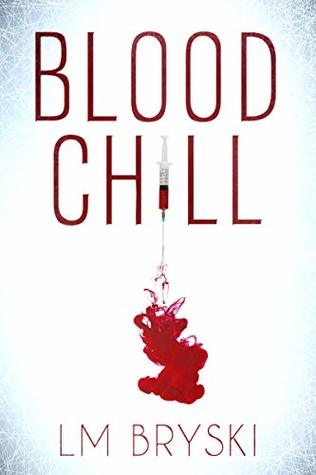
L.M. Bryski delivers a thriller that has every element necessary for great storytelling. Characters with elaborate backstories are revealed over time via tasteful use of flashbacks. A prop triggers the memory of a detective and leads him in the right direction. Medical/scientific backdrop is used in a way that suggests the author knows a thing or two on the topics she writes about. It’s a tightly woven narrative with realistic characters with whom I empathize.

Blood Chill takes place in the city of Janus, and the novel spans throughout a great deal of the community. Ranging from those who inhabit the newly renovated homeless shelter to the rich who run the show, there’s no class or age group left unaddressed.

These characters have the greatest pull in the story. They’re so well fleshed out and realistic, flawed and funny, weighed upon by the past and other regrets. Commentary between police officers is the main source with comic relief, and I found myself enjoying the banter of Roy Fletcher whenever he’s on the page.

I find it difficult to review thrillers of this nature because I want to delve into the details that hooked me, the feeling when there’s an epiphany regarding a narrative arc, and my thoughts on the villain(s). The fun of these reads is in unraveling the mystery, and I loathe to give anything away.

With that in mind I’ll keep it short. If you’re looking for a smart, funny, and at times culturally satirical thriller with a scientific backdrop then you must check out Blood Chill by L.M. Bryski.

Blood Chill

Beatrix and the Wooden Dagger: What’s Up With the Prop?

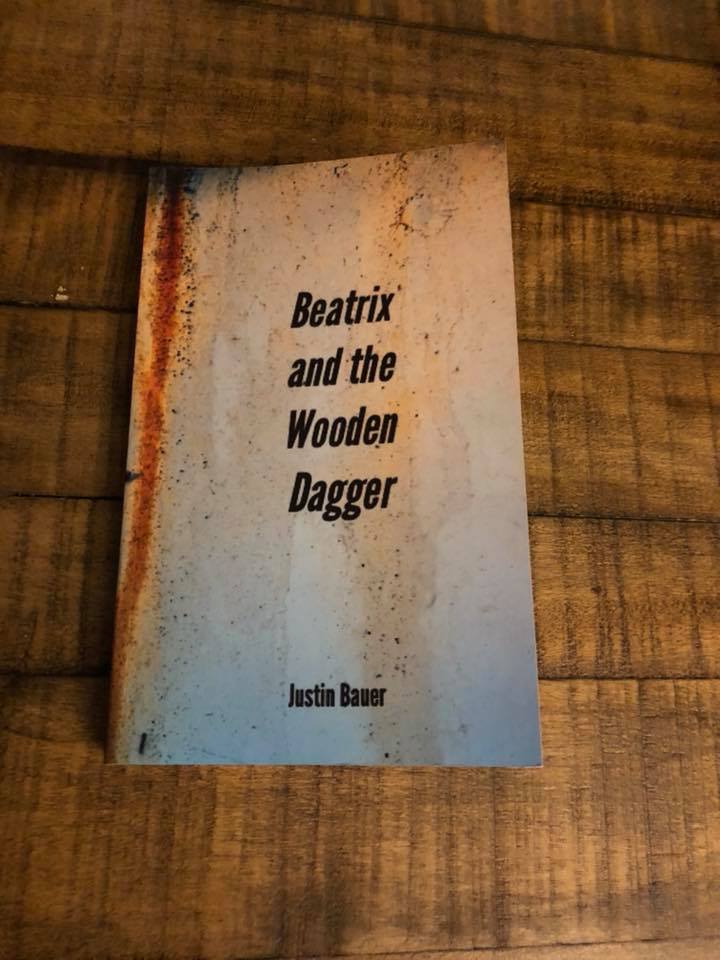
What’s the deal with the wooden dagger? It doesn’t appear anywhere in the text, so why is it in the title? What does it have to do with the story? The answer has to do with medieval theatre and use of props in character development. Characters in the medieval morality plays were often named for traits they were meant to embody. The vice figure was one of comic relief, meant to tempt and bring folly towards characters of virtue or other such positive traits. The vice often turns to the audience, and delivers lines by breaking the fourth wall. This brings about an inclusion so that the audience is in on the misdeeds.

They would carry a wooden dagger on stage. This prop was meant as a direct gesture to inform the audience, ‘Hey! I’m the villain.’ By the Renaissance, Shakespeare had dropped the prop, but perfected the role of vice in Richard III and Iago of Othello. These characters turned to the audience, told them of the intent, and then turned back to the story world with their malice in practice. A contemporary version of this that has resonated with audiences would be comic book antihero Deadpool, or average politician Frank Underwood in House of Cards.

40293634_1952187111524705_6374020166375702528_n

That’s my aim with Beatrix. She’s an antihero of sorts, who wants to fill you in on her thoughts and intent as she does whatever her wretched heart desires. The book consists of five stories that span over the course of her life, and plays with time. It’s framed with bits of the thriller, cultural satire, and dysfunctional family drama.

That’s the deal with the wooden dagger. I framed this character after the many vices I’ve come across, and hope to turn you off to humanity with her antics. If you’re still with me, give it a shot! 

As always, thank you for your time.

Sharp Objects: Book Review

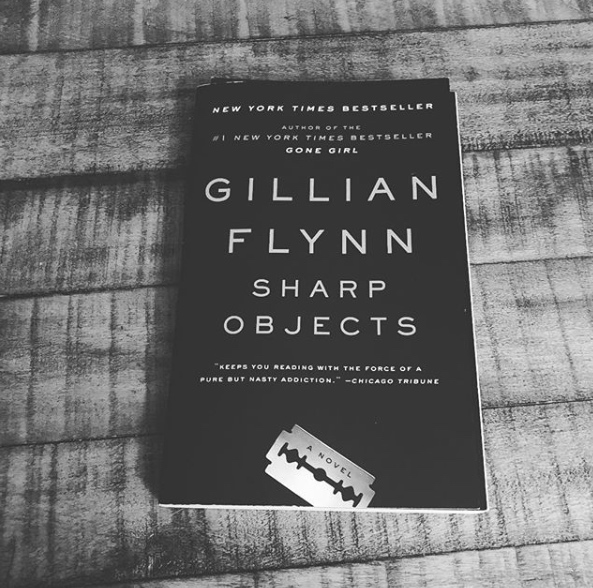
Gillian Flynn delivers with her debut novel. Sharp Objects stands on its own as a solid literary thriller. I read Gone Girl at the height of the film’s popularity, and after this book it’s safe to say I’m a fan of Flynn’s work. This novel is a story about a damaged journalist working in Chicago who is sent back to her small town to write on the murders of two young children. Wind Gap is the kind of town where the population consists of those who couldn’t escape after high school, so our narrator, Camille, visits a past that still haunts with vibrant life.

To save on travel costs Camille stays with her family, a group wrought with dysfunction. She has a teenage sister she hardly knows, and a stepfather who exists in the background world. Her relationship with her mother consists of a great cold distance where affection has lacked for the better part of a lifetime. When Camilla’s mother reacts to the murders with emotion it is interpreted with resentment,

“Every tragedy that happens in the world happens to my mother, and this more than anything about her turns my stomach. She worries over people she’s never metwho have a spell of bad chance. She cries over news from across the globe. It’s all too much for her, the cruelty of human beings.”

It’s written with wit and insight, and flows with ease. Flynn has the chops to keep me coming back. I’m hoping to check out the film rendition at some point. Flynn recently tweeted out that there’s a book on the way, so in the meantime I’ll be looking forward to that.

Screen Shot 2018-09-03 at 10.08.24 PM

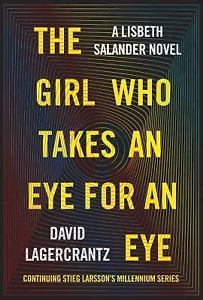
The Girl Who Takes An Eye For An Eye: A Book Review

David Lagercrantz does excellent work. ‘The Girl Who Takes An Eye For An Eye’ is his second contribution to the Millennium Series, and it’s a stronger piece of fiction than his first. He has mastered the characters and their motives to such a degree that I’m no longer aware of a disparity between the writing of Lagercrantz and Larsson.

The narrative begins with Lisbeth Salander serving a prison sentence for crimes committed in the previous book. An innocent inmate is the target of gross abuse by a most guilty inmate, while the guards look the other way. Salander takes an interest, and intervenes with violent results, and takes it upon herself to correct the record. Thus begins a revenge thriller that captures the essence of Larsson’s characters and story world. It’s a wild ride that’s worth the price of admission.

In order to not give anything away I’m going to keep this review short and sweet. I take delight in these novels, and will continue reading further installments of ‘The Millennium Series’ while Lagercrantz writes them. His additions compliment the original trilogy with equal quality.


s-l300

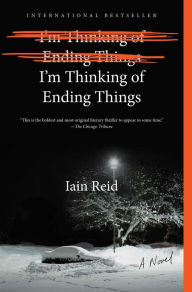
I’m Thinking of Ending Things: Book Review

There’s a great deal I want to discuss with regards to the book, the majority of which requires me to spoil the ending. So much is tied up in the twist, and to only talk about the psychological buildup comes off as a sales pitch.

I’m into tragedy. A title like, “I’m Thinking of Ending Things” carries implications that I don’t feel need to be spelled out. The entire first page carries an ambiguity hinting of these thoughts being suicidal in nature, but is cleared up by our unnamed narrator describing how she intends to break things off with her boyfriend, Jake. I felt let down. It wasn’t outright dark enough compared to my initial expectations.

Things get weird, and the buildup is fun. You’re let in on glimpses of some tragic violence between chapters. Something bad is going to happen, but the where, when, and who is kept off of the table for the purposes of suspense. Reid knows how to develop a plot, and he knows story structure.

The book is crafted just fine. But the ending… The last twenty pages of the book and all I could think was, “It’s ‘Fight Club’ all over again.” The narrator is a figment of fantasy, a woman Jake met once. Jake has parents who appear on the page, but they’re long dead. The entire episode is of an imagination longing to compensate for want. Jake’s academic ambitions have been left in the past, he inherits the home in which he grew up, he is alone, and goes through a fantastic detachment that leaves him (and the time frame of the story) at the height of Jake’s potential. This window of time that places Jake in his late twenties to early thirties is subjected to the reality that thirty years have passed since the events of the story world. Has he and the narrator not aged in his fantasy? This obsession with youth and age shows that Jake is not as detached as the general narrative would have you believe. It’s much more depressing than your average thriller, but is painted as such because an alternative angle would turn off a good portion of the audience.

It’s not about having an original story, but telling it in an original way… I’ve heard similar expressions regarding storytelling, so I can forgive the ‘Fight Club’ ending. Where I take issue is the youthful angle of the fantasy, without which the entire narrative (as it is) cannot stand. The character is obsessed with the past, and to a degree I really dig it.

What if we knew Jake was in his sixties the whole time? What if we knew he was living in a fantasy world to make up for whatever he lacked? What if the title didn’t play with our preconceived notions about language, and was honest from the starting point? The book would’ve been entirely different, maybe less commercial, no over the top twist, but it would’ve been honest. A partner does not stability create. Jake is not honest with himself, his problems are not rooted in loneliness, but in serious mental complication by which his isolation is a side effect. Jake was always going to self-destruct, and a romantic partner would’ve made no difference, but it’s nice to pretend.

It was a fun and easy read, but I’ve got mixed feelings about the ending.

Ending things.jpg

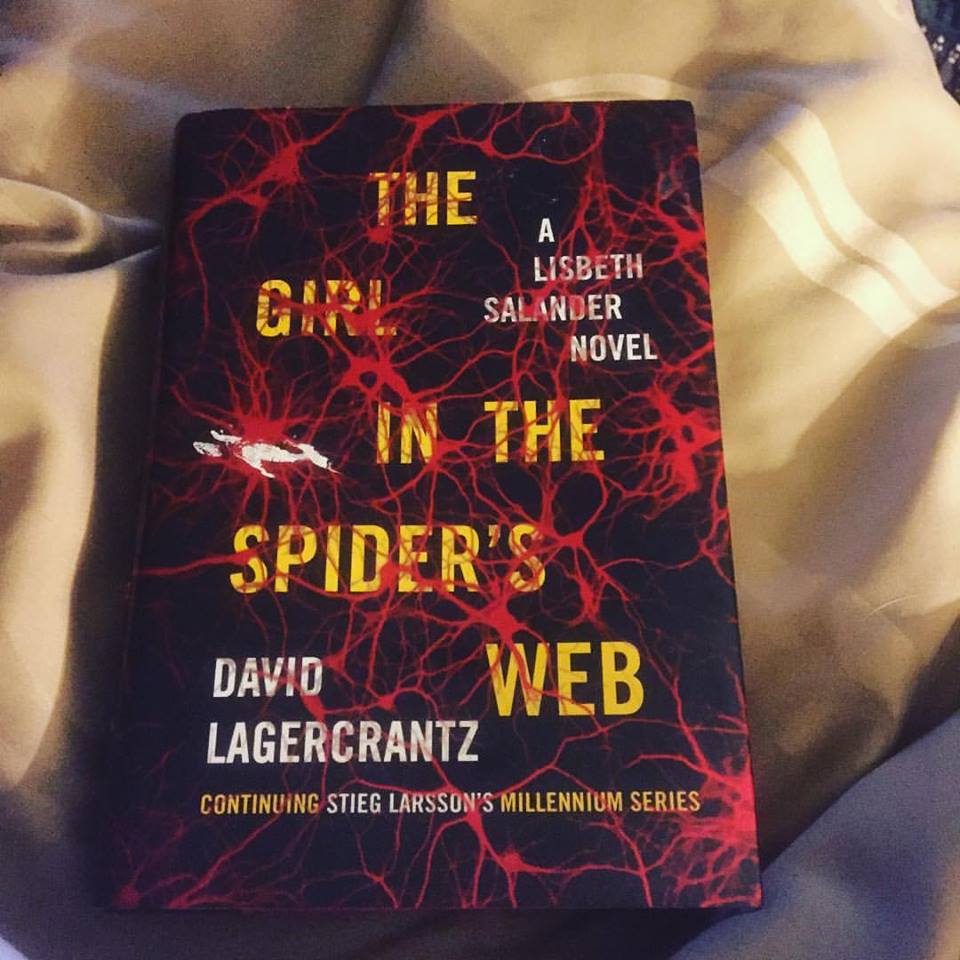
The Girl in the Spider’s Web: Book Review

I came with the same reservations you’ve got: how could this live up to the original trilogy? Stieg Larsson is not the author. In fact the initial rough draft for a fourth installment was put aside for the efforts of Swedish writer and journalist, David Lagercranz. His writing is smooth, and works towards establishing an authentic experience. Lagercranz brings his own story to the table, and what starts as a slow burn is revealed as the foundation for a thriller that compliments the returning cast and new character alike.

That’s how I knew it wasn’t a failure from the start; I was convinced of genuine portraits that brought me back into the story world of the Millennium Series. Blomkvist, Berger, and Salander were presented as they had been, but the side story of police officers Bublanski and Modig offered fantastic commentary, and the attention given to their characters helped to solidify the space. New characters contribute to chaos, and fun is had by all. I enjoyed the book. If there’s a flaw it’s the occasional wording that may be the result of a rushed translation, but that may be too critical of me.

The Girl in the Spider’s Web uses a narrative style that jumps every couple of pages, as a means to show a consistent juxtaposition of events through the scope of different perspectives. Though there is a consistent narrator the emphasis on jumping to different characters with such frequency suggests the possibility that it was written with a film in mind. It transitions fast enough to never burn out on a moment, and seems to move with the fluidity of thoughtful storytelling. It left open the option of a sequel, on which I have mixed feelings.

All in all I enjoyed this book, and would recommend it to fans of the original trilogy. It’s fun, authentic to the established editions before it, and satisfies the desire for a quality continuation.

16711649_10207087616262314_592412953148187988_n