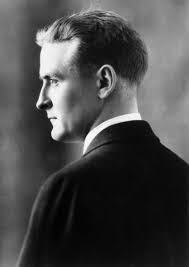
Reason and the Excuse

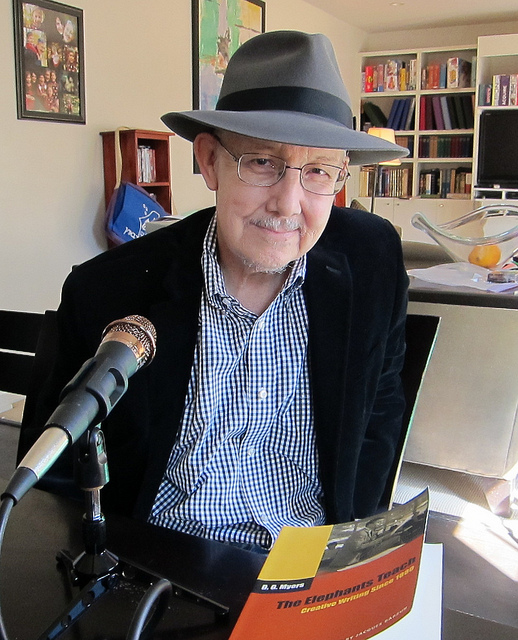
Majoring in English has been a labor of love and obsession that has greatly impacted my own creative writing. Having been exposed to a vast array of literature that I never would’ve contemplated reading on my own, I’ve discovered greater potential within myself than my ego had previously envisioned. I wrote the first draft of Tin Foil Hat during my first year at Ohio State. It developed over the course of a semester while I studied Fitzgerald, and more specifically The Great Gatsby under the guidance of a terminally ill professor. He lived with a greater zest for life than the vast majority of the people I’ve encountered by bringing passion to the classroom in spite of his illness, and he helped to remind me of my own confidence concerning the craft of writing. In returning the first assignment of the semester, he opened the notes with, “You may have the best prose style of an undergraduate I’ve ever read,” and then proceeded to tear it all down as any great educator should. On more than one occasion he would answer his cell phone in class, remind the person on the other end that he was in class, and promptly hang up without giving the other party a chance to respond. He engaged and even entertained in such a way as to create an atmosphere that I haven’t since encountered. When he suggested I might’ve been a better writer than him (in front of the class) I couldn’t differentiate between sincerity and sarcasm, but the ambiguity was part of his charm, and his continued words of appreciative encouragement would clarify his intension. The semester ended, and I’ve driven my writing forward with a confidence that I must credit to the push and expectations of David Myers.

I finished the draft, and Doctor Myers passed away last September. The academic year returned me to the full time school/work routine, and my manuscript would wait, backed up on a multitude of scattered flash drives. I would edit during free time, and in between semesters. I would read Woolf, Morrison, Nabokov, Faulkner, Shakespeare, and the vast majority of Renaissance English playwrights, in addition to countless others. My blog suffered due to scheduling conflicts and excuses, as my academic writing would come replace my creative endeavors.

While working on a production of Shakespeare’s Richard II last spring, my manuscript was being picked apart by my editor, Daniel Killinger. The semester wrapped up, and final arrangements were made for publication. In comparing Tin Foil Hat to my first piece of fiction The Blue Moon Catastrophe, I’ve come to find a style that has developed thanks to the time and effort applied to my studies of English literature. The Fitzgerald influence is something I see in a great many scenes, coupled with the scathing satirical style that I still credit to my obsession with the novels of John Niven (in fact, I wrote a paper on what Fitzgerald called ‘The Price of Admission’ which I had first discovered while reading Niven’s Straight White Male).

I’m almost done with my undergraduate studies at Ohio State, and due to my half-time schedule this fall, I will write with confidence that I’ll be blogging with a bit more regularity.

Doctor David Gershom Myers Doctor David Gershom Myers

Tender is the Thinly Veiled Confession

A violent climax is lacking in Fitzgerald’s Tender is the Night. After rereading Gatsby this past winter, I had come to expect a larger horror show to cap his long anticipated follow-up novel. Instead I explored the burden of witnessing a relationship between imperfect people dissolve. The Divers stand in as Tom/Daisy Buchanan type figures, but stir something similar to empathy as the conditions of routine take hold of their unhappy lives, and place them as the central figures of emphasis. Fitzgerald’s prose illuminates a complicated tale of privileged people, contaminated by their own entitlement and spite for one another. The use of language would deliver violent intent, as Dick’s resentment is conveyed, “As an indifference cherished, or left to atrophy,” which enables his desire to, “become empty of Nicole, serving her against his will with negations and emotional neglect” (168). Taking a psychiatric patient as his wife, Dick burdens himself with Nicole’s status as patient, and they both suffer for it. It has Fitzgerald and Zelda’s personal complications written all over it.

Fitzgerald reflected upon himself to a greater extent for this novel than he had for his previous work. The use of alcoholism as Dick’s self-destructive tendency makes a nod to his own lifestyle. Fitzgerald is self aware of the complications of having not published novels with the consistency a mainstream artist demanded, as he projects the notion of such onto a thinly veiled artist of another medium, “he was a musician who after a brilliant and precocious start had composed nothing for seven years” (34)(eight years between 1925-Gatsby and 1933-Tender). Yet in A Life in Letters, Fitzgerald admits he’d rather take his time to create a quality work of literature than pump out some mediocre and yearly scheduled product novel. The end result is something wonderful, and dense, and complicated.

46164

On Elliot Rodger and Social Dialogue

For a long time I’ve studied mass killers, with a focus on the school shooter variety. I know it’s a strange topic, but it’s for a novel I’m working on. Up until recently I’ve been insecure concerning the authenticity of my villain, due to the complications of such characters. Why do young adults shoot up schools or other highly populated areas? I personally think that whatever part mental illness plays it is coupled with the fact that their lives have been for their own short term satisfaction and selfish benefit. With that in mind they don’t have the ability to do something that will stand the test of time. It is the idea of being forgotten that justifies (in their damaged thought process) the action that needlessly snuffs out life. It comes down to a grand finale, a violent outburst that becomes their only option for doing something that will be remembered. Does violence make one’s life worthwhile? A celebrity obsessed culture seems to validate such perspective. While I have a variety of sources that range from academic articles to personal letters from an imprisoned school shooter it’s still difficult for me to personally craft a motive for my character, and the shape that took form wasn’t exactly what I envision when I think of such people. My villain is an obsessive misogynist. It is the seed that took root and gave bloom to the flowers of social rage, and eventually bore the wretched fruit of violent misanthropy. Could I really have my character (no matter how mentally off) claim that the source of his discontentment was his inability to conform a woman to personally owned object?

Elliot Rodger apparently wrote a manifesto that reached well over one hundred pages, but what will stand the test of time and be scrutinized is the six minute video he posted the day before his rampage in Santa Barbra. While the subculture that embraces such violence equates these videos to manifestos the films are little more than press kits. I watched it the day his rampage was reported, and thought it was different than what I’ve seen in the past, but brushed it off as just another one. His rage wasn’t the broad rant against all of society, but against women in general. I found it off putting, but still had a hard time taking him seriously. Did you really go out and kill a bunch of people because the objectification of your desire can think for herself? His fake laugh and vulnerable confessions resulted in me not thinking much of this pathetic rant, and all but erasing it from my short term memory as the typical social outrage played out in the media. Both sides took to their designated posts on the gun rights/mental illness debate that follows every one of these tragedies, and yet this repeated type of bloodshed brings forth little in the way of social progress in the aftermath.

Then I noticed this #YesAllWomen conversation that started to surface in my social networking feeds. Declarations against the objectification/dehumanization of women would be met with threats of rape posted by those masked through the filter of the screen. The conversation has been on full blast since then, and I personally think it’s a good thing. Not the rape threats, but the worthwhile dialogue that is still taking place. This isn’t to suggest that it will wipe out misogyny in our culture, but change starts at the level of the individual. From the Renaissance era documentation that defines a good wife as a reflection of her husband to the notion of patriarchy in Hitchcock’s film Vertigo as commented on by feminist critic Modleski that man’s great desire concerning women is his own reflection- much hasn’t changed. It seems we must culturally reflect upon how we regard each other, instead of paralleling women with our own narcissism. With that in mind male entitlement and the objectification of woman has been viewed as acceptable throughout history, but that does not justify it’s continuation.


The Question of Hitler and Satire

Growing up in America I’ve come to terms with the political atmosphere breeding the extremes of rage and/or apathy. The blatant truth is that George Bush wasn’t Hitler. Likewise Barack Obama isn’t Hitler, either. But what if Adolf Hitler did come back, not reincarnated into another figure but as he was in early April 1945?

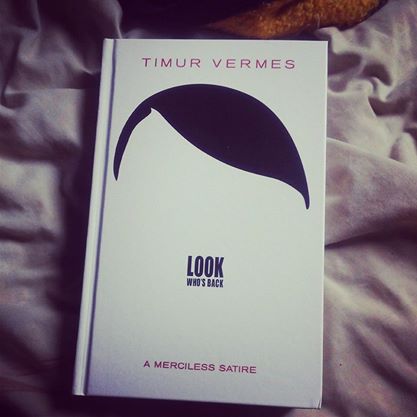
The first novel of German journalist Timur Vermes addresses just how far celebrity culture has reached. The return of an historical figure to the modern world isn’t a fresh approach to satire. Another such engagement was John Niven’s novel The Second Coming which brought Jesus Christ to the United States. But Vermes’ novel Look Who’s Back drops Hitler off on a patch of grass in Berlin during the August of 2011. He is without memory of killing himself, or of anything else up until he awoke in contemporary times. His looks are spot on, and his demeanor reflects that of Hitler, but he is generally received as an actor who refuses to break character. When interviewed by a talent agency they come to the conclusion that this improv routine isn’t funny. It’s dry, full of historical references, and is delivered with the awkwardness one would expect when engaging in a realistic conversation with Adolf Hitler. He’s no Charlie Chaplin, and he doesn’t bother with slapstick. Even still he is given a chance. Making an appearance on a televised program, Hitler’s rant goes viral, and he becomes a star. It’s through this media platform that Hitler believes he will establish a legitimate following that will enable him to once again take control of Germany.

Before I read the novel I checked out a few message boards to find the grand debate of whether or not Hitler would be an appropriate figure from which to derive satirical comedy. It’s strange how that online conversation seemed to be one of the central themes, and how closely it reflected the individuals within that debate. The older generation that had lived through the atrocities of Hitler’s Germany has been left reasonably haunted to such an extent that it’s just not appropriate. In the novel Hitler’s personal assistant quits her job when her grandmother becomes aware of whom she’s working for and declares, “What that man does is not funny. It’s nothing to laugh about.” Yet it was Hitler’s unorthodox approach that gets him threatened and assaulted by real Nazi loyalists. Comedy and satire has the capability to undermine the authority of tyrannical figures, but it happens to be those hurting the most who have the hardest time facing it in any light. It appears as though if Hitler were to come back in such a fashion, he’d resemble Stephen Colbert more than any politician. In spite of this new life path Hitler maintains his goals of world domination and German superiority in the face of those under the impression that it’s all an act.


Image


Mother’s Day Special: On Bechdel’s Second Graphic Memoir

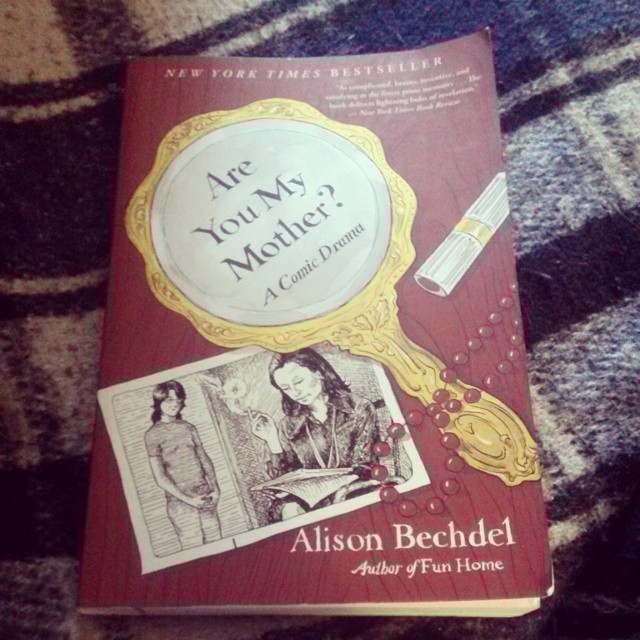
Having spent a good portion of my teenage years at a comic shop it comes as no surprise that I’ll seek out the occasional graphic novel. While there will always be a place in my heart for hyper-masculinity in spandex fighting crime my tastes have since drifted from the humble roots of adolescent origin. Alison Bechdel’s second graphic novel Are You My Mother? examined the complications between the author (as subject) and her mother. Without having read Bechdel’s first graphic novel Fun Home which explored her family’s dynamics with an emphasis on her father’s homosexuality and apparent suicide the context of the second memoir may be a bit difficult to follow, so I recommend you read both.

I was introduced to Fun Home during my first semester at Ohio State. A friend had overheard me rambling about Fitzgerald and The Great Gatsby, as I was taking a class that spent the entire semester examining Fitzgerald and his most famous novel. She told me about how Bechdel examined her father’s appreciation of Fitzgerald’s work and let me borrow Fun Home. It was an astonishing account of what felt ordinary. Composed of a ‘down to earth’ mentality I haven’t read in a graphic novel since Backderf’s My Friend Dahmer and an elevated use of language (at least… elevated when juxtaposed with my judgemental opinion of the comic book market), I felt compelled to read Bechdel’s second memoir.

With Are You My Mother? Bechdel explored the depths of the rabbit hole that she had only revealed in her first graphic novel. The fragmentation of time in which the narrative is structured reads much like a novel by Virginia Woolf. In fact the second graphic novel jumps ship, from obsessing over Fitzgerald in Fun Home (her father’s favorite author) to Woolf in Are You My Mother? (an author Bechdel claimed her mother had never read). The themes of modernism explored by Woolf are reexamined by Bechdel with a quality of reflection that reveals its universal tones. Lines such as, “Then I started seeing how the transcendent would almost always creep into the Everyday” (Bechdel, 33), remind me of Woolf’s novel Mrs. Dalloway, in that it is the transcendent forces of one’s own past that haunt the present and influence the characters to feel anxiety over any sort of future. In mentioning Woolf a total of sixteen times Bechdel sought to draw parallels between the author (Woolf) and psychoanalyst Donald Winnicott. Through the exploration of Winnicott’s work as it related to Bechdel’s relationship with her mother she came to conclusions on the complications regarding communication, “Your unconscious wants to express the pain you feel about your own lost innocence. But your ego wants to keep it repressed. So the compromise is anxiety” (Bechdel, 45). Such complication regarding communication is another reflection of Woolf’s work as Mrs. Dalloway’s husband Richard thought, “it is a thousand pities never to say what one feels” (Woolf, 116). With regards to another one of Woolf’s character’s desire to communicate such feelings, “some grief for the past holds it back; some concern for the present” (Woolf, 49).

This past semester I spent a lot of time studying the politics of gender regarding literary texts. From the Renaissance to Hitchcock critics of their time have often refered to the feminine as an object relating to man’s ‘top of the list’ desire that the ideal woman simply be a reflection of himself. Hundreds of years of criticism and that’s the correlating theme. But in chapter six of Are You My Mother? Bechdel explores the mirror from the point of view of an infant in the state of becoming self-aware, or at least separate from the entity of her mother. Though this created a sense of anxiety for Bechdel it brought me relief to see the mirror being used to present the dawning of an individual instead of imposing the demands of oppressive conformity.

The heightened prose and vivid characters have brought me to feel a sense of intimacy with the scenario. The ambiguous conclusion draws upon the sentiment of freedom, but what has Bechdel done with such freedom other than recoil into her own past as though she were a character out of a Woolf novel? The human condition is not as enduring as it is obsessive. It should go without saying that I’m looking forward to anything else Alison Bechdel may publish.


untitled

Robert: A Eulogy

All the world before his feet, and yet he chose to take a seat. How would one begin to speak of the person that was Robert Patrick Allton? His family, friends, and acquaintances (anybody who wasn’t a suit) knew him as ‘Bobby’ though I called him ‘Roberto’ after having known him a couple of years. My name is Justin Bauer and I’ve been a friend of Bobby’s for the better part of thirteen years. In that time I came to know him as one would a brother. In that time I came to know and love his brother Aaron, sister Amber, his father Brian, and his mother Robin as my own extended family. Bobby was charitable with his time, always willing to lend an ear to my seemingly irrelevant teenage problems. His attitude was predominately one of uplifting positive energy… He could turn a quiet melancholy room into an occasion with a mischievous word and his laugh, alone. His humor and compassion helped to establish feelings of brotherhood on my end. What’s special is that Bobby had that effect on people in general… it seems to make my experience a little less unique in that I know a great many of you feel in your hearts as though he were family. We’ve indeed lost a brother. The heart in that kid was not of this world. It was a majestic vessel that contained an endless “capacity for wonder” and a loving affection that ran as though it were on tap. Beyond the love of other people was his love of music. I first met Bobby with his brother at a local all ages concert hall on Saturday October the 13th, 2001. The actual music never mattered, Bobby could find a reason to dance… or on this occasion flail about in a mosh pit. Now Bobby and Aaron were big guys… compared to me they might as well have been giants. Taking note of the potential danger I made my way outside to catch my breath, and Bobby (a complete stranger) followed me into the evening air to make sure he hadn’t actually hurt me. That expression of compassion could’ve been viewed as transparent, but it wasn’t… we clicked… Turned out that his love of music extended to his playing of the guitar… a defining passionate trait that he seemingly inherited from Brian would simply be an extension of his gentle personality (though you wouldn’t have thought so had you heard our early attempts at making what we called “music”). A short conversation later over our shared taste for bad aggressive rock, and plans were made to meet again at Westerville South. It was at school that the ice was broken and I learned something else about Bobby that stood out in the form of his mind. He took honors classes, and was without question the smartest peer I had, and possibly the most humble (unless challenged)… he could be witty on the fly, and his grades were high, and yet he could still make time to be attentive to the needs of those for which he cared. He studied as though his memory were photographic (in other words… I don’t remember him studying much at all). As Amanda Moore said of Bobby’s academic abilities, “he made it look so easy.” Once in the setting of high school I learned quickly that he wasn’t a person to judge someone by their appearance… except for Aaron… this made for his diverse circle of friends. He was less than perfect, yet it was this human quality that attracted so many to his presence. His short life was a gift to those who knew him. We spoke once of childhood and I was struck in the subtle differences in the gift giving aspect of Christmas. I always had the kind of Christmas that I considered normal… waking up to unwrap that which your family had spent a good deal of time wrapping… From what Bobby told me his family decided such a step wasn’t necessary. All of the gifts for the children were set out in the open for the sake of reaction. Of that tradition Bobby told me, “there’s something magical about waking up with your family and seeing everything set out for you all at once.” I never really thought much of it, but now his explanation leads me to believe that Bobby lived in such a way; so openly. Once introduced, you knew Bobby. Those of you here now are quite telling of his magnetic qualities. I thank you for allowing me to share this moment with you. Through the circle of his community he will live on… and in the hearts and minds of those who remember such a gentle soul, know that there is peace for him. Image

Reflections and Moving Forward

My studies have taken priority over the manuscript buried on my hard drive. On that note there’s a novel on the way, but it’s at such a stage currently that I’m not ready to talk about a release date. I’m starting my spring break after class this afternoon, and while I plan on getting ahead of my studies, I intend to invest a good bit of the break on my book. Please forgive me if I start rambling about my #TinFoilHat in the coming months.

The scope of my literary experience has expanded significantly since publishing The Blue Moon Catastrophe. The study of literature has enabled me to consider my options, and still all I want to do is write fiction. On the business side I’ve gotten acquainted with social networking while scrutinizing the field of self publishing, and I’m still feeling my way around.

In spite of this growth I still take pride when reflecting on my first novel. It’s a mystery/thriller that includes a bit of satire on the follies of the hospitality industry. I always imagined that I’d write on my time working in hospitality, but not until after that time had passed. The danger of such a project made it fun, as I feared it could’ve compromised my employment. Maybe I’m crazy, but I don’t expect a fiction disclaimer to protect a lower level management job.

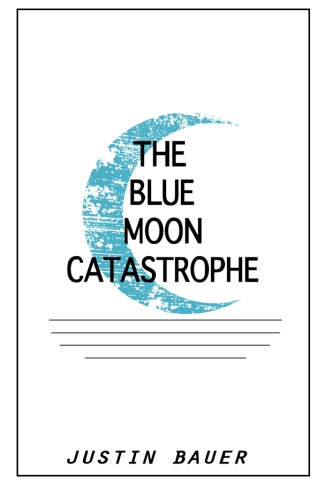
Now I know I’ll need to produce more, and more often if I’m to forge a career in such a disposable marketplace. I don’t entertain the idea of instant success, as I know it’ll take a few consistent novels before any ground can be established beneath my feet. On that note I figure I’m little more than a nonentity in the field. I’ve looked into the right time to offer a free book promotion, and based on the numerous variables that applied to me now is not the that time. Such advice has been wasted on me. I’d like to offer an ebook version of The Blue Moon Catastrophe for free today through Sunday on Amazon.

BlueMoonBookCover

The Price of Admission

The following is an essay I wrote last semester for English 3398: Writing for English Majors

A coincidence occurred at the beginning of the semester that has left me obsessing over a particular philosophy applied to the various writing practices and prose of F. Scott Fitzgerald. A new novel by my favorite contemporary author had arrived from England on the first day of classes, and yet obligations to assigned reading would cause deviation from visions of instant gratification. It was wrongly assumed that college level students studying English would have read The Great Gatsby by this point in their academic careers. My first reading of Gatsby was a rushed and hasty experience that pleasantly aided me in avoiding my professor’s ruining of the novel at our second class meeting, when he spoiled the fact that the character for which the novel was titled dies! While there would be plenty of time for rereading the material for the purpose of deeper analysis the semester was fresh and the workload had not yet kicked into full gear. If I could get through Gatsby in a day I could surely consume a quick four hundred pages over the following weekend. In John Niven’s most recent novel Straight White Male, the main character is himself an author by the name of Kennedy Marr, who happened to speak of Fitzgerald’s name no less than three times. It is the final mentioning of the book in which Marr observed in passing, “what Fitzgerald called the price of admission,” (Niven, 328).

Throughout the entirety of his literary career Fitzgerald sought a greater grail than that of Gatsby’s imagination, for such dreams were part of the process. The practice of crafting a level of prose that made a piece of writing not only sellable but a work of art was the professional attitude and philosophy that drove Fitzgerald’s creative ambitions. When looking into this price of admission I came to find it referenced on a singular occasion in Bruccoli’s A Life in Letters. The context related to the craft of writing on the standards of a professional level and was directed to a friend of the family who had submitted her manuscript to Fitzgerald in seeking his advice. His reaction was less than comforting as he was honest and informed Ms. Turnbull, “I’m afraid the price for doing professional work is a good deal higher than you are prepared to pay at present. You’ve got to sell your heart, your strongest reactions, not the little minor things that only touch you lightly,” (Bruccoli, 368). He writes of these minor things as practices of an amateur as he continues, “you have not yet developed the tricks of interesting people on paper, when you have none of the technique which it takes time to learn. When, in short, you have only your emotions to sell, (Bruccoli, 368). Fitzgerald goes on to tell Turnbull about investing in the weight of specific experiences in confessing, “In ‘This Side of Paradise’ I wrote about a love affair that was still bleeding as fresh as the skin wound on a haemophile,” (Bruccoli, 368). The truth behind criticism can be excruciating when it acknowledges the failures of strategy, and the lack of anything published by a Frances Turnbull suggests the submission of defeat.

A little more than nineteen years prior to the letter to Ms. Turnbull, Fitzgerald wrote a letter to his editor concerning the first draft of a manuscript that would go on to be This Side of Paradise. Such confidence was revealed in this short letter as Fitzgerald made abstract inquires of possible publication dates in spite of the fact that Mr. Perkins hadn’t, “even seen the book,” (Bruccoli, 28). Even considering the good nature of the working relationship between Fitzgerald and Perkins the gesture of such inquiries seems intrusive and unwarranted, yet it was the confidence in his craft that merited Fitzgerald’s motivations for doing so. Such confidence is never omitted from the inconsistency of man, as Fitzgerald quickly turned around and wrote his second novel, The Beautiful and the Damned, and broke with the routine of regularly crafting prose. In between the drafts and publication Fitzgerald took a break from his work to indulge in the leisure of the free time afforded him. In a letter to Perkins, Fitzgerald explained the psychological consequences of an ambitious man in the midst of a period of sloth, “because I’ve loafed for 5 months + I want to get to work,” (Bruccoli, 48). Not keeping up with any regular practice will damage one’s craft, and for Fitzgerald not keeping up with the craft put him, “in this particularly obnoxious and abominable gloom,” (Bruccoli, 48). The shortcoming of his gloom resulted in the deteriorating of his confidence as he wrote, “I haven’t the energy to use ink-ink the ineffable destroyer of thought, that fades an emotion into that slatternly thing, a written down mental excretion. What ill-spelled rot!” (Bruccoli, 48). This confession reveals the profoundness of Fitzgerald’s obsession and dedication to the craft in the reflections of momentary failure. In spite of his first two novels the philosophy of the price was in a state of development to this point.

From failure to the grindstone, Fitzgerald progressed in his approach to Gatsby. One lesson I’ve learned as a developing writer is to never be married to the manuscript as is. Writing is rewriting, and such is included in this price of admission. Through the revisions of editing Fitzgerald admits that regardless of how much time the process may consume, “I cannot let it go out unless it has the very best I’m capable of,” (Bruccoli, 65). For the sake of getting work done I’ve become acquainted with the mantra of, ‘don’t get it right, get it writ,’ and maybe that’s relevant for the vigorous constructing of a first draft. But Fitzgerald’s longevity can be contributed to his taking the time to get it right in spite of deadlines. If he were to have pushed the work and conformed to the commercial styling of authors that pump out a novel every year Fitzgerald may have considered himself, “dead with those who think they can trick the world with the hurried and the second rate,” (Bruccoli, 183).

Second rate was not of Fitzgerald’s fashion as he revealed the formula in his letter to Ms. Turnbull, “You’ve got to sell your heart, your strongest reactions,” (Bruccoli, 368). On selling his heart to Gatsby, Fitzgerald described in a letter to Zelda how difficult it actually was to apply the developing philosophy, “I thought then that things came easily- I forgot how I’d dragged the great Gatsby out of the pit of my stomach in a time of misery,” (Bruccoli, 187). Focusing on negative memories in a time of misery seemingly creates a vicious cycle, but Fitzgerald included his strongest reaction to the bitterness of a previous romance in the form of Tom Buchanan’s polo ponies as the woman he coveted, “married a man with a string of polo ponies. Fitzgerald never forgot Ginevra King-he saved all her letters-and Jay Gatsby’s timeless love for Daisy Fay, who also married a man with a string of polo ponies, undoubtedly had its roots in his memory of her,” (Miller, 5). This example of a simple truth from Fitzgerald’s life seems transparent at first glance, but it’s inclusion in The Great Gatsby reveals the selling of Fitzgerald’s own heart.

Following Gatsby Fitzgerald strove to outdo his previous effort, “Gatsby was far from perfect in many ways but all in all it contains such prose as has never been written in America before. From that I take heart. From that I take heart and hope that some day I can combine the verve Paradise, the unity of the Beautiful + Damned and the lyric quality of Gatsby, its aesthetic soundness, into something worthy of the admiration of those few,” (Bruccoli, 112). Fitzgerald’s confidence contained parallels with Gatsby’s dream in that it was all about the chase and the moment. Once obtained, it is fleeting and holding onto the moment is impossible. Fitzgerald’s personal satisfaction with his work was a fleeting sensation, and it was only the prospect of outdoing himself that he remained wholly dedicated to chasing a dreamlike vision that he could never quite grasp. “That, anyhow, is the price of admission,” (Bruccoli, 369).

Image

Why I’m an English Major

I’ve got a music degree that’s displayed in the cheapest of frames on the wall in my basement. Can’t say I do much with it. Occasionally I still make music for myself, but I no longer partake of the idea that a career in the industry is for me. The market is over saturated as it is, and more music schools are coming into existence than are necessary to fill the potentially available careers. I haven’t even played the drums since last May. In that regard I don’t feel like the person I’ve come to know as myself, and yet the distance has permitted adequate reflection that I’ll expose in the near future.

Instead of chasing that musical dream full time I went back to the monotonous routine of a day job. Once or twice I joined bands on a whim and did bits of drumming for local musical theatre companies, but nothing concrete formed. Those are the fleeting moments I still dream about. But I went back to school, and between that pursuit and the day job, I am left with little time to consider music. I blame no one but myself in that regard.

This March I’ll have been in the hospitality industry for five solid years. It has afforded me the opportunity to study on the clock, and obtain the coveted ‘experience’ demanded by the majority of employers offering entry level positions. I’ve been promoted to assistant manager, and the place supplied the foundation for the setting of my first novel, The Blue Moon Catastrophe.

You’re going to school for another degree in the arts? Why would you go back for yet another worthless degree? In a time when there’s a slipping enrollment in the humanities is the desire to become an educator applicable? Novelist pipe dreams? Both academia and fiction publishing are over saturated fields: you’ve been down that road with music! From a realistic point of view there is little hope, a fact of which I’m well aware.

Have I learned nothing? Some would call this madness, and I’m somewhat inclined to agree with them. Above all else I desire to become a better writer. Some would argue that the practice of writing alone should suffice, but the serious study of literature will contribute to the goal as well. I’m an English major because I want to take my lifelong enthusiasm for reading and apply it to a better understanding of… everything. I’m an English major because I want to produce better novels. I am an English major by choice and stand by my passion.

I think Fitzgerald best summarized the union of hope and realistic expectations with the famous lines, “Gatsby believed in the green light, the orgastic future that year by year recedes before us. It eluded us then, but that’s no matter—tomorrow we will run faster, stretch out our arms farther. . . . And then one fine morning—
So we beat on, boats against the current, borne back ceaselessly into the past.”

Some men think, and therefore are… I write, and know not.