An Evening with Saul Williams

A light rain brought forth little urgency while walking to the club. I arrived 90 minutes early, confused by the familiar. The Rumba Café turned out to be a place I had been once before. I failed to realize it until the interior of the bar had been recognized, and my thoughts wandered back toward that initial experience. The band of that evening has since dissolved, but such a moment was recalled with appreciation. Nostalgia doesn’t always sting, and I smiled.

The establishment was near vacant upon arrival, and I wasn’t sure how the crowd turnout was going to look, and feared our community wouldn’t accommodate a travelling poet. Would our general public misinterpret the notion of live spoken word? Would it be brushed off as a random hipster ode to my vegan bicycle? No. The people began to trickle in, business at the bar increased, and soon the place contained quite an audience for this intimate venue.

I’ve always associated quality spoken word to be most heavily impacted by delivery. Without backing music or gimmick, all that is left to impact beyond the literal word choice is the performativity of the speaker. Saul Williams often structures his words into narratives that blur the lines between philosophy and poetic grandeur, but it is his performative delivery that gives his words such appeal beyond logical musing. Much of his work is fraught with social commentary and complicated by personal reflections. Williams speaks on race, gender, misogyny, poverty, culture, society, and his considerations as it all fits into a narrative that begs an attempt at thoughtfulness and consideration.

Suddenly an entity appears on the stage in sunglasses, displaying a casual demeanor of calm as he rejects the humidity. His appearance brings the crowd to an instinctive silence, and without pomp or so much as an introduction he begins with the careful vigor of skilled aggression. The initial silence of the crowd bordered between respect and a collective hesitant tendency to break the ice with an artist.

Williams opened by reciting a selection of poems from his newest collection titled, US (a.), before moving on to singing, older poetic works, and even taking a few audience requests. He ran through an extended version of DNA, which included a great assortment of lyrics that were restructured for the musical compositions of his 2007 album, The Inevitable Rise and Liberation of Niggy Tardust. It seemed as though it were all for me, and I am selfish enough to consider it for just a moment.

There weren’t many words expressed by Saul that didn’t impact the crowd with the weight of their blunt force honesty. In exploring narcissism as the cultural norm he describes the problem as “not just consumerism, but self-consumerism” (Williams). This notion furthers another theory on fear and consumption, “keep them afraid, and they’ll consume” (M. Manson), and directs it toward the concept that the product we’re being sold is our own narcissistic satisfaction as a means to complacency. But such is a notion to reject. Progress is revealed to be stagnant in complacent waters, as the poet continued, “sometimes we stand on the shoulders of our ancestors, sometimes we must stand on their fucking necks” (Williams). There was a collective feeling that resonated in the audience of harmony through discord. Maybe that’s a bit much, but without bells, whistles, or even a beat… I felt something.

Danger exists when the problem is only acknowledged. An addict may be capable of admitting such a circumstance complicates their ability to associate, yet the vice may parallel with their sense of identity. Morbid pride forms when such flaws are embraced. Williams spoke near the end of his struggles with his view of women, which reminds me that acknowledgement of the defect is not equal to catharsis.

The delivery of Saul Williams comes second to his words. He is a poet, and such poets are dangerous. We should live to embrace such danger.

Marilyn Manson and the Developmental Crisis

I’ve spent the past month in a state of dishonest research. The publishing company 33 1/3 has declared they’re open to proposal submissions. With a late July deadline, I contemplated the albums that have had the largest impact on my life. Marilyn Manson came to mind, as I’m a fan, and from there I considered my favorite albums. With Holy Wood addressing the topic of social violence, I was drawn toward the exploration of that album, but 33 1/3 released a poll of albums that fans of the series wanted to read, and Antichrist Superstar was the only Manson album on the list. Without shame I shifted my focus to what most Manson fans consider to be the greatest critical work of the band. While I am of the opinion that the triptych (Antichrist Superstar, Mechanical Animals, and Holy Wood) is the best work, Antichrist is my least favorite of that collection. But I took the suggestion of the poll, and started collecting notes and ideas that I could construct into a proposal, and then into a 30,000 word project.

Picking up Manson’s autobiography, The Long Hard Road Out of Hell (co-written with Neil Strauss), I read through it for the first time in over a decade, because I remembered the final third of the book covers the production of Antichrist Superstar. Manson claims a good bit of the lyrical content came from dreams. Imagery such as, “Their jaws had been wired shut so that they wouldn’t bite” (215), was dropped into the song, Little Horn. The second single, Tourniquet is also composed of this nightmare imagery, “taking my own hair and teeth… ritualistically creating an artificial companion” (215) reflects the theory that the greatest attribute a man desires in a woman is his own reflection. Such was described in Renaissance depictions of a ‘good wife’ and the notion remains in contemporary criticism, as Tania Modleski states the same concerning her psychoanalytic interpretation Hitchcock films.

Four months into the production and cocaine is the excuse concerning lack of progress on the album. He tells of stagnant sessions leading to drug use, and being so wired from the drugs that progress became out of reach. It’s a troubling read, as Manson describes, “the only time anyone agreed with me was when I suggested we call (the cocaine dealer)” (227). The lowest moment comes with the realization that Manson, “was a rock and roll cliché” (235). The drugs would compromise the project to the edge of failure before any sort of rebound would set the pace for progress.

Before the ball is rolling Daisy Berkowitz (guitarist and last founding member aside from Manson) quits the band, Dave Ogilvie (a producer hired by Trent Reznor to assist on the project) is fired, and David Lynch gives film work to Reznor that Manson expects for himself. Ego based divisions dominates the narrative, and complicates the notion that this album could be possible at all. Oglivie is replaced by Sean Beavan, Twiggy Ramirez (bassist) takes on the majority of the guitar work, Manson claims to quit cocaine (for the moment), and from there the process is hardly written about as the focus of book centers on the chaos, neglecting what brought the production to life.

So I played with the idea of writing essays concerning the album (production, arrangement, lyrics, meaning, critical response, social response, etc.) or even a fictitious exploration of the story that carries this concept album. With the consideration that fans are still waiting for Manson to release his own novel based on Holy Wood, I knew that Antichrist Superstar would be the better fit for a fictional interpretation.

But the notes compiled, and I felt no closer to deciding which route to take. No more comfortable with the project, in spite of the enthusiasm I’ve carried since 33 1/3 announced they’re accepting proposals. Having a degree in music and now majoring in English writing about music feels like a given, but the anger and rage of Antichrist Superstar is not what’s in my heart at the moment.

It took the entire month before I decided to abandon the project. My favorite album by Marilyn Manson is Mechanical Animals, the glam rock concept album with a sleek production that differs from anything else the band has released. The theme of being numb complicated by a first experience with emotion, coupled with the unique sound of the record offers a calm and collected emptiness that would rather go with the apathetic flow than destroy the world.

With this in mind, I know that any proposal I could throw together by the deadline wouldn’t be of enough quality to be worth a contract, but I now know that I want to write about Mechanical Animals. I still plan to write out a solid proposal, but if it’s not ready in time, I’m more than happy to polish and perfect what it is I want to say, and wait for the next open call for submissions.

MechanicalAnimalsZimZum

Trenton Mays to Play Football at Hocking College

There are two parallel trains of thought when I think about Hocking College. The first is of fond memories. Of the three institutions of higher education where I’ve been a student, Hocking made up what I would call the ‘college experience’ years. I moved away from my hometown, studied abroad, interned at a high-end recording studio, worked at the school’s recording studio, and made lifelong friends in an ugly impoverished little truck stop of a town. Mistakes were made that would ruin my run at politics and defining experiences were had. It could’ve been Hollywood. This is not to diminish my time at Columbus State or Ohio State, but the essence of my experience at Hocking will always feel like a terrible fantasy world that was different from anything else.

The second train of thought concerns scandal and shame. April of 2007 presented the first murder in Nelsonville since the 1970’s. In 2008 I remember then Hocking president John Light having been investigated for embezzling funds for his own vacations. The following school year saw threats of violence concerning race. Student enrollment numbers are dwindling due to the consistent scandal and perceived quality of programs. Four presidents later and the financial situation still that of corruption, as they operate well below the standards of a responsible institution.

But it’s the most recent reason Hocking’s in the news that has prompted me to write this. Convicted rapist of Steubenville fame (yeah… fame…), Trenton Mays has been accepted with open arms to play for the newly established football team. I wonder if that sort of star power will move enough units to dig the institution out of their own financial mess. In truth, giving Mays the opportunity to play ball at the college level awards Hocking the title of ‘rape culture promoter’. His opprotunity to contribute to a college team serves as an award for bad behavior. Two years in a juvenile detention center and Mays has paid his debt to society. I’m simply not convinced.

This is the sort of shame I associate with my alma mater.

Reason and the Excuse

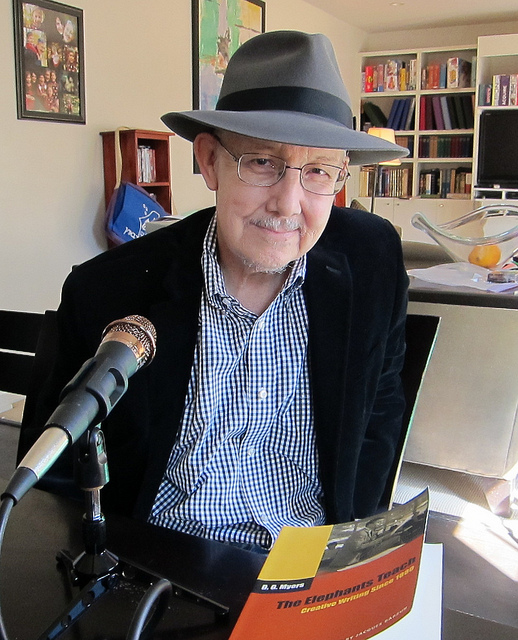
Majoring in English has been a labor of love and obsession that has greatly impacted my own creative writing. Having been exposed to a vast array of literature that I never would’ve contemplated reading on my own, I’ve discovered greater potential within myself than my ego had previously envisioned. I wrote the first draft of Tin Foil Hat during my first year at Ohio State. It developed over the course of a semester while I studied Fitzgerald, and more specifically The Great Gatsby under the guidance of a terminally ill professor. He lived with a greater zest for life than the vast majority of the people I’ve encountered by bringing passion to the classroom in spite of his illness, and he helped to remind me of my own confidence concerning the craft of writing. In returning the first assignment of the semester, he opened the notes with, “You may have the best prose style of an undergraduate I’ve ever read,” and then proceeded to tear it all down as any great educator should. On more than one occasion he would answer his cell phone in class, remind the person on the other end that he was in class, and promptly hang up without giving the other party a chance to respond. He engaged and even entertained in such a way as to create an atmosphere that I haven’t since encountered. When he suggested I might’ve been a better writer than him (in front of the class) I couldn’t differentiate between sincerity and sarcasm, but the ambiguity was part of his charm, and his continued words of appreciative encouragement would clarify his intension. The semester ended, and I’ve driven my writing forward with a confidence that I must credit to the push and expectations of David Myers.

I finished the draft, and Doctor Myers passed away last September. The academic year returned me to the full time school/work routine, and my manuscript would wait, backed up on a multitude of scattered flash drives. I would edit during free time, and in between semesters. I would read Woolf, Morrison, Nabokov, Faulkner, Shakespeare, and the vast majority of Renaissance English playwrights, in addition to countless others. My blog suffered due to scheduling conflicts and excuses, as my academic writing would come replace my creative endeavors.

While working on a production of Shakespeare’s Richard II last spring, my manuscript was being picked apart by my editor, Daniel Killinger. The semester wrapped up, and final arrangements were made for publication. In comparing Tin Foil Hat to my first piece of fiction The Blue Moon Catastrophe, I’ve come to find a style that has developed thanks to the time and effort applied to my studies of English literature. The Fitzgerald influence is something I see in a great many scenes, coupled with the scathing satirical style that I still credit to my obsession with the novels of John Niven (in fact, I wrote a paper on what Fitzgerald called ‘The Price of Admission’ which I had first discovered while reading Niven’s Straight White Male).

I’m almost done with my undergraduate studies at Ohio State, and due to my half-time schedule this fall, I will write with confidence that I’ll be blogging with a bit more regularity.

Doctor David Gershom Myers Doctor David Gershom Myers

Tender is the Thinly Veiled Confession

A violent climax is lacking in Fitzgerald’s Tender is the Night. After rereading Gatsby this past winter, I had come to expect a larger horror show to cap his long anticipated follow-up novel. Instead I explored the burden of witnessing a relationship between imperfect people dissolve. The Divers stand in as Tom/Daisy Buchanan type figures, but stir something similar to empathy as the conditions of routine take hold of their unhappy lives, and place them as the central figures of emphasis. Fitzgerald’s prose illuminates a complicated tale of privileged people, contaminated by their own entitlement and spite for one another. The use of language would deliver violent intent, as Dick’s resentment is conveyed, “As an indifference cherished, or left to atrophy,” which enables his desire to, “become empty of Nicole, serving her against his will with negations and emotional neglect” (168). Taking a psychiatric patient as his wife, Dick burdens himself with Nicole’s status as patient, and they both suffer for it. It has Fitzgerald and Zelda’s personal complications written all over it.

Fitzgerald reflected upon himself to a greater extent for this novel than he had for his previous work. The use of alcoholism as Dick’s self-destructive tendency makes a nod to his own lifestyle. Fitzgerald is self aware of the complications of having not published novels with the consistency a mainstream artist demanded, as he projects the notion of such onto a thinly veiled artist of another medium, “he was a musician who after a brilliant and precocious start had composed nothing for seven years” (34)(eight years between 1925-Gatsby and 1933-Tender). Yet in A Life in Letters, Fitzgerald admits he’d rather take his time to create a quality work of literature than pump out some mediocre and yearly scheduled product novel. The end result is something wonderful, and dense, and complicated.

46164

On Elliot Rodger and Social Dialogue

For a long time I’ve studied mass killers, with a focus on the school shooter variety. I know it’s a strange topic, but it’s for a novel I’m working on. Up until recently I’ve been insecure concerning the authenticity of my villain, due to the complications of such characters. Why do young adults shoot up schools or other highly populated areas? I personally think that whatever part mental illness plays it is coupled with the fact that their lives have been for their own short term satisfaction and selfish benefit. With that in mind they don’t have the ability to do something that will stand the test of time. It is the idea of being forgotten that justifies (in their damaged thought process) the action that needlessly snuffs out life. It comes down to a grand finale, a violent outburst that becomes their only option for doing something that will be remembered. Does violence make one’s life worthwhile? A celebrity obsessed culture seems to validate such perspective. While I have a variety of sources that range from academic articles to personal letters from an imprisoned school shooter it’s still difficult for me to personally craft a motive for my character, and the shape that took form wasn’t exactly what I envision when I think of such people. My villain is an obsessive misogynist. It is the seed that took root and gave bloom to the flowers of social rage, and eventually bore the wretched fruit of violent misanthropy. Could I really have my character (no matter how mentally off) claim that the source of his discontentment was his inability to conform a woman to personally owned object?

Elliot Rodger apparently wrote a manifesto that reached well over one hundred pages, but what will stand the test of time and be scrutinized is the six minute video he posted the day before his rampage in Santa Barbra. While the subculture that embraces such violence equates these videos to manifestos the films are little more than press kits. I watched it the day his rampage was reported, and thought it was different than what I’ve seen in the past, but brushed it off as just another one. His rage wasn’t the broad rant against all of society, but against women in general. I found it off putting, but still had a hard time taking him seriously. Did you really go out and kill a bunch of people because the objectification of your desire can think for herself? His fake laugh and vulnerable confessions resulted in me not thinking much of this pathetic rant, and all but erasing it from my short term memory as the typical social outrage played out in the media. Both sides took to their designated posts on the gun rights/mental illness debate that follows every one of these tragedies, and yet this repeated type of bloodshed brings forth little in the way of social progress in the aftermath.

Then I noticed this #YesAllWomen conversation that started to surface in my social networking feeds. Declarations against the objectification/dehumanization of women would be met with threats of rape posted by those masked through the filter of the screen. The conversation has been on full blast since then, and I personally think it’s a good thing. Not the rape threats, but the worthwhile dialogue that is still taking place. This isn’t to suggest that it will wipe out misogyny in our culture, but change starts at the level of the individual. From the Renaissance era documentation that defines a good wife as a reflection of her husband to the notion of patriarchy in Hitchcock’s film Vertigo as commented on by feminist critic Modleski that man’s great desire concerning women is his own reflection- much hasn’t changed. It seems we must culturally reflect upon how we regard each other, instead of paralleling women with our own narcissism. With that in mind male entitlement and the objectification of woman has been viewed as acceptable throughout history, but that does not justify it’s continuation.


The Question of Hitler and Satire

Growing up in America I’ve come to terms with the political atmosphere breeding the extremes of rage and/or apathy. The blatant truth is that George Bush wasn’t Hitler. Likewise Barack Obama isn’t Hitler, either. But what if Adolf Hitler did come back, not reincarnated into another figure but as he was in early April 1945?

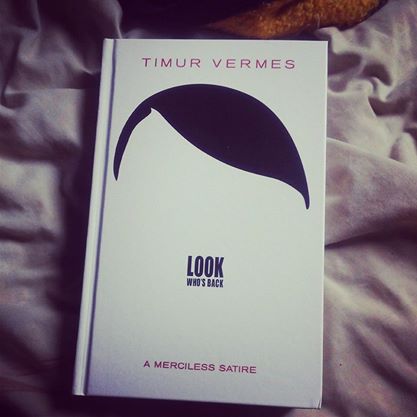
The first novel of German journalist Timur Vermes addresses just how far celebrity culture has reached. The return of an historical figure to the modern world isn’t a fresh approach to satire. Another such engagement was John Niven’s novel The Second Coming which brought Jesus Christ to the United States. But Vermes’ novel Look Who’s Back drops Hitler off on a patch of grass in Berlin during the August of 2011. He is without memory of killing himself, or of anything else up until he awoke in contemporary times. His looks are spot on, and his demeanor reflects that of Hitler, but he is generally received as an actor who refuses to break character. When interviewed by a talent agency they come to the conclusion that this improv routine isn’t funny. It’s dry, full of historical references, and is delivered with the awkwardness one would expect when engaging in a realistic conversation with Adolf Hitler. He’s no Charlie Chaplin, and he doesn’t bother with slapstick. Even still he is given a chance. Making an appearance on a televised program, Hitler’s rant goes viral, and he becomes a star. It’s through this media platform that Hitler believes he will establish a legitimate following that will enable him to once again take control of Germany.

Before I read the novel I checked out a few message boards to find the grand debate of whether or not Hitler would be an appropriate figure from which to derive satirical comedy. It’s strange how that online conversation seemed to be one of the central themes, and how closely it reflected the individuals within that debate. The older generation that had lived through the atrocities of Hitler’s Germany has been left reasonably haunted to such an extent that it’s just not appropriate. In the novel Hitler’s personal assistant quits her job when her grandmother becomes aware of whom she’s working for and declares, “What that man does is not funny. It’s nothing to laugh about.” Yet it was Hitler’s unorthodox approach that gets him threatened and assaulted by real Nazi loyalists. Comedy and satire has the capability to undermine the authority of tyrannical figures, but it happens to be those hurting the most who have the hardest time facing it in any light. It appears as though if Hitler were to come back in such a fashion, he’d resemble Stephen Colbert more than any politician. In spite of this new life path Hitler maintains his goals of world domination and German superiority in the face of those under the impression that it’s all an act.


Image


Mother’s Day Special: On Bechdel’s Second Graphic Memoir

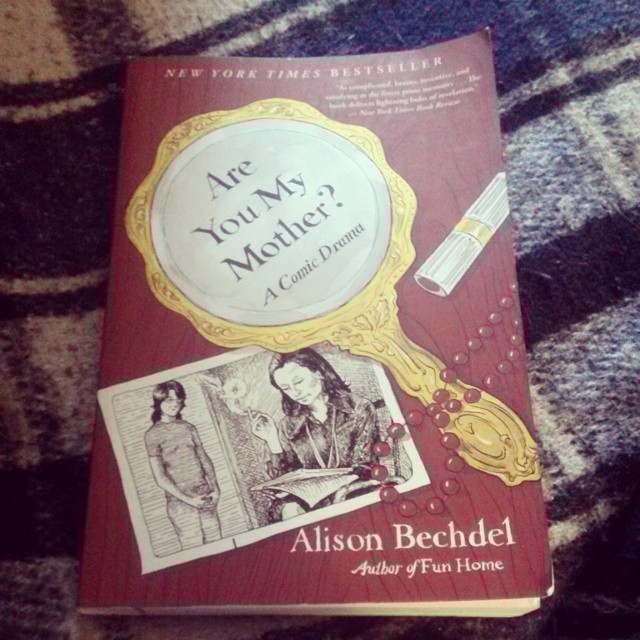
Having spent a good portion of my teenage years at a comic shop it comes as no surprise that I’ll seek out the occasional graphic novel. While there will always be a place in my heart for hyper-masculinity in spandex fighting crime my tastes have since drifted from the humble roots of adolescent origin. Alison Bechdel’s second graphic novel Are You My Mother? examined the complications between the author (as subject) and her mother. Without having read Bechdel’s first graphic novel Fun Home which explored her family’s dynamics with an emphasis on her father’s homosexuality and apparent suicide the context of the second memoir may be a bit difficult to follow, so I recommend you read both.

I was introduced to Fun Home during my first semester at Ohio State. A friend had overheard me rambling about Fitzgerald and The Great Gatsby, as I was taking a class that spent the entire semester examining Fitzgerald and his most famous novel. She told me about how Bechdel examined her father’s appreciation of Fitzgerald’s work and let me borrow Fun Home. It was an astonishing account of what felt ordinary. Composed of a ‘down to earth’ mentality I haven’t read in a graphic novel since Backderf’s My Friend Dahmer and an elevated use of language (at least… elevated when juxtaposed with my judgemental opinion of the comic book market), I felt compelled to read Bechdel’s second memoir.

With Are You My Mother? Bechdel explored the depths of the rabbit hole that she had only revealed in her first graphic novel. The fragmentation of time in which the narrative is structured reads much like a novel by Virginia Woolf. In fact the second graphic novel jumps ship, from obsessing over Fitzgerald in Fun Home (her father’s favorite author) to Woolf in Are You My Mother? (an author Bechdel claimed her mother had never read). The themes of modernism explored by Woolf are reexamined by Bechdel with a quality of reflection that reveals its universal tones. Lines such as, “Then I started seeing how the transcendent would almost always creep into the Everyday” (Bechdel, 33), remind me of Woolf’s novel Mrs. Dalloway, in that it is the transcendent forces of one’s own past that haunt the present and influence the characters to feel anxiety over any sort of future. In mentioning Woolf a total of sixteen times Bechdel sought to draw parallels between the author (Woolf) and psychoanalyst Donald Winnicott. Through the exploration of Winnicott’s work as it related to Bechdel’s relationship with her mother she came to conclusions on the complications regarding communication, “Your unconscious wants to express the pain you feel about your own lost innocence. But your ego wants to keep it repressed. So the compromise is anxiety” (Bechdel, 45). Such complication regarding communication is another reflection of Woolf’s work as Mrs. Dalloway’s husband Richard thought, “it is a thousand pities never to say what one feels” (Woolf, 116). With regards to another one of Woolf’s character’s desire to communicate such feelings, “some grief for the past holds it back; some concern for the present” (Woolf, 49).

This past semester I spent a lot of time studying the politics of gender regarding literary texts. From the Renaissance to Hitchcock critics of their time have often refered to the feminine as an object relating to man’s ‘top of the list’ desire that the ideal woman simply be a reflection of himself. Hundreds of years of criticism and that’s the correlating theme. But in chapter six of Are You My Mother? Bechdel explores the mirror from the point of view of an infant in the state of becoming self-aware, or at least separate from the entity of her mother. Though this created a sense of anxiety for Bechdel it brought me relief to see the mirror being used to present the dawning of an individual instead of imposing the demands of oppressive conformity.

The heightened prose and vivid characters have brought me to feel a sense of intimacy with the scenario. The ambiguous conclusion draws upon the sentiment of freedom, but what has Bechdel done with such freedom other than recoil into her own past as though she were a character out of a Woolf novel? The human condition is not as enduring as it is obsessive. It should go without saying that I’m looking forward to anything else Alison Bechdel may publish.


untitled

Robert: A Eulogy

All the world before his feet, and yet he chose to take a seat. How would one begin to speak of the person that was Robert Patrick Allton? His family, friends, and acquaintances (anybody who wasn’t a suit) knew him as ‘Bobby’ though I called him ‘Roberto’ after having known him a couple of years. My name is Justin Bauer and I’ve been a friend of Bobby’s for the better part of thirteen years. In that time I came to know him as one would a brother. In that time I came to know and love his brother Aaron, sister Amber, his father Brian, and his mother Robin as my own extended family. Bobby was charitable with his time, always willing to lend an ear to my seemingly irrelevant teenage problems. His attitude was predominately one of uplifting positive energy… He could turn a quiet melancholy room into an occasion with a mischievous word and his laugh, alone. His humor and compassion helped to establish feelings of brotherhood on my end. What’s special is that Bobby had that effect on people in general… it seems to make my experience a little less unique in that I know a great many of you feel in your hearts as though he were family. We’ve indeed lost a brother. The heart in that kid was not of this world. It was a majestic vessel that contained an endless “capacity for wonder” and a loving affection that ran as though it were on tap. Beyond the love of other people was his love of music. I first met Bobby with his brother at a local all ages concert hall on Saturday October the 13th, 2001. The actual music never mattered, Bobby could find a reason to dance… or on this occasion flail about in a mosh pit. Now Bobby and Aaron were big guys… compared to me they might as well have been giants. Taking note of the potential danger I made my way outside to catch my breath, and Bobby (a complete stranger) followed me into the evening air to make sure he hadn’t actually hurt me. That expression of compassion could’ve been viewed as transparent, but it wasn’t… we clicked… Turned out that his love of music extended to his playing of the guitar… a defining passionate trait that he seemingly inherited from Brian would simply be an extension of his gentle personality (though you wouldn’t have thought so had you heard our early attempts at making what we called “music”). A short conversation later over our shared taste for bad aggressive rock, and plans were made to meet again at Westerville South. It was at school that the ice was broken and I learned something else about Bobby that stood out in the form of his mind. He took honors classes, and was without question the smartest peer I had, and possibly the most humble (unless challenged)… he could be witty on the fly, and his grades were high, and yet he could still make time to be attentive to the needs of those for which he cared. He studied as though his memory were photographic (in other words… I don’t remember him studying much at all). As Amanda Moore said of Bobby’s academic abilities, “he made it look so easy.” Once in the setting of high school I learned quickly that he wasn’t a person to judge someone by their appearance… except for Aaron… this made for his diverse circle of friends. He was less than perfect, yet it was this human quality that attracted so many to his presence. His short life was a gift to those who knew him. We spoke once of childhood and I was struck in the subtle differences in the gift giving aspect of Christmas. I always had the kind of Christmas that I considered normal… waking up to unwrap that which your family had spent a good deal of time wrapping… From what Bobby told me his family decided such a step wasn’t necessary. All of the gifts for the children were set out in the open for the sake of reaction. Of that tradition Bobby told me, “there’s something magical about waking up with your family and seeing everything set out for you all at once.” I never really thought much of it, but now his explanation leads me to believe that Bobby lived in such a way; so openly. Once introduced, you knew Bobby. Those of you here now are quite telling of his magnetic qualities. I thank you for allowing me to share this moment with you. Through the circle of his community he will live on… and in the hearts and minds of those who remember such a gentle soul, know that there is peace for him. Image