Book Review: ‘The Blood of the Lamb’ by Peter De Vries

Great literature has often moved me to feeling, but never to tears until ‘The Blood of the Lamb’ by Peter De Vries. As described by the late Dr. Myers back in 2013, the book is, “a comedy about a man whose child dies of cancer.” With this spoiler in mind, I was still left unprepared for the impact of the prose upon my heart.

In truth the novel follows Don Wanderhope from his early childhood through the loss of his daughter, Carol. We don’t meet Carol until the final third of the book, but to that point we are exposed to the persistence of loss, and the complications of faith in the face of such experience.

The death of a young lover brings Wanderhope to question the overseeing doctor on a belief in God, and we are given a great insight to the nature of doubt,

“He just perceptibly raised his eyes, as if in entreaty to Heaven to spare him at least this. It took me some years to attain his mood and understand my blunder. He resented such questions as people do who have thought a great deal about them. The superficial and the slipshod have ready answers, but those looking this complex life straight in the eye acquire a wealth of perception so composed of delicately balanced contradictions that they dread, or resent, the call to couch any part of it in a bland generalization. The vanity (if not outrage) of trying to cage this dance of atoms in a single definition may give the weariness of age with the cry of youth for answers the appearance of boredom. Dr. Simpson looked bored as he ground his teeth and gazed away” (111).

Our narrator is a tragic embodiment of something that relates to the human condition. In describing the conflicts of his marriage he observes, “one of those subtle shifts of mood that emphasize how much we live by one another’s variable weather” (147).

But no matter the weight I’m well versed in tragedy. It is a subject matter or genre that brings me a peculiar pleasure. Morbid as it may seem, I delight in such material as it brings me the comforts of community. Upon fighting the ‘beast’ that is Carol’s leukemia, Wanderhope suggests that in the face of a terminal illness, medicine is, “the art of prolonging disease” (183), and that the notion of progress serves only to infect the wound, as, “Progress doubles our tenure in a vale of tears” (242). It is with the loss of Carol that Wanderhope is able to admit that, “Time heals nothing” (246).

The Blood of the Lamb is a hard-hitting piece of work, with a style of prose that tells more than it shows. It’s in this telling that we relate to such loss through empathy. Knowing that the entire book was leading up to the death of a child made it no easier to read the passage in which Carol was lost. I had to put the book down on several occasions, but in returning I always found more value than I had expected, and more emotion than I could handle at times. This was the kind of tragedy that goes beyond standard literary merit… this book moved me to tears more than once.

What makes it so difficult is knowing how closely the story mirrored the life of the author. It’s what made it all so authentic. His conflicting thoughts on faith, and his sharp observations of love, and life, and hatred, brought me to care in such a way as to suggest true feeling… My apologies, for this is not my typical review of sorts… I’m still dealing with the loss described on the page.

This’ll Feel Like Home-My Friends of Mumvies Boy

Disclaimer and personal opinion: the unique band name is derived of a story oddly close to infringing upon the copyrights of Friday the 13th.

My time with Mumvies Boy came with a predetermined expiration date, so I knew from the start that we’d share a limited series of moments. No long-term commitment allowed me to apply effort without any real pressure. I felt free to be myself, and play the parts as I saw fit. The core members consisted of the songwriting duo Michael Davanzo and Tommy Isaac, and their plans involved relocation after obtaining their respective degrees. With their previous drummer having departed from the Columbus area I was welcomed into their circle. Bias runs through this text, but music is best described in terms of taste… their approach to creating music is most tasteful.

I met Michael at Ohio State in the fall of 2013. Through our studies we became acquaintances, but through music emerged friendship. He was living with Tommy off of Hudson, and I met him when I finally came over to jam last winter… no strings attached.

While my drumming resume ranges from metal to musical theatre I’ve never taken part in anything that would fall under the banner of folk. Michael plays an acoustic guitar with a style that nods towards that of Lindsey Buckingham. Tommy brought flare to the table with erratic synthesizers, and the occasional complimentary ukulele. Together they seek to craft a sound that is a hybrid of minimalist electronic and folk.

The only Columbus show I played with them took place at the Space Bar in early February. At the time they had acquired the talents of Sylvie Mix to round out the group on bass. I remember the burden of concern that Tommy had expressed for that show. To consider a rhythm section that hadn’t ever gone over the songs together would sound the alarm of inadequate preparation, and yet the set started, we all clicked, and the crowd was none the wiser.

After that Sylvie departed for the endeavors of her own plate, and Mumvies Boy would continue without a bass player for the remainder of their time in Ohio.

We started tweaking songs and playing gigs in their hometown of Mansfield. The duo had acquired the vocal talents of local artist Erin Mason (to my knowledge she performs with a multitude of other acts, but I’m only certain of Hello Emerson), and the harmonies she and Michael produced gave the sound an extra layer of magic. I loved the charm of their music, and their Mansfield. Up to that point in my life I’d never experienced latte art, and assumed the patterns atop coffee cups to be the beautiful lie of Photoshop. Though I’ve seen pictures of such imagery online, the physical cup of chai tea amused me beyond what it had merited… a simple pleasure serves best.

The Mansfield gigs included the basement office space of a newspaper production house (of which there is a recording), the patio of a local brewery, and a larger outdoor stage that we shared with another Columbus act, Coal Fired Bicycle. Within the scope of that time I met their families, was a guest in the homes they grew up in, explored high rooftops, carousels, and developed friendships outside of a classroom setting. All of which happened to be more than I expected to take away.

With their departure I find a personal joy in acknowledging their hopeful spirits. They venture west in search of the next chapter of their lives, without burning the pages of previous endeavors. I write this only to reflect, and wish them well. I hope they settle into their new home with an ease that allows for their musical project to take root, and continue with the most limited of interruption. I believe in the horror story that is Mumvies Boy.

13226996_1788012838095872_7974681245444180948_n.jpg

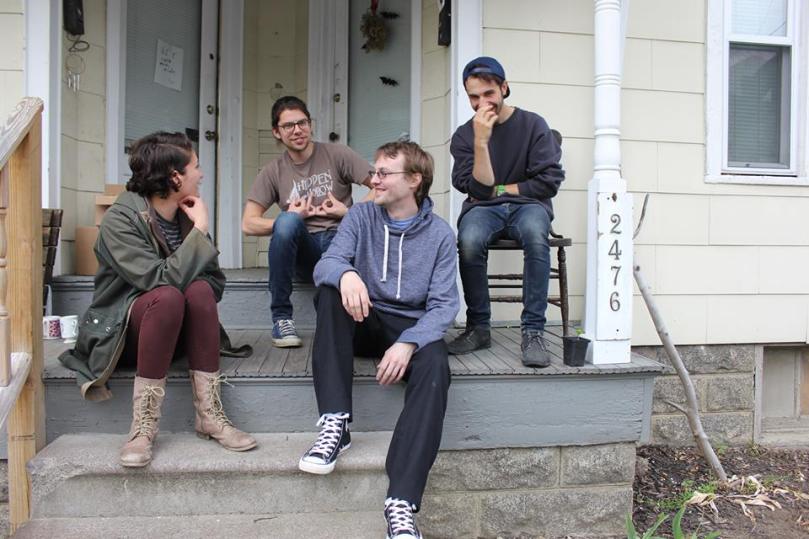
From left to right: Erin Mason, Michael Davanzo, my horror-show self, and Tommy Isaac.

Prologue for ‘Tin Foil Hat’

{The following is the prologue from my second book, Tin Foil Hat.}

Record Seventy-Four
On Stalking-Social Skills-A Prelude to Waste

Reflecting upon the first time I broke into Beatrix Kennedy’s apartment, I associate the memory with the euphoric sensation similar to the peace one feels beyond the climax of drowning. With her Twitter account informing me that she would be spending quality ‘alone time’ with the TV while she caught up on some shitty drama before the new season was set to premier the following weekend, I felt this was the moment worth seizing. Knowing she’d be by herself and binging in front of the screen allowed for an excitement that sent my heart into double time. I’ve been stalking Beatrix for a matter of years now, and I could not have fantasized such a perfect coincidence. How foolish of her to move back home…

It starts by seeking them out online. Social networking has made this easier than ever before. While B’s Facebook page was private and left much to the imagination, her Twitter account granted open access to her thoughts, feelings, and occasionally her schedule. Of course, I started from the beginning and broke the ice by reading through all one thousand three hundred and twenty-seven tweets that she had typed off since the winter of 2009. You can learn so much private information about a person when they post it for the world to see; no roommate, no dog, owns a gun, even the fact that she prefers women to men. I tell myself when she does love a man she loves a man with a beard. My routine of maintaining a shaved face would not be a deterrent, as her tastes were not part of what I considered important. Her online persona is so sarcastic, and beautiful, and selfish. It’s no wonder she’s single.


Once the target has been confirmed, it never takes more than twenty minutes to Google my way to an address. You really have no idea how easy it is; I should’ve worked for the government on some spy program aimed at watching civilians. As it turned out, Beatrix lived a ten-minute drive from my residence, and I visited the premises often. I even took the time to visit the leasing office, claiming to be moving to the area. This allowed me to indulge the specifics like the restrictions on installing a security system.

I had scoped out her complex a number of times before our first encounter. So much time spent in longing… She lived on the third story, which at first appeared to complicate how I’d go about breaking in. After a little inspection I realized that the stairwell was out of sight for the passerby and made for a prime jumping point to get onto the balcony that entered straight into the glory of her bedroom.

The best part of that humid Friday afternoon was making the drop to find that the city girl with a gun was under the assumption that her balcony was out of reach. Ms. Kennedy had left the door unlocked, and I slid the plate of glass to the left, pushed aside the blinds, and entered paradise.

Crisp air conditioning chilled me and solidified the layer of sweat to my skin in a way that contrasted the swamp-like atmosphere outside. That first sensation of cool air brought on such comfort that I almost forgot to press forward with my plan. Beatrix would be on the clock for another three hours… plenty of time to poke around and set up camp.

Dirty clothes were scattered about a carpeted floor in a flawed way that turned me on. An aroma lifted from the laundry and I brought a shirt to my nose to properly breathe her in. Pressing the fabric to my face, I closed my eyes and thought of her hair. Joy overwhelmed my heart as I dropped the shirt to the floor and continued inspecting the room. A queen size bed was located in the far corner with a few blankets carelessly discarded to the foot. Her dresser top consisted of old receipts and other such clutter that told me where she shopped and ate. A bookcase stood adjacent to the dresser and for the most part displayed the texts of her studies. Such curiosity on an intellectual level… could it be that I’ve found an equal? Nay, for she is greater than I am.

The only television was located in the living room, with all the bells and whistles of video game systems and surround sound. A walk-in closet peered directly at the couch that sat at the optimal television viewing position. At that point in time the closet had been left wide open. Clutter would be my saving grace, as I would drape fallen jackets and other loose garments over me and watch her watch her show. Even if she shut the closet I could still bear witness to her presence through the crack where the bottom of the door neglects to reach the carpet. Not too bad a view, at all.

The minor bits of filth in the bathroom brought a smile to my face. Upon entering I immediately seized the hairbrush and stripped it of the loose hair caught within, pocketing it for later indulgences.

I turned off my cellphone, ate a piece of wheat bread, and used the restroom well before Beatrix returned home for the evening. With building anticipation I took my place within the living room closet to wait it out.


She was so beautiful. That first audible sigh of relief that she let out caused my heart to swell with the genuine happiness that triggers the nostalgic wonder of childhood. Her business attire was quickly replaced with a loose fitting yellow t-shirt, the shortest of gray cotton shorts, and pure untainted white socks. I had never before seen much of her flesh above the knee. Such a sight complicated the conditions required to restrain myself. But I’m well disciplined.

Taking into account her negligence concerning the closet door, I would be treated to a much more desirable viewpoint than initially expected. What amazing luck. I stared directly at her, and she never caught my glare.

She spent a little time in the bathroom before emerging. Moving with the grace of divinity, she walked to the kitchen where she grabbed and consumed an apple. This display of her eating habits explains how she maintained a physique of such desirable conditions. I could not have fantasized this level of perfection. She is as an apple; the fruit I so desire to consume; the drug I need if I intend to sleep.

Upon assuming her position on the couch, Beatrix handled the assortment of remote controls to establish the ice breaking of the series-streaming binge.

Hours passed. The only interruption occurred due to hunger. In between episodes she ordered food from a Chinese restaurant, and it was delivered shortly thereafter.

Following dinner she removed more articles of clothing. The yellow t-shirt found its place on the floor next to the shorts. She was without a bra… I would have touched myself right there had it not been a point of compromise to my going unnoticed.


Shortly after two in the morning, she deviated from the show and put on something else to serve as background noise. From that point she proceeded to pass out on the couch.

I waited a solid half hour beyond my personal certainty that she was asleep before standing up as quietly as possible. I approached her resting body and hovered over it. The glow of the screen illuminated her pale skin, revealing the magnitude of its pull as a coveted and living thing. I looked upon her bare chest and considered a gentle caress… but the possibility of waking her would prohibit such a gesture. To compromise I ran my fingers through her hair and lowered my face to smell her before I walked out through the front door. Leaving it unlocked left me with the knowledge that something suspicious would be revealed to her, for she is not one to overlook such details.

I went home, and played guitar into the early afternoon. Then I masturbated myself out of the scope of realism and into a restful sleep. May have a new song in the works.

All of my love, -MT


BookCoverImage

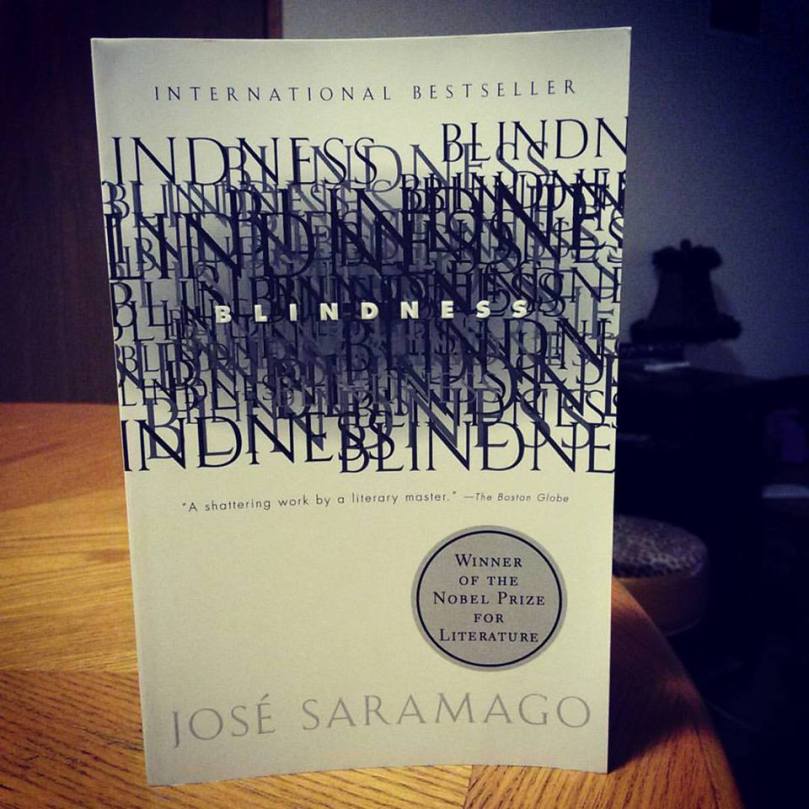
On ‘Blindness’ by José Saramago

An epidemic will typically start with an individual entity. Blindness by José Saramago begins with a singular unnamed character, strikes him with sudden blindness behind the wheel of his car, and spreads out from there. The science fiction motif follows through the hoops of genre expectation, but with a literary merit that won a Nobel Prize. The initially afflicted are quarantined, and the standard of living descends into the wretchedness of human depravity. There is little hope beyond the instinct that dictates survival, and yet our cast presses on in the fashion of a funeral march. It is a heartbreaking read that ends on a hopeful note that almost feels forced. I’m not thrilled that this sci-fi tragedy had an optimistic ending, but even with the resolution comes the reflection of what a simple lack will do to a people, and to what depths are we driven by want? It’s satire, so I dig it. Yet it is not only the story that makes this book special.

The text is a fluid thing. It is without question or quotation marks, proper paragraph breaks, or even character names. The reader is challenged to forgo the expectations of traditionally published storytelling, and to feel their way through the text. The narrator jumps through perspectives, breaks from the story to imply or manipulate opinion, and seems to play with the experimental atmosphere of modernity coupled with the stuff narrative theorists dream of. The rhythm is fun to read, but the density removes the notion that Blindness is intended to be a quick read.

12512528_10204488174477894_1592080864985141690_n.jpg

Puzzle Box: Product Review

I’ve exhausted the typical routes to earthly pleasure. Hedonism comes second only to self-destruction. Hard drugs? Whatev. Blood of virgins? I’ll tell you that it doesn’t preserve youth as well as I’d have liked. Horror movies? That’s where I found this most false refuge.

I’m a fan of the Hellraiser series. I’ve read The Hellbound Heart, and found that Clive Barker writes my kind of horror. For some reason I’ve watched all nine films. I recommend the initial trilogy. If you’re into punishing yourself I recommend them all.

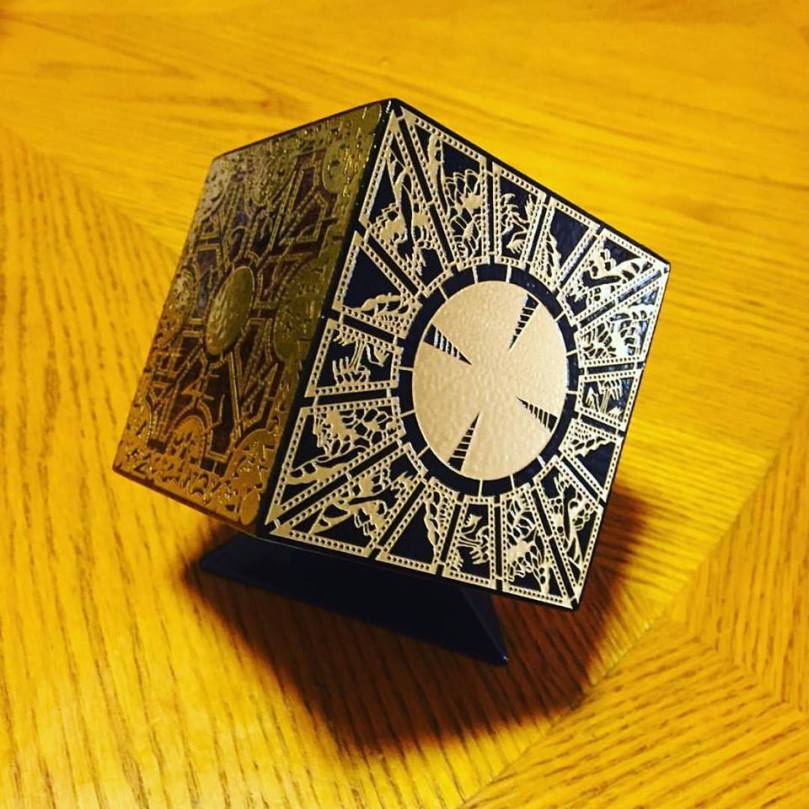
Stumbling through a series of sites I was thrilled to have found Lemarchand’s box. The stained wood and etched brass offers a sleek appearance. Searching for the space that would allow me to open the box I found only slick surface. I was confused. I carried upon my will the intent to solve the Lament Configuration, summon the Cenobites, and subject myself to all of the pleasures of spiritual suffering… but it was not to be.

Once I had discovered that I was in possession of a replica I wrote a strongly worded letter, to which I received no reply. Now I’ll take my complaints to the internet. I SHOULD BE IN SOME VERSION OF HELL, but I’m still here… The box now rests in my bookcase, and serves as a beautiful and constant reminder of a fantasy.

Now that I think further on it I may have gotten the real thing, solved it, and this reality is what I get…

12728770_10204663828549136_9192342625123214459_n.jpg

All kidding aside, it’s a beautiful piece of work. Fans of the Hellraiser series should do themselves a favor and check out The Puzzle Box Maker.

Kaleb Smith and the Power of Goofy Moments

Eight years ago I gave a terrible speech for a class on the moon landing conspiracy. At the conclusion of my rhetorical mess a peer named Kaleb Smith suggested to me that it was Pink Floyd who had first landed on the moon. He was an audio/video guy, yet the layout of the campus made it so that I hardly ever saw him. I knew then that I saw a character of comedic value, but I didn’t know how hard he’d have me laughing all these years later.

Social media isn’t all bad. Trolls aim to do their worst, but good people bring their best, and Kaleb Smith offers it up with consistent material. He posts video segments that range between twenty and ninety seconds a pop. While the themes vary the great consistency of his work is derived from how character driven it is. One motif of his work is that of an individual who has had enough, and lashes out in the great fury of emotion that simmers beneath the surface of most people. My personal favorites include a midlife crisis at the office, and a Medieval/fantasy showdown from the most foolish of knights.

On his Facebook page Kaleb says, “this world is sad enough,” which motivates him, “to slap a smile on its face.” He describes the snippets as, “Comedy through a little stocky tattooed man.” Through his work I see him playing against the tide of the sadness he interprets from the world. His characters struggle through their casual foolishness. Confusion and injustice drive many to their comedic outbursts. Smith’s feelings lend a hand to the stereotype of the sorrowful comedian, as one can catch a glimpse of the entity behind the characters.

He delivers exactly what he intends, as his punch lines play towards the darkness, but does more to expose the light. The entirety of his current catalog appears to be the work of a singular person, juggling the writing, acting, and technical duties. It has an honest DIY vibe throughout, which I find adds a peculiar charm to the comedy.

Of course it comes off with a lightheartedness that I’m failing to address, here. Smith seeks to make us laugh, and often it’s a simple procedure that he administers with the careful hand of comedic madness. While some of his clips highlight the tensions and conflicts of human interaction many are fun for the sake of it.

Yet all artists develop. Producing media comes with the idea that one’s methods would sharpen, skills continue to develop, and equipment gets replaced with better equipment. Any given scenery in his work assists in giving Smith that DIY charm, but his most recent production is the first installment of the ‘KPDragon Show’ which has the sleek giveaway of a green screen backing him up. Watching it seemed to offer the honest jump in development, and took nothing away from the appeal of ‘lower’ quality productions.

The five-minute segment seems to be made up of various sketches that are strung together. Smith makes social commentary by breaking PC boundaries in a way that plays on satirical traditions, and even concludes on one character suggesting literature to another after a ridiculous tirade.

The great sampler:

https://www.facebook.com/plugins/video.php?href=https%3A%2F%2Fwww.facebook.com%2F871469736228573%2Fvideos%2F1022727481102797%2F&show_text=0&width=560

‘No Net’ by Noah Nichols: A Review

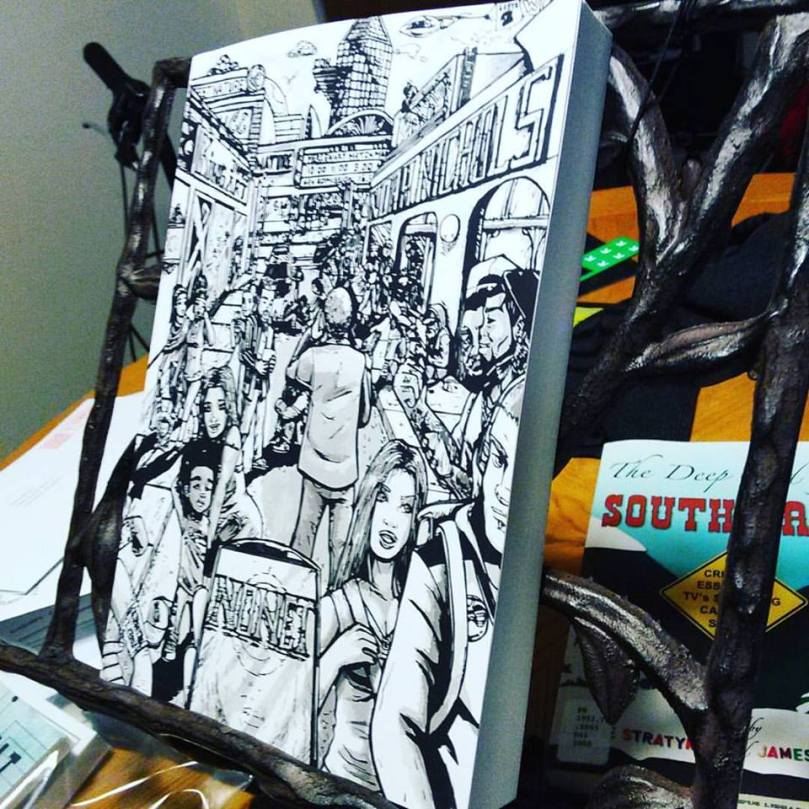
This is a collection of loosely connected fragments set to a sci-fi backdrop where the Internet is gone without explanation, and the book explores a series of events under the influence of the commodity’s sudden absence. Without the pacifying stream of information characters are subjected to chaotic conditions and society is compromised through violence. The opportunity for social criticism is abundant, and while the collection plays with different genres it is satire that stands out to me with the most clarity. The notion of a social problem as a result of Internet addiction is a motif that the narrator wants to expose. Nichols brings us characters who specialize, “in enabling each other’s deficiencies” (121), and those deficiencies are often expressed through the exposure of our addictive tendencies, and the anxiety of distance. It is the shock of sudden change that results in the chaos of impulsive reaction.

One condition of modernity is nostalgia. A collective longing for the good old days makes up a significant part of mainstream thought. Everyone my age wants to relive the 90s for the rest of their lives. Yet the idea that, “America would be ready to actually live in that nostalgia” (28-29) is met with the social chaos of sudden change.

Our character focus shifts between chapters, so the cast is grown quickly. What makes the stories special are the moments where we return to earlier characters, and delve further into the complexities of this small world. It is this novel-like quality that lends itself to a proper rising action and resolution through the scope of loosely connected short stories. Between the satire and haunting resolutions we’re faced with social critique and the consequences of familial bonds. It is the expression of character and conclusion that reveals the great takeaway that’s built upon the foundation of the earlier chapters. While the emotional payoff is delivered with the conclusion I don’t intend to take anything away from the earlier chapters. We are offered cause and effect, action and then tragedy. Nichols delivers the complication of our human condition upon removing that, which has, “separated us from people,” (295).

My Internet Done Up and Went Away

12743589_10204622300350957_5375134994606488930_n.jpg

The White Noise of Our Lives

I took my sweet time in reading White Noise by Don DeLillo. The aim of satire requires that I slow down, and this novel offers a great amount to reflect upon. DeLillo writes in a stream of consciousness style that rambles on occasion, but for the benefit of exploring the follies of his condition. The motifs of consumerism culture and fear of death are rampant and connected in a way that our narrator never identifies. While Jack Gladney doesn’t come to this conclusion on his own the text presents this connection just outside of his grasp. His thoughts repeatedly stumble through the process from fear to consumerism, “I am afraid… I am taking no calls… The supermarket shelves have been rearranged” (325). Long stretches of elegant and explanatory prose are interrupted by an advertisement or reference to consumer culture. The following segment breaks the ice on the lives and marriage of Jack and Babette,

“It isn’t that she doesn’t cherish life; it’s being left alone that frightens her. The emptiness, the sense of cosmic darkness.

MasterCard, Visa, American Express.

I tell her I want to die first” (100).

This interruption fails to cut the tension of the moment because it’s the idea of this ‘white noise’ that occupies the background of our lives that serves to reinforce our collective fear of want.

While Jack and Babette obsess over fear the novel begins with a confidence in lifestyle. Their middle class existence convinces Jack that he is above consequences reserved for those below the poverty line, “I’m the head of a department. I don’t see myself fleeing… That’s for people who live in mobile homes out in the scrubby parts of the county” (117). This is the second time that Jack expresses tragedy is for the poor. Once the catastrophe contaminates their lives secrets are revealed, and familial conflicts emerge at the surface. It is a book that suggests we are much more the products of the culture than we’d care to admit. Comfort is reassured by the belief that a, “slowly moving line (is) satisfying,” because it gives, “us time to glance at the tabloids” (326). He describes the comfort that the papers offer, “Everything we need that is not food or love is here in the tabloid racks. The tales of the supernatural and the extraterrestrial. The miracle vitamins, the cures for cancer, the remedies for obesity. The cults of the famous and the dead” (326). But these comforts are crafted through faith in a vain hope.

DeLillo made me uncomfortable with his truth. Such is the aim of good satire. These themes took me back to my teenage years when I was first introduced to the connection between the themes. This book has been a terrifying reminder that mainstream media is, “a campaign of fear and consumption… Keep everyone afraid, and they’ll consume” (Marilyn Manson). That is the culture of our lives, and DeLillo identified this fact with harmful clarity.

Novallo II: Portrait and Review

There’s a group of musicians I must acknowledge, for they’ve had my attention for some time and I find myself impressed by their efforts over and over again. The sheer talent to be heard from Novallo is nothing short of my unfair expectations, and their second release has something for everyone.

I’ll admit to a bit of a bias here, as I’ve known these guys for well over a decade. I met the individuals that make up Novallo over the course of my high school experience, and their continuation is something I deeply appreciate. But my bias is of no extended value; the material speaks for itself.

Brandon Johnson played guitar in my basement every Friday during the early years of our musical journey. More than that, he always brought a positive attitude to a place that was wrought with teen angst. Consistently the one to turn a dull moment into a party, Brandon had an endless personality that was supplied for the benefit of those around him. He’s pretty goofy, but in truth he’s got nothing on Salvatore.

Nicholas Salvatore is the only drummer I’ve ever convinced to haul his kit to my place for some duel drummer action. Some of it was messy, other moments memorable. He’s a top-quality metal drummer with an ear for funk. Aside from music he’s nothing, if not fun. He is the goof of the band, and it’s been a pleasure to watch him behind the kit all these years.

I first met Gino in an art class. When he took up the guitar I would hear him playing familiar riffs by System of a Down in some concrete basement setting. He had solid chops for the developing beginner, and these initial moments surfaced long before I would come to recognize the drive behind any potential thing to which Gino would set his mind. Never the one to settle on a singular endeavor Gino went to college for visual art/media (explaining one half of Novallo’s unique visual appeal), and buried himself into the obsessive hobby audio production. He’s truly the brains behind the operation, and his many hats have left him sought after by a multitude of artists seeking his production expertise, as he’s turned the hobby into his career.

As for Sam Gitiban, he was the dangerously quiet one. While the other three were high school peers they sought a vocalist on Craigslist, risking their lives in doing so. At the time Sam was majoring in art at Ohio State (the second half of their visual arts department), and while he’s the most reserved of the band (in a social setting), his vocals bring a sound to the music that stands out on the new EP. I’m relieved that this social experiment has resulted in their partnership, but I’m still not convinced he won’t up and kill the lot of ‘em.

When they first appeared Novallo did little more than ‘pay-to-play’ gigs, where they unloaded tickets to personal friends. Shows at the Newport were good for the ego, but did little else to generate a sense of belonging to a musical community. The early sound reflected their metal based influences of the time, but included a Middle Eastern flare that made the material stand out. It wouldn’t be until Gino took to experimenting with audio production that the vision for the band shifted to a more technical focus.

While Gino developed into an audio engineer of reputable merit, new material accumulated for a professional debut release. The initial EP was an attempt to do what most bands do on their first professional-level go-round: showcase their talents within the given parameters in an attempt to capstone the genre. And it was a fantastic collection of songs, but with time comes reflection and the desire to do other things. They’ve been thirsty to do something unique, and they required new methods of getting to the bottom of their well.

This is where the new EP comes into play. With three years between this release and the first EP, Gino has only advanced on the production side of things, and the band has progressed in both songwriting and tastefully deviating from the confines of genre. Novallo II still comes off as something I’d associate with metal and what some people call djent (is ‘djent’ still the word being used for technical metal?), but the means by which they digress from the norm is extraordinary. One major difference between this and the first EP is the lack of growl style screaming, making the music accessible to a wider audience. Guitar production surfaces as what I’m assuming to be Gino’s specialty, as the entirety of the EP substitutes synthesizers for guitars effects, and the primary rhythm guitar sounds go back and forth between a sharp biting metal tone, and a sound that represents the stabbing noise of EDM. There are swing, jazz, and pop segments that are downright danceable. If you’re considering some unique new music, I can’t do enough to adequately recommend Novallo II.

Novallo on Bandcamp

WAKE

The album opens with an intro track where I’m being lectured by a version of the Stephen Hawking voice that’s layered with a distortion. I believe the sound to have originated in nightmares. This takes place within some sort of ambient tunnel/vacuum soundscape. I’m not sure if it’s meant to be the fragments of a dream before awakening, but the choir of Sam’s vocals that come in at the end feels like opening my eyes to the following expedition.

BETTY PHAGE (Goes to Bronxton)

A jumpy hybrid of metal and swing is done in the most tasteful manner I’ve heard since Marilyn Manson’s Doll-Dagga Buzz-Buzz-Ziggety-Zagg, but with a greater emphasis on exploring the elements of swing. Yet the bridge nearing the second half of the track is of some of the hardest metal on the EP.

1 AM

Opens with that EDM guitar sound as though it were coming through an AM radio. Breaks into a straightforward segment that is held up by a sequenced undertone. Sam plays with rhyming vocal patterns that make me believe he’s from a different time before the track gives way to my favorite chorus on the EP. I feel the genuine groove of a perfect pop song, yet the chorus doesn’t compromise in bringing you this moment. I’d argue that the chorus offers the highest energy moment on the track, and that stands in the face of the heavy EDM sounding guitars of the bridge.

SIDEWAYS BIRD

What a kind way of wording what I’m interpreting to mean dead woman. This song isn’t new, as an official music video for this track was released shortly after the first EP in 2012. It’s probably one of the most solid tracks regarding adherence to genre expectations. It stands as a solid tech metal song in spite of the synth lead (actually played on guitars) that runs on and off throughout.

GIVE GRAVITY A CHOICE

This song contains my favorite verse on the EP. The mellow guitars aren’t trying to be overly technical here, and it makes for an atmospheric experience that conveys a welcomed change of pace for the rhythm section. The bridge in the second half of the song brings the distortion, but maintains the integrity of the piece. In terms of production and songwriting, I’m conflicted in declaring a favorite song between this track and 1 AM.

WHITE PHOENIX

Opens with an 8-bit riff that reminds me of a jumpier rendition of the intro to I Am. It’s as though I’m playing Zelda on speed, except I’m not waiting to die. Then the 8-bit morphs into the EDM style guitars as the rest of the band jumps in on a song that’s competing with ‘Sideways Bird’ for the title of heaviest song on the EP. The piano bridge takes the song in a calmer direction that allows for the most playful bass segment on the EP, before launching into an aggressive final stretch.

SLEEP

An orchestral string arrangement steps into the aftermath of White Phoenix in such a way as to have you believe this sleep will be peaceful. No such luck, as a distorted electronic noise surfaces to establish an uneasy atmosphere. This unsettling return to the vacuum of sleep is met with a fragmented clip of the ghostly Stephen Hawking voice. Then it all cuts off.

a2823426355_10

Of Sunshine and Bank Heists: A Review of ‘The Sunshine Cruise Company’ by John Niven

Niven delivers hilarious satire juxtaposed with genuine heartfelt moments. Such is typical from this writer; everything he has published is fantastic in one light or another, yet this most recent effort is his most commercially accessible as the emphasis has shifted away from a protagonist of deplorable merits. Empathy is established without the effort required for the typical vice figure. The Sunshine Cruise Company is Niven at his best, and I don’t offer those words lightly.

The book opens with Susan Frobisher preparing a violent moment for the stage. She has been working with her local theatre for a matter of years, and we meet her in the midst of creating a makeshift eyeball for the gouging scene in King Lear. This Shakespearian reference serves as a thin veil over the topic of aging, which is satirized throughout the novel.

Susan’s husband is an accountant, and they’ve been married thirty years. He’s the solitary overseer of their finances, and has a secret flat that has been converted into a sex dungeon of sorts to accommodate a secret lifestyle. When Susan is called by police and brought to the flat to identify the body of her husband under the glow of a blue neon sign that spells out the word ‘RAPIST’ she comes to find that his infidelity serves as the means to much larger problems. Barry had Susan convinced that their finances were of stable conditions, which couldn’t have been further from the truth. Surprise debt brought Susan into the reality that the bank sought to take her home.

Susan Frobisher and Julie Wickham have been the best of friends since adolescence. While Susan seemed to have had the good life with Barry, Julie can’t help but to feel some gratification that Susan’s misfortune has brought them closer to being equals in terms of monetary success. Julie works in an assisted living facility, and carries the regret of past failures dictating her contemporary circumstances. We met Julie at age sixty mopping up urine at work, wondering how such a low point has become her norm. The one friend she has made at work is the wheelchair bound Ethel. Ethel is crude, speaks her mind, and has the richest backstory that surfaces throughout the narrative in bits and pieces, “I was a singer… There was always work in the chorus line” (88). Ethel serves as the incarnation of Niven’s id (he always has a character to serve this indulgent/comic purpose). She says whatever she wants often to the disgust of her peers, and is damn funny in addition to the value of her insight. It’s when Ethel offers the advice, “it’s better to regret something you did do than something you didn’t” (89) that ultimately convinces Julie and Susan to go through with their plan to rob their small town bank and flee the country.

The episodes that follow are full of action, tension, comedy, and the tragedy of a past that is forever creeping into the present. Presented in third person, Niven highlights different characters in alternating chapters in order to present the parallel story of English police, as they make for consistent comic relief in clashing with their French counterparts. Again, the book delivers. I made the mistake of reading parts of the book in public, for I know I was caught laughing on more than one occasion.

61Qw+5LN1nL