Lonely Legend:Film Review

You’re never obligated to be a fan when a friend makes a piece of art. I hold that uncomfortable truth close to my heart as a means of protecting myself. In spite of this, I find myself giving a chance to anything a friend produces…just the kind of consumer I am.

            Noah Nichols is a friend of mine, so up front is an admission of bias. We met in 2007 when his band came to record at a studio where I was interning. We lost touch after that, but somewhere around 2016 he stumbled upon one of my books and remembered who I was. We became friends over our shared pursuits and he has edited two pieces of my written work.

            Aside from writing and music, Noah has decided to embark on the medium of film. He spent a great deal of time making this movie in the midst of personal turmoil; a second upheaval of his life in as many years had landed him in depression. He threw himself into this project as a means of staying distracted, and it worked to a degree. This film project outright consumed him. When he announced the premier, I made plans to be there.

            Lonely Legend is a movie that follows a would-be serial killer simply named Impervious. This masked character is tasked with carrying on the family tradition of surfacing in a fifteen-year cycle to hack and slash his way through a small town. His father before him had been this killer, but the torch isn’t so easily passed.

            Our contemporary Impervious wants to live up to familial expectations. He wants to be this killer, but every little interaction with a would-be victim brings out empathy that prevents him from being violent. When simply asked what he’s doing with a crowbar, or waved at from the side of the road, Impervious drops the façade and recoils.

            Impervious has pressure put on him by his family. At one point he tells his father over the phone, “I’d rather take care of animals than kill people.” This admission is dismissed as being irritably hungry, but as the film continues it’s all too clear that this incarnation of Impervious isn’t up to the task.

            The only notable violence in the film is our main character letting off steam on a teddy bear or inflatable toy he carries around with him for companionship. These instances reveal our would-be killer can separate his projection of friendship onto an object from the real people he cannot bring himself to harm, in spite of the genuine care he has for these inanimate companions.

            Impervious holds a lot of anger over expectations placed on him to continue on with family tradition, when all he seeks out is a more peaceful experience. He goes on walks with nature, lets out his aggression in ways that don’t hurt others, plays music/indulges in art, and gives himself permission to, “go to a field and be sad.”

            There’s a longing for something more than the predetermined horrors that are expected of him. He breaks into a number of houses when no one is home, presumably to follow through on his “mission,” yet he can’t seem to follow through.

            There’s comedy as well. Situational mishaps arise as Impervious tries to find himself while out and about. It bridges the gap and showcases a most human experience from a character built to be a monster.

            The soundtrack was fantastic. Music helped to convey the mood perfectly, and while Noah could’ve filled out the film with his own music, he pulled resources from every direction as a means of conveying the mood as it fit his vision.
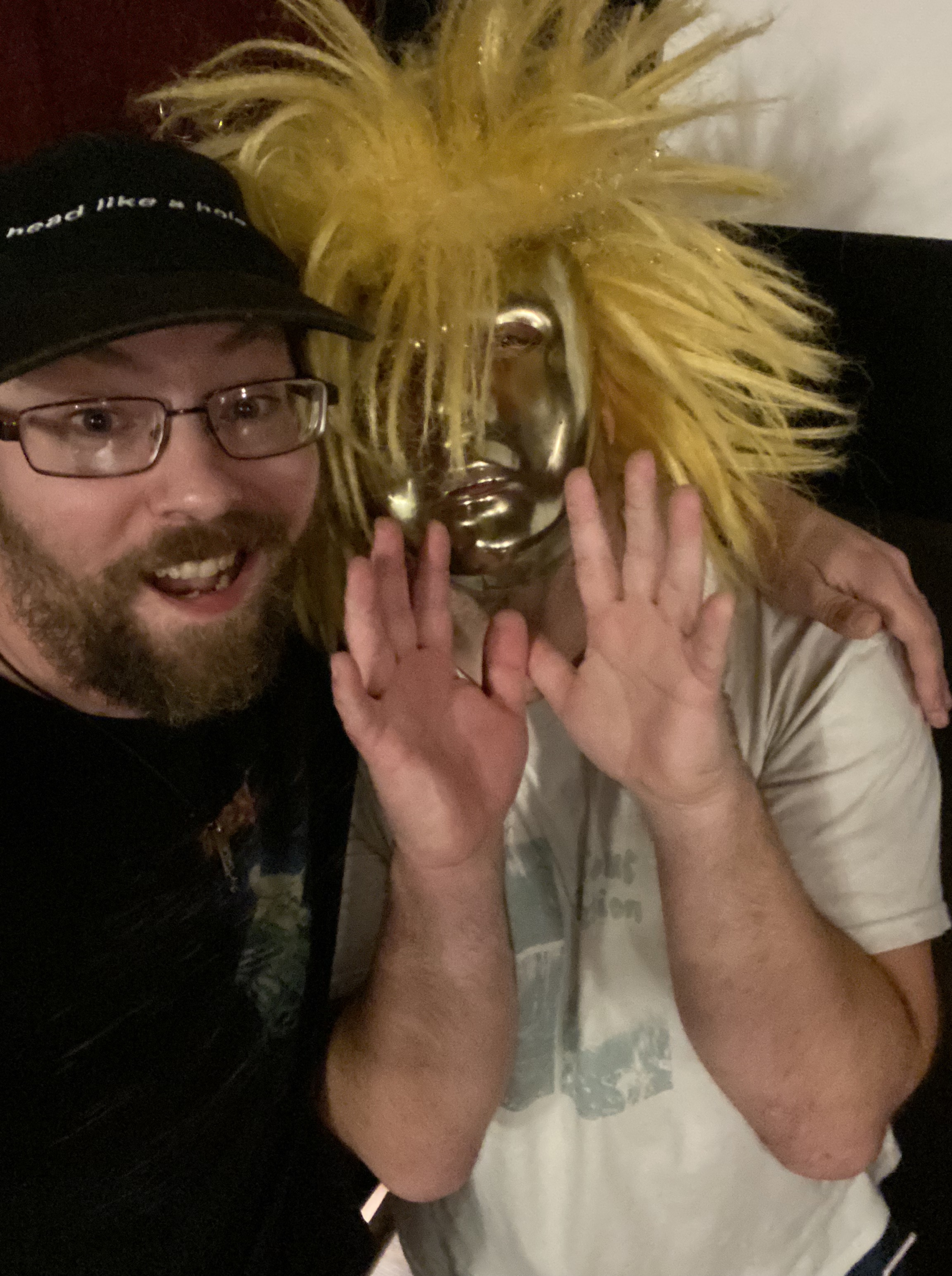
Pictured: Myself with Impervious (Noah Nichols) at the premier of Lonely Legend in Columbus, Ohio.

Violence and Entertainment: Some Thoughts

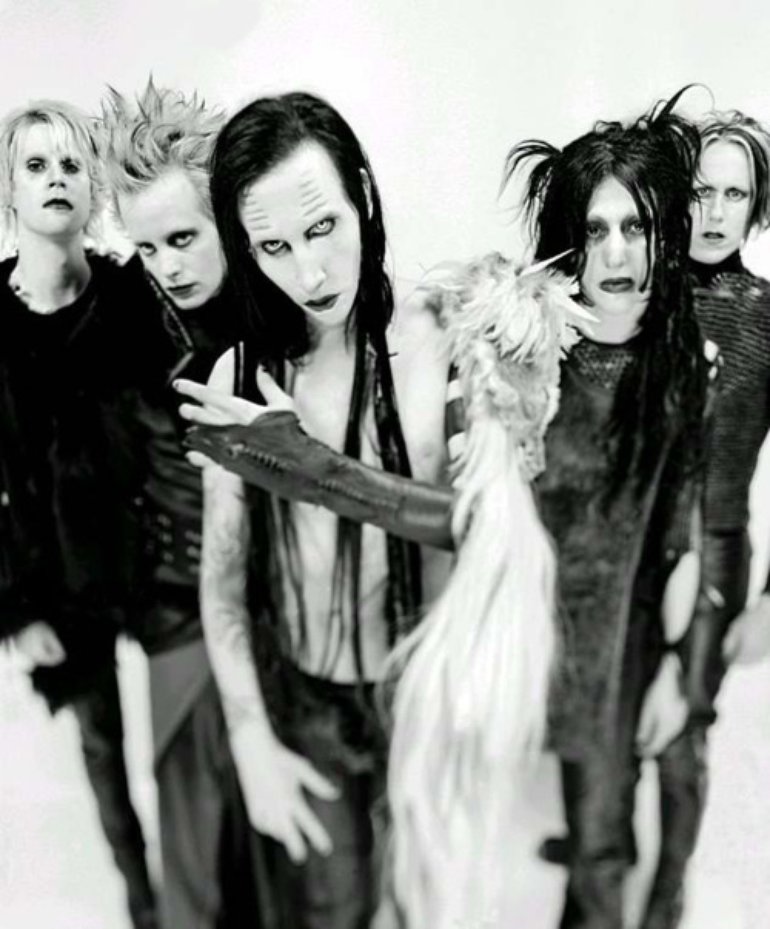
In the wake of the commonplace mass shooting that occurred at Marjory Stoneman Douglas High School, blame has been thrown in every direction as a means to pivot away from any real action. Mental illness is further stigmatized while the notion of gun control is entertained, but not considered with honest intent. The president has fallen on the age-old rhetoric that blames the glorification of violence as presented in our media, specifically video games and film. These mediums aren’t to blame for the ills of society. I recall a similar instance from my youth, one that involved casting blame on a rock and roll star following the mass shooting at Columbine. Video games (Doom) and films (Natural Born Killers) were scapegoated as well, but Marilyn Manson became the figure of cause, or in his own words, “the poster boy for fear,” in an arena where the artist had no business.

edf198eb4438486ea8d01bca674cc408

Violence in entertainment has been normalized through the ages. Shakespeare had to compete with a bear-baiting arena that stood within walking distance from The Globe, where dogs were set against bears. Violence is an unfortunate byproduct of the human experience, to which entertainment falls short of reality. Does entertainment glorify the vices of violence and drug dependency? Absolutely. Can entertainment have a psychological impact on the person? Studies conclude our violent media doesn’t make a violent mind. I’d ask the POW’s whom the United States government exposed to singular songs on repeat at volumes too great to withstand, but that’s use of media as a means of torture. I guess I’ve never met a person who watched Breaking Bad, and decided to try their hand at cooking crystal meth.

Still, I will say that though some media is horribly toxic (especially without proper context or critical thinking skills), mass shootings don’t stem from a ‘life imitating art’ philosophy. No one kills a police officer because they could in Grand Theft Auto. No one shoots up any array of social settings because of the music/images associated with Marilyn Manson. Such arguments serve only to pivot from the issue, with the intent of leaving it unaddressed. Jim Carrey possibly disagrees with me, as he decided to not promote a violent film he had acted in, following the shooting at Sandy Hook Elementary. He drew parallels of self-importance, and saw his participation in the production of the film as something bigger than what it was. While I admire him wanting to bring attention to the issue, the source of his conviction was one rooted in error.

There’s a greater cultural problem that won’t be solved through a singular idea, and Americans need to acquire the skills of civil debate if compromise is to be reached. Without adjustment the shootings will continue. Even with adjustments the shootings will continue. Resolution won’t come overnight, and the first steps shall not yield instant results. There are growing pains ahead if we are to grow from these events, but the ‘pivot blame game’ falls on the same old arguments that have-time and time again-been reduced to falsehood. Video games, music, and movies entertain, and at times provide a coping mechanism by means of catharsis. Should we ban the work of William Shakespeare before the influence drives more teenagers to kill themselves and each other?

shake

Greater insight is necessary. What of violence in the real world? News programs use significant portions of their broadcasts to examine violent events within any given community, and break them down in such a way as to have the viewer feeling relieved. They’re left with a feeling of, ‘at least I’m not that bad,’ which serves complacency. They speak of wars in foreign lands with a particular cruelty, and equate their human condition to a sordid less than. Further down the pipeline is a subculture that celebrates the tragedies our society bears. Before the shooting at Virginia Tech, the shooter made a video where he paid homage to the school shooters that had come before him, even naming a few. When the Vegas concert shooting left 58 dead, and 851 others injured, particular online message boards discussed how he’d fallen short of the ‘high score,’ by referencing the mass shooting in Norway that left 80 dead in 2011. Violence is encouraged in a way that mimics the most morbid of support groups. There’s enough real world influence to claim our entertainment is not as harmful as some would allege.


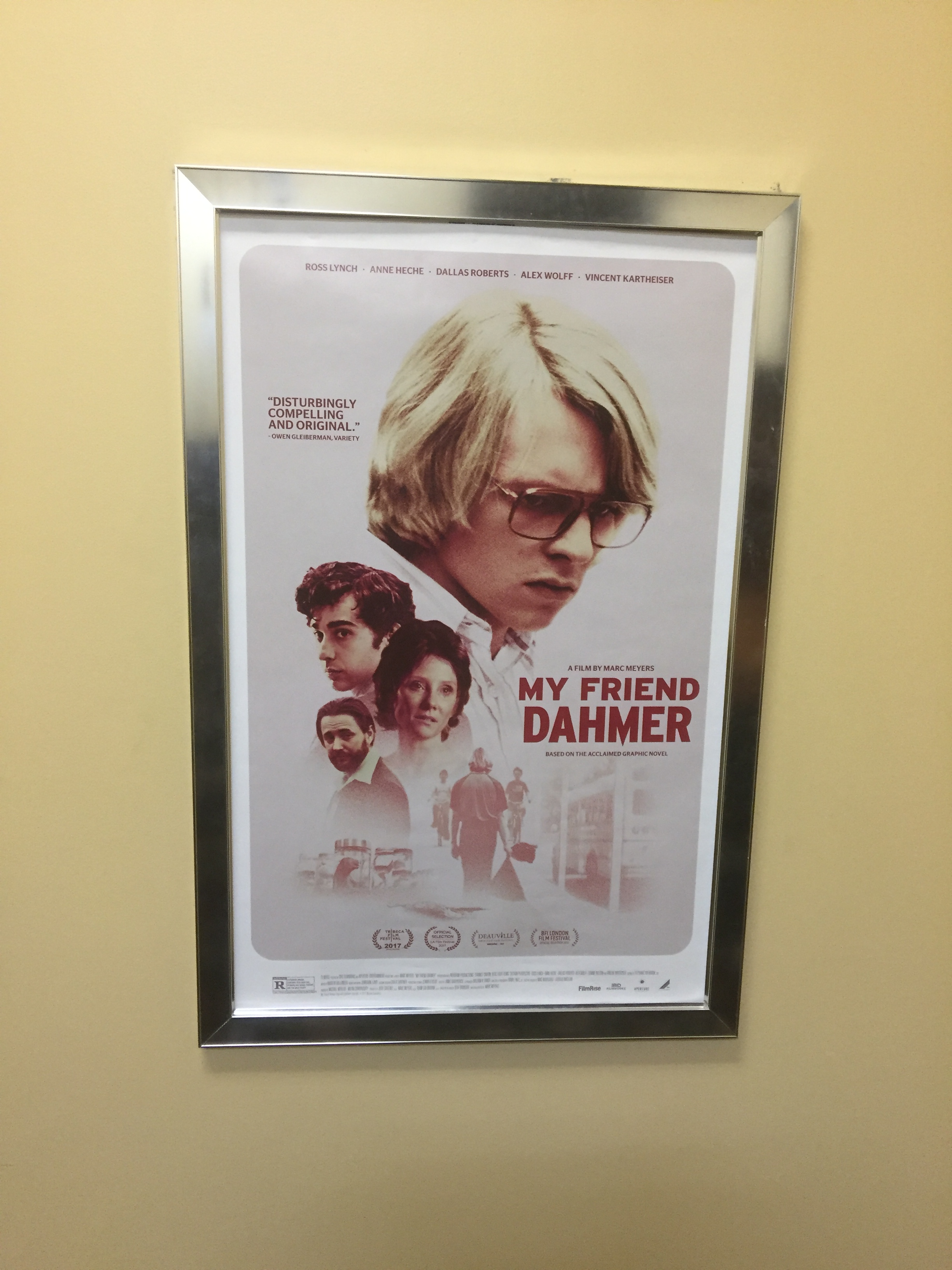
Film Review: My Friend Dahmer

With a baby on the way my wife and I decided to get out for what may be our last ‘out on the town’ date before our girl arrives. There was no consideration of any other film, we were going to see My Friend Dahmer. We had to drive an hour+ out of town, as this film hasn’t the reach of a typical Hollywood blockbuster. We arrived in Athens, Ohio to find the streets flooded with college students, but had little trouble navigating through the hoards of bobcats.

Anxious to get our seating preference we were the first in the theater. Back row: center… as always… if it can be managed.

The film delivers much of the same that Backderf’s graphic novel of the same title had to offer. It reveals the complications of closeted homosexuality in a ‘we don’t talk about that kinda thing’ environment, a distant/hostile home life, and the escapism of chronic alcohol abuse. Dahmer isn’t a character that stirs much in the way of empathy, nor does the movie glorify his violent crimes, instead I feel that the movie seeks to show a cultural failure to help a troubled youth. The ‘friends’ Dahmer made along the way only catered to his company as a means of exploiting his antics for their own entertainment. They put him in situations, pressuring him to act out, and reveled in the results. It’s not the most flattering way Backderf could’ve presented himself, but the honesty draws me in more than the prospect of fabricated friendship.

Backderf’s involvement in Dahmer’s life was amplified for the sake of making a more cohesive film, while the graphic novel was more fragmented in a way that filled the gaps with assumptions. Backderf’s comic suggested they only got together outside of school on one occasion, and that’s not enough for a full length feature film. That’s the main difference between the two mediums. Aside from this issue, Dahmer’s mother is presented with a particular mania of sorts that wasn’t expressed in the graphic novel. The comic book shows Mrs. Dahmer in a depressive state that borders on catatonic, while the movie explores her mental instability through argumentative highs. I also wish that the prom scene had included Dahmer’s awkward parting handshake with his date at the end of the night. But these gripes are for the purists who want a book and film to be exactly the same, and I’m not that kind of fan. For what it is My Friend Dahmer is an honest prelude to tragedy that is tragic in an of itself. Dahmer Poster.JPG