The Handmaid’s Tale: Book Review

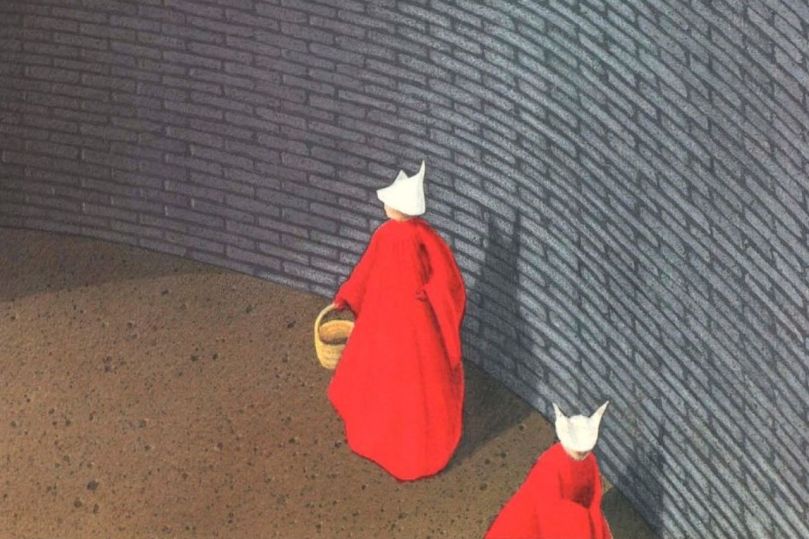
What makes dystopian fiction frightening is the prospect of truth. When I think of the genre I ponder over themes of science fiction, with tendencies that lend themselves to some kind of futuristic setting. In The Handmaid’s Tale, Atwood offers us something that feels modern, and for that the story feels as though it could happen today. It’s not the notion of oppression through the vessel of a futuristic specter, but a hyper masculine insecurity that treads the nostalgic waters of a more outspoken, forceful, and violent patriarchy.

Our main character is a handmaid named Offred. She isn’t legally allowed to read, and any rhetoric or conduct beyond appropriate protocol could result in execution. Her primary social value is rooted in her potential to become pregnant. It is not a comfortable existence.

Offred is summoned for private and illicit meetings with her Commander. With brevity she entertains the thought of free will, but concludes that, “to refuse to see him could be worse. There’s no doubt about who holds the real power” (136). Offred understands the conditions of her scenario, and stimulates the notion of her own interest, “To want is to have a weakness. It’s this weakness… that entices me… I want to know what he wants” (136).

It seems fitting that this book would take a place in our social consciousness, but I’ll leave political/social parallels up to you. Atwood is nothing short of fantastic.


handmaid.0.0

I’m Thinking of Ending Things: Book Review

There’s a great deal I want to discuss with regards to the book, the majority of which requires me to spoil the ending. So much is tied up in the twist, and to only talk about the psychological buildup comes off as a sales pitch.

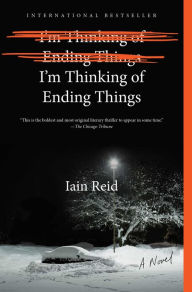
I’m into tragedy. A title like, “I’m Thinking of Ending Things” carries implications that I don’t feel need to be spelled out. The entire first page carries an ambiguity hinting of these thoughts being suicidal in nature, but is cleared up by our unnamed narrator describing how she intends to break things off with her boyfriend, Jake. I felt let down. It wasn’t outright dark enough compared to my initial expectations.

Things get weird, and the buildup is fun. You’re let in on glimpses of some tragic violence between chapters. Something bad is going to happen, but the where, when, and who is kept off of the table for the purposes of suspense. Reid knows how to develop a plot, and he knows story structure.

The book is crafted just fine. But the ending… The last twenty pages of the book and all I could think was, “It’s ‘Fight Club’ all over again.” The narrator is a figment of fantasy, a woman Jake met once. Jake has parents who appear on the page, but they’re long dead. The entire episode is of an imagination longing to compensate for want. Jake’s academic ambitions have been left in the past, he inherits the home in which he grew up, he is alone, and goes through a fantastic detachment that leaves him (and the time frame of the story) at the height of Jake’s potential. This window of time that places Jake in his late twenties to early thirties is subjected to the reality that thirty years have passed since the events of the story world. Has he and the narrator not aged in his fantasy? This obsession with youth and age shows that Jake is not as detached as the general narrative would have you believe. It’s much more depressing than your average thriller, but is painted as such because an alternative angle would turn off a good portion of the audience.

It’s not about having an original story, but telling it in an original way… I’ve heard similar expressions regarding storytelling, so I can forgive the ‘Fight Club’ ending. Where I take issue is the youthful angle of the fantasy, without which the entire narrative (as it is) cannot stand. The character is obsessed with the past, and to a degree I really dig it.

What if we knew Jake was in his sixties the whole time? What if we knew he was living in a fantasy world to make up for whatever he lacked? What if the title didn’t play with our preconceived notions about language, and was honest from the starting point? The book would’ve been entirely different, maybe less commercial, no over the top twist, but it would’ve been honest. A partner does not stability create. Jake is not honest with himself, his problems are not rooted in loneliness, but in serious mental complication by which his isolation is a side effect. Jake was always going to self-destruct, and a romantic partner would’ve made no difference, but it’s nice to pretend.

It was a fun and easy read, but I’ve got mixed feelings about the ending.

Ending things.jpg

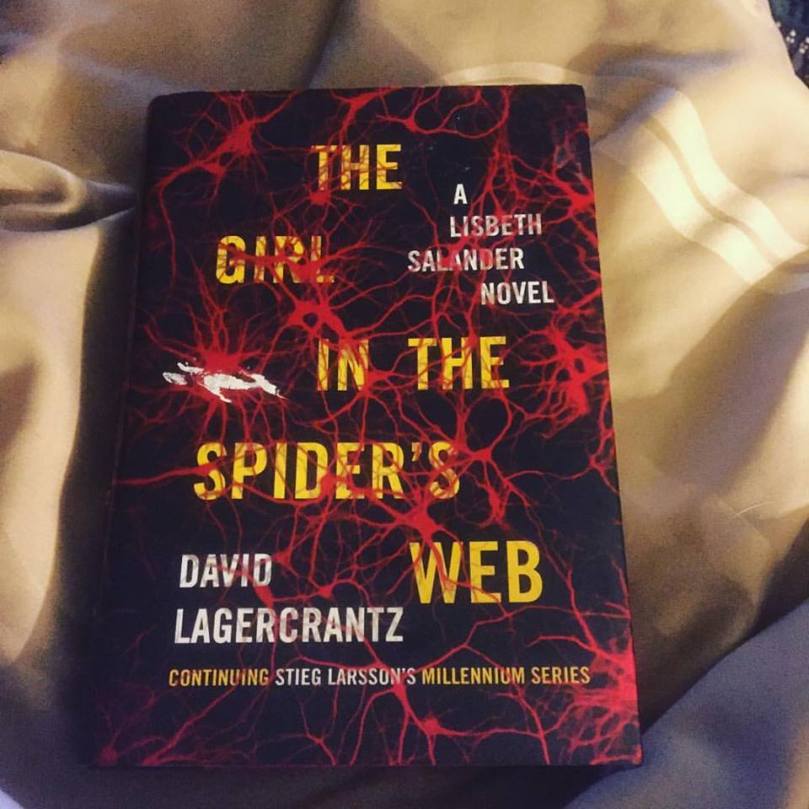
The Girl in the Spider’s Web: Book Review

I came with the same reservations you’ve got: how could this live up to the original trilogy? Stieg Larsson is not the author. In fact the initial rough draft for a fourth installment was put aside for the efforts of Swedish writer and journalist, David Lagercranz. His writing is smooth, and works towards establishing an authentic experience. Lagercranz brings his own story to the table, and what starts as a slow burn is revealed as the foundation for a thriller that compliments the returning cast and new character alike.

That’s how I knew it wasn’t a failure from the start; I was convinced of genuine portraits that brought me back into the story world of the Millennium Series. Blomkvist, Berger, and Salander were presented as they had been, but the side story of police officers Bublanski and Modig offered fantastic commentary, and the attention given to their characters helped to solidify the space. New characters contribute to chaos, and fun is had by all. I enjoyed the book. If there’s a flaw it’s the occasional wording that may be the result of a rushed translation, but that may be too critical of me.

The Girl in the Spider’s Web uses a narrative style that jumps every couple of pages, as a means to show a consistent juxtaposition of events through the scope of different perspectives. Though there is a consistent narrator the emphasis on jumping to different characters with such frequency suggests the possibility that it was written with a film in mind. It transitions fast enough to never burn out on a moment, and seems to move with the fluidity of thoughtful storytelling. It left open the option of a sequel, on which I have mixed feelings.

All in all I enjoyed this book, and would recommend it to fans of the original trilogy. It’s fun, authentic to the established editions before it, and satisfies the desire for a quality continuation.

16711649_10207087616262314_592412953148187988_n

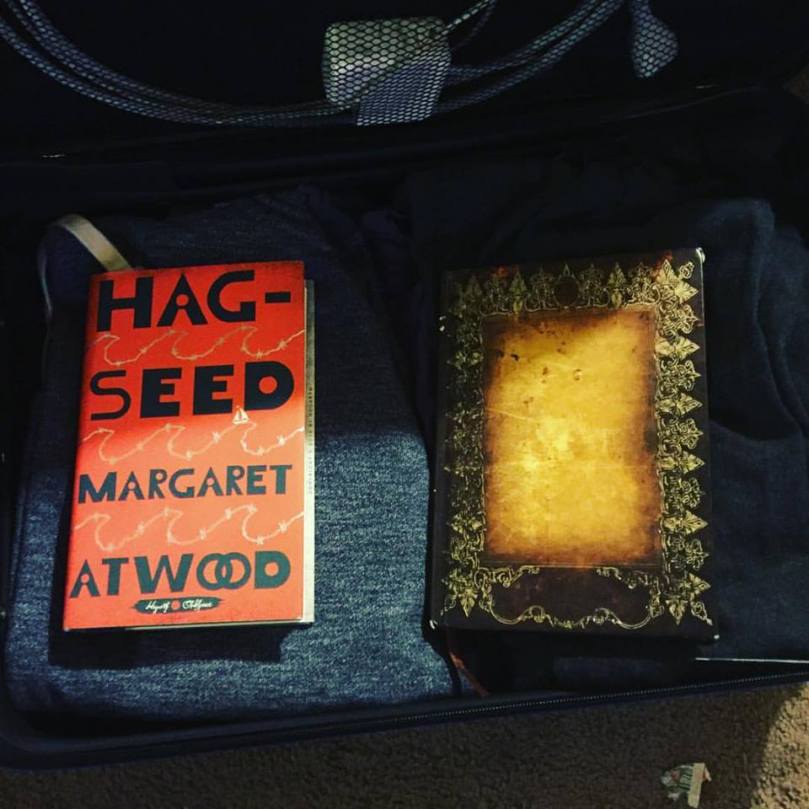
Hag-Seed: A Rambling Review

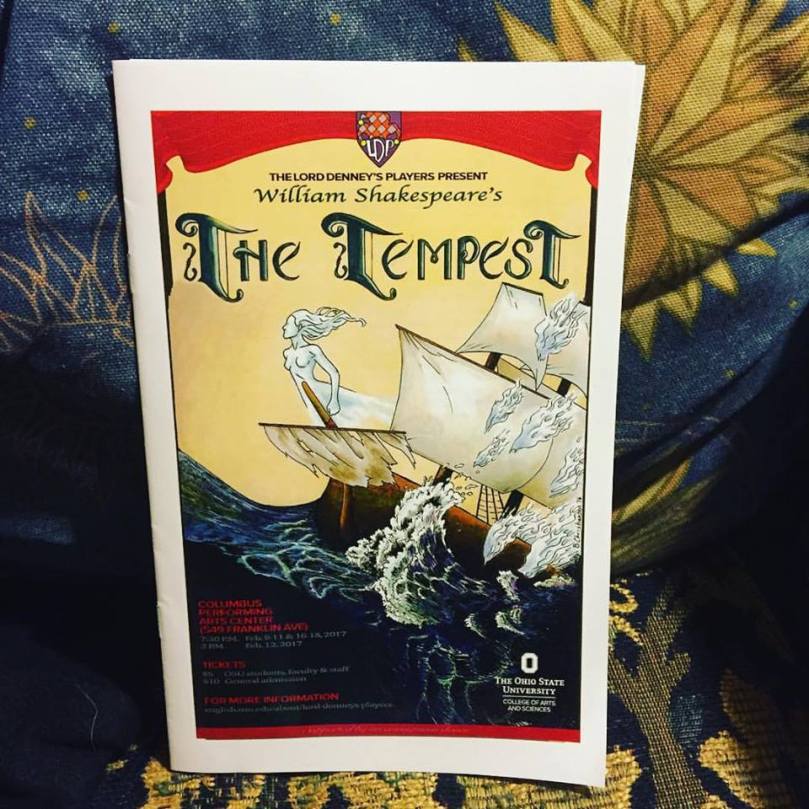
Strange to think that in my time as an English major I never read The Tempest, or Margaret Atwood. I have The Lord Denney’s Players to thank for the recent exposure. The theatre company is of the Ohio State Department of English, and their emphasis is on the Renaissance. With this production they’ve chosen to put on The Tempest. In order to familiarize myself with the text and story I read Shakespeare’s work, an article by Stephen Greenblatt, and Margaret Atwood’s retelling in a contemporary prison, Hag-Seed. All of which were wonderful texts (as I’ll get to Hag-Seed in a moment), but that breathing entity of theatre was something fantastic to behold.

I started reading Hag-Seed a day or two following my completion of The Tempest. Atwood bridged the gap, from text to stage. Her novel begins with a Prospero figure, and his work as a Shakespearian theatre producer. Every piece is there; political betrayal, exile, revenge, and forgiveness as prompted by the figure of Ariel, an inmate known only as 8Handz.

But the best qualities of a retelling are in what makes it new. Long has the topic of prisons been applied to conversations on The Tempest, but Atwood has sculpted a narrative of her own, with the actual play as the underlying plot point. Freakin’ meta, man… but it gets at some parallels that prove Atwood is a master of her craft.

Most of the novel seems grounded in reality, but there are moments that are just fantastic. Felix (the figure for Prospero) getting away with his crazed hostage taking revenge plot is too good to be real, but such is the stuff of great fiction, and such is Shakespeare’s text. If you’re really looking for an over the top reworking of Shakespeare check out South Park, season five, episode four: Scott Tenorman Must Die. That mess recreates Titus Andronicus, and it’s dark. Sorry, that got off subject.

I’m new to the Margaret Atwood fan club, but I’m looking forward to reading more of her work. Aside from The Handmaid’s Tale, what else of hers should be at the top of my list?

16114235_10206892117294962_3398982135386129746_n.jpg16649414_10207045690574198_346283771551689809_n.jpg

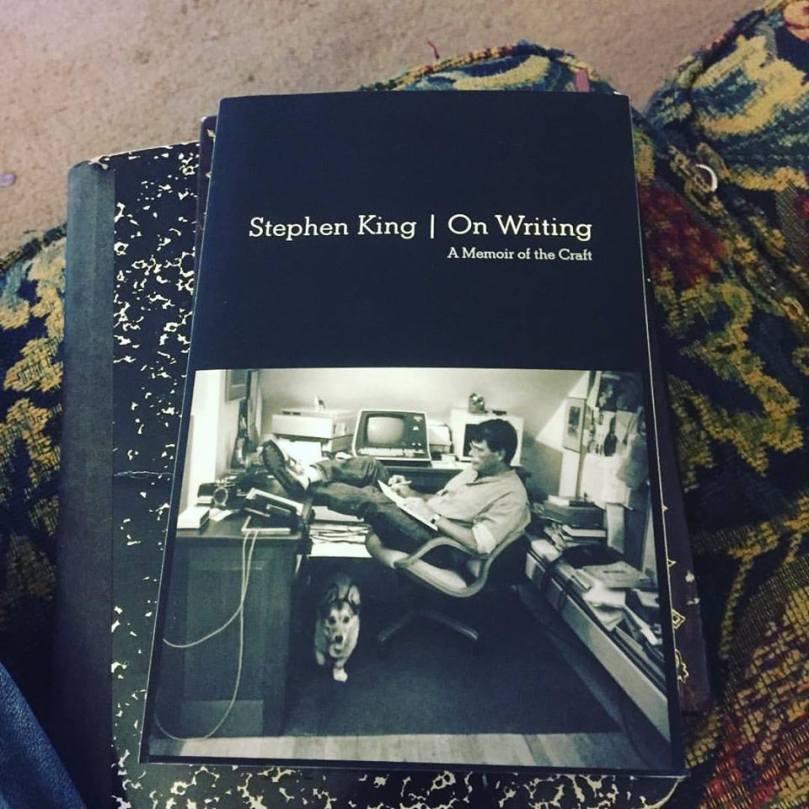
Book Review: ‘On Writing’ by Stephen King

I’m not one to care much about material possession, but if gifts are in order I’m all about books. For the big dirty thirty I received a copy of On Writing by Stephen King. I’ve had friends suggest this text to me before, but with academic writing taking precedent over fiction I didn’t have time for it.
The book is odd, as it’s broken up into segments that often have little concern of the writing process. It opens with a solid hundred pages of a life story that begins with childhood imagination. The cover of the book reveals the subtitle “A Memoir of the Craft” to which the first and third segments adhere. My expectations were thrown off, but for the rabid King fan it’s an interesting look into the life of the author.
It’s the middle segment of the book where King offers the goods. The tips to writing that makes for good reading include similar tendencies I developed in my academic pursuits. King even name-dropped The Elements of Style throughout his text, which I had put to use in college.
Beyond sentence structure King’s emphasis is crafting fiction. This is the gray area that has worked for him, if it’s true. I wouldn’t take the advice as that which all should follow, but one radical element stood out to me. I scoffed, at first, but further consideration has given the idea validity in my mind, though it’s not for me. This claim is that King does not plot, and that it’s the coupling of questions with the writing process that crafts his stories. Like a scientific theory more than one party must handle the notion if it’s to be considered fact. From here I point towards Matt Stone and Trey Parker, the minds behind South Park. At a college lecture on writing Stone and Parker described an approach that considers the full plotting of an episode to produce a result that is predictable. To avoid this the writing starts with a premise, and they throw questions at it until something sticks, and eventually takes shape.
Sorry to venture off there, but it’s the notion that King’s approach works for successful writers beyond himself that suggests the idea has some commercial merit. I do enough plotting to know where I’m going, lest I get to a pivotal moment and take the easy way out… but I must acknowledge appreciation in the face of difference.
This book is no holy grail. King offers no magic beyond general practices, and personal preferences. It’s another chunk of text on writing in a sea of such material. Yet I’d recommend it to those getting started, or even an experienced writer in need of a refresher. King’s voice is clear, encouraging, and easy to understand.

14980667_1172937189449705_2968603988949774373_n

Book Review: ‘The Blood of the Lamb’ by Peter De Vries

Great literature has often moved me to feeling, but never to tears until ‘The Blood of the Lamb’ by Peter De Vries. As described by the late Dr. Myers back in 2013, the book is, “a comedy about a man whose child dies of cancer.” With this spoiler in mind, I was still left unprepared for the impact of the prose upon my heart.

In truth the novel follows Don Wanderhope from his early childhood through the loss of his daughter, Carol. We don’t meet Carol until the final third of the book, but to that point we are exposed to the persistence of loss, and the complications of faith in the face of such experience.

The death of a young lover brings Wanderhope to question the overseeing doctor on a belief in God, and we are given a great insight to the nature of doubt,

“He just perceptibly raised his eyes, as if in entreaty to Heaven to spare him at least this. It took me some years to attain his mood and understand my blunder. He resented such questions as people do who have thought a great deal about them. The superficial and the slipshod have ready answers, but those looking this complex life straight in the eye acquire a wealth of perception so composed of delicately balanced contradictions that they dread, or resent, the call to couch any part of it in a bland generalization. The vanity (if not outrage) of trying to cage this dance of atoms in a single definition may give the weariness of age with the cry of youth for answers the appearance of boredom. Dr. Simpson looked bored as he ground his teeth and gazed away” (111).

Our narrator is a tragic embodiment of something that relates to the human condition. In describing the conflicts of his marriage he observes, “one of those subtle shifts of mood that emphasize how much we live by one another’s variable weather” (147).

But no matter the weight I’m well versed in tragedy. It is a subject matter or genre that brings me a peculiar pleasure. Morbid as it may seem, I delight in such material as it brings me the comforts of community. Upon fighting the ‘beast’ that is Carol’s leukemia, Wanderhope suggests that in the face of a terminal illness, medicine is, “the art of prolonging disease” (183), and that the notion of progress serves only to infect the wound, as, “Progress doubles our tenure in a vale of tears” (242). It is with the loss of Carol that Wanderhope is able to admit that, “Time heals nothing” (246).

The Blood of the Lamb is a hard-hitting piece of work, with a style of prose that tells more than it shows. It’s in this telling that we relate to such loss through empathy. Knowing that the entire book was leading up to the death of a child made it no easier to read the passage in which Carol was lost. I had to put the book down on several occasions, but in returning I always found more value than I had expected, and more emotion than I could handle at times. This was the kind of tragedy that goes beyond standard literary merit… this book moved me to tears more than once.

What makes it so difficult is knowing how closely the story mirrored the life of the author. It’s what made it all so authentic. His conflicting thoughts on faith, and his sharp observations of love, and life, and hatred, brought me to care in such a way as to suggest true feeling… My apologies, for this is not my typical review of sorts… I’m still dealing with the loss described on the page.
Prologue for ‘Tin Foil Hat’

{The following is the prologue from my second book, Tin Foil Hat.}

Record Seventy-Four
On Stalking-Social Skills-A Prelude to Waste

Reflecting upon the first time I broke into Beatrix Kennedy’s apartment, I associate the memory with the euphoric sensation similar to the peace one feels beyond the climax of drowning. With her Twitter account informing me that she would be spending quality ‘alone time’ with the TV while she caught up on some shitty drama before the new season was set to premier the following weekend, I felt this was the moment worth seizing. Knowing she’d be by herself and binging in front of the screen allowed for an excitement that sent my heart into double time. I’ve been stalking Beatrix for a matter of years now, and I could not have fantasized such a perfect coincidence. How foolish of her to move back home…

It starts by seeking them out online. Social networking has made this easier than ever before. While B’s Facebook page was private and left much to the imagination, her Twitter account granted open access to her thoughts, feelings, and occasionally her schedule. Of course, I started from the beginning and broke the ice by reading through all one thousand three hundred and twenty-seven tweets that she had typed off since the winter of 2009. You can learn so much private information about a person when they post it for the world to see; no roommate, no dog, owns a gun, even the fact that she prefers women to men. I tell myself when she does love a man she loves a man with a beard. My routine of maintaining a shaved face would not be a deterrent, as her tastes were not part of what I considered important. Her online persona is so sarcastic, and beautiful, and selfish. It’s no wonder she’s single.


Once the target has been confirmed, it never takes more than twenty minutes to Google my way to an address. You really have no idea how easy it is; I should’ve worked for the government on some spy program aimed at watching civilians. As it turned out, Beatrix lived a ten-minute drive from my residence, and I visited the premises often. I even took the time to visit the leasing office, claiming to be moving to the area. This allowed me to indulge the specifics like the restrictions on installing a security system.

I had scoped out her complex a number of times before our first encounter. So much time spent in longing… She lived on the third story, which at first appeared to complicate how I’d go about breaking in. After a little inspection I realized that the stairwell was out of sight for the passerby and made for a prime jumping point to get onto the balcony that entered straight into the glory of her bedroom.

The best part of that humid Friday afternoon was making the drop to find that the city girl with a gun was under the assumption that her balcony was out of reach. Ms. Kennedy had left the door unlocked, and I slid the plate of glass to the left, pushed aside the blinds, and entered paradise.

Crisp air conditioning chilled me and solidified the layer of sweat to my skin in a way that contrasted the swamp-like atmosphere outside. That first sensation of cool air brought on such comfort that I almost forgot to press forward with my plan. Beatrix would be on the clock for another three hours… plenty of time to poke around and set up camp.

Dirty clothes were scattered about a carpeted floor in a flawed way that turned me on. An aroma lifted from the laundry and I brought a shirt to my nose to properly breathe her in. Pressing the fabric to my face, I closed my eyes and thought of her hair. Joy overwhelmed my heart as I dropped the shirt to the floor and continued inspecting the room. A queen size bed was located in the far corner with a few blankets carelessly discarded to the foot. Her dresser top consisted of old receipts and other such clutter that told me where she shopped and ate. A bookcase stood adjacent to the dresser and for the most part displayed the texts of her studies. Such curiosity on an intellectual level… could it be that I’ve found an equal? Nay, for she is greater than I am.

The only television was located in the living room, with all the bells and whistles of video game systems and surround sound. A walk-in closet peered directly at the couch that sat at the optimal television viewing position. At that point in time the closet had been left wide open. Clutter would be my saving grace, as I would drape fallen jackets and other loose garments over me and watch her watch her show. Even if she shut the closet I could still bear witness to her presence through the crack where the bottom of the door neglects to reach the carpet. Not too bad a view, at all.

The minor bits of filth in the bathroom brought a smile to my face. Upon entering I immediately seized the hairbrush and stripped it of the loose hair caught within, pocketing it for later indulgences.

I turned off my cellphone, ate a piece of wheat bread, and used the restroom well before Beatrix returned home for the evening. With building anticipation I took my place within the living room closet to wait it out.


She was so beautiful. That first audible sigh of relief that she let out caused my heart to swell with the genuine happiness that triggers the nostalgic wonder of childhood. Her business attire was quickly replaced with a loose fitting yellow t-shirt, the shortest of gray cotton shorts, and pure untainted white socks. I had never before seen much of her flesh above the knee. Such a sight complicated the conditions required to restrain myself. But I’m well disciplined.

Taking into account her negligence concerning the closet door, I would be treated to a much more desirable viewpoint than initially expected. What amazing luck. I stared directly at her, and she never caught my glare.

She spent a little time in the bathroom before emerging. Moving with the grace of divinity, she walked to the kitchen where she grabbed and consumed an apple. This display of her eating habits explains how she maintained a physique of such desirable conditions. I could not have fantasized this level of perfection. She is as an apple; the fruit I so desire to consume; the drug I need if I intend to sleep.

Upon assuming her position on the couch, Beatrix handled the assortment of remote controls to establish the ice breaking of the series-streaming binge.

Hours passed. The only interruption occurred due to hunger. In between episodes she ordered food from a Chinese restaurant, and it was delivered shortly thereafter.

Following dinner she removed more articles of clothing. The yellow t-shirt found its place on the floor next to the shorts. She was without a bra… I would have touched myself right there had it not been a point of compromise to my going unnoticed.


Shortly after two in the morning, she deviated from the show and put on something else to serve as background noise. From that point she proceeded to pass out on the couch.

I waited a solid half hour beyond my personal certainty that she was asleep before standing up as quietly as possible. I approached her resting body and hovered over it. The glow of the screen illuminated her pale skin, revealing the magnitude of its pull as a coveted and living thing. I looked upon her bare chest and considered a gentle caress… but the possibility of waking her would prohibit such a gesture. To compromise I ran my fingers through her hair and lowered my face to smell her before I walked out through the front door. Leaving it unlocked left me with the knowledge that something suspicious would be revealed to her, for she is not one to overlook such details.

I went home, and played guitar into the early afternoon. Then I masturbated myself out of the scope of realism and into a restful sleep. May have a new song in the works.

All of my love, -MT


BookCoverImage