On ‘Blindness’ by José Saramago

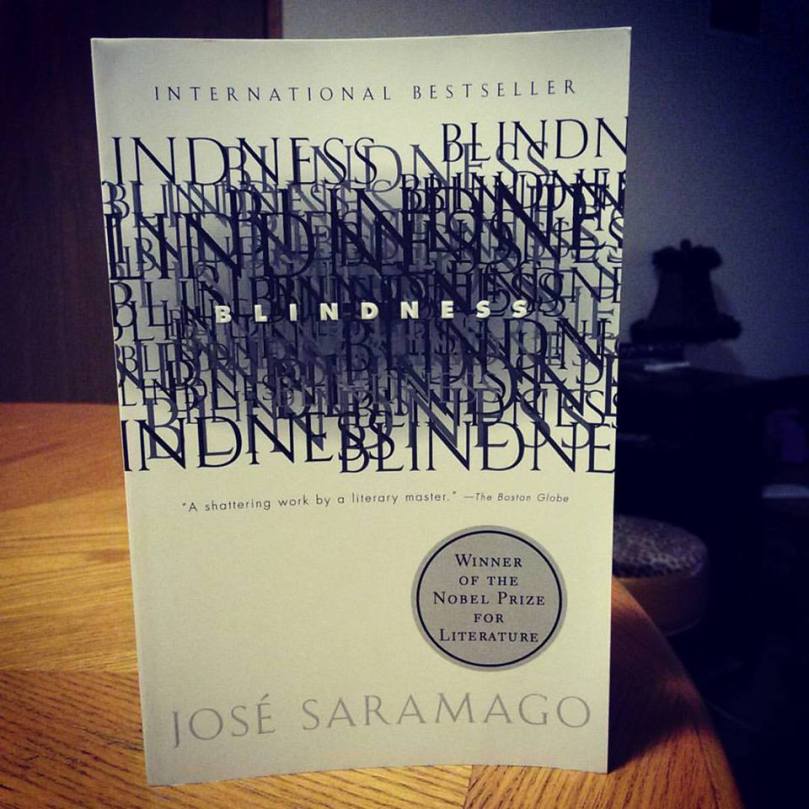
An epidemic will typically start with an individual entity. Blindness by José Saramago begins with a singular unnamed character, strikes him with sudden blindness behind the wheel of his car, and spreads out from there. The science fiction motif follows through the hoops of genre expectation, but with a literary merit that won a Nobel Prize. The initially afflicted are quarantined, and the standard of living descends into the wretchedness of human depravity. There is little hope beyond the instinct that dictates survival, and yet our cast presses on in the fashion of a funeral march. It is a heartbreaking read that ends on a hopeful note that almost feels forced. I’m not thrilled that this sci-fi tragedy had an optimistic ending, but even with the resolution comes the reflection of what a simple lack will do to a people, and to what depths are we driven by want? It’s satire, so I dig it. Yet it is not only the story that makes this book special.

The text is a fluid thing. It is without question or quotation marks, proper paragraph breaks, or even character names. The reader is challenged to forgo the expectations of traditionally published storytelling, and to feel their way through the text. The narrator jumps through perspectives, breaks from the story to imply or manipulate opinion, and seems to play with the experimental atmosphere of modernity coupled with the stuff narrative theorists dream of. The rhythm is fun to read, but the density removes the notion that Blindness is intended to be a quick read.

12512528_10204488174477894_1592080864985141690_n.jpg

Puzzle Box: Product Review

I’ve exhausted the typical routes to earthly pleasure. Hedonism comes second only to self-destruction. Hard drugs? Whatev. Blood of virgins? I’ll tell you that it doesn’t preserve youth as well as I’d have liked. Horror movies? That’s where I found this most false refuge.

I’m a fan of the Hellraiser series. I’ve read The Hellbound Heart, and found that Clive Barker writes my kind of horror. For some reason I’ve watched all nine films. I recommend the initial trilogy. If you’re into punishing yourself I recommend them all.

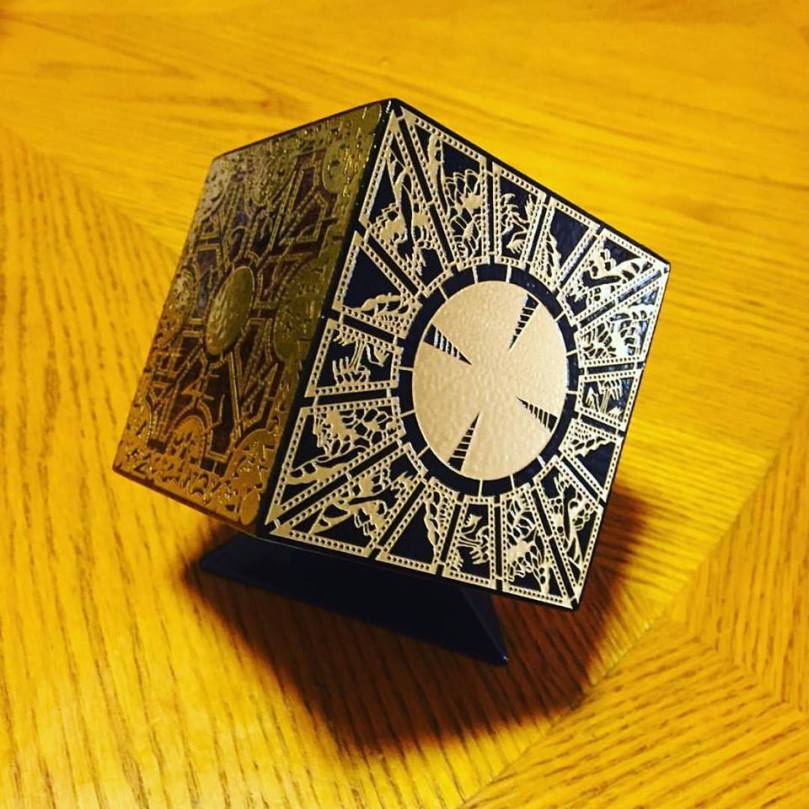
Stumbling through a series of sites I was thrilled to have found Lemarchand’s box. The stained wood and etched brass offers a sleek appearance. Searching for the space that would allow me to open the box I found only slick surface. I was confused. I carried upon my will the intent to solve the Lament Configuration, summon the Cenobites, and subject myself to all of the pleasures of spiritual suffering… but it was not to be.

Once I had discovered that I was in possession of a replica I wrote a strongly worded letter, to which I received no reply. Now I’ll take my complaints to the internet. I SHOULD BE IN SOME VERSION OF HELL, but I’m still here… The box now rests in my bookcase, and serves as a beautiful and constant reminder of a fantasy.

Now that I think further on it I may have gotten the real thing, solved it, and this reality is what I get…

12728770_10204663828549136_9192342625123214459_n.jpg

All kidding aside, it’s a beautiful piece of work. Fans of the Hellraiser series should do themselves a favor and check out The Puzzle Box Maker.

Kaleb Smith and the Power of Goofy Moments

Eight years ago I gave a terrible speech for a class on the moon landing conspiracy. At the conclusion of my rhetorical mess a peer named Kaleb Smith suggested to me that it was Pink Floyd who had first landed on the moon. He was an audio/video guy, yet the layout of the campus made it so that I hardly ever saw him. I knew then that I saw a character of comedic value, but I didn’t know how hard he’d have me laughing all these years later.

Social media isn’t all bad. Trolls aim to do their worst, but good people bring their best, and Kaleb Smith offers it up with consistent material. He posts video segments that range between twenty and ninety seconds a pop. While the themes vary the great consistency of his work is derived from how character driven it is. One motif of his work is that of an individual who has had enough, and lashes out in the great fury of emotion that simmers beneath the surface of most people. My personal favorites include a midlife crisis at the office, and a Medieval/fantasy showdown from the most foolish of knights.

On his Facebook page Kaleb says, “this world is sad enough,” which motivates him, “to slap a smile on its face.” He describes the snippets as, “Comedy through a little stocky tattooed man.” Through his work I see him playing against the tide of the sadness he interprets from the world. His characters struggle through their casual foolishness. Confusion and injustice drive many to their comedic outbursts. Smith’s feelings lend a hand to the stereotype of the sorrowful comedian, as one can catch a glimpse of the entity behind the characters.

He delivers exactly what he intends, as his punch lines play towards the darkness, but does more to expose the light. The entirety of his current catalog appears to be the work of a singular person, juggling the writing, acting, and technical duties. It has an honest DIY vibe throughout, which I find adds a peculiar charm to the comedy.

Of course it comes off with a lightheartedness that I’m failing to address, here. Smith seeks to make us laugh, and often it’s a simple procedure that he administers with the careful hand of comedic madness. While some of his clips highlight the tensions and conflicts of human interaction many are fun for the sake of it.

Yet all artists develop. Producing media comes with the idea that one’s methods would sharpen, skills continue to develop, and equipment gets replaced with better equipment. Any given scenery in his work assists in giving Smith that DIY charm, but his most recent production is the first installment of the ‘KPDragon Show’ which has the sleek giveaway of a green screen backing him up. Watching it seemed to offer the honest jump in development, and took nothing away from the appeal of ‘lower’ quality productions.

The five-minute segment seems to be made up of various sketches that are strung together. Smith makes social commentary by breaking PC boundaries in a way that plays on satirical traditions, and even concludes on one character suggesting literature to another after a ridiculous tirade.

The great sampler:

https://www.facebook.com/plugins/video.php?href=https%3A%2F%2Fwww.facebook.com%2F871469736228573%2Fvideos%2F1022727481102797%2F&show_text=0&width=560

‘No Net’ by Noah Nichols: A Review

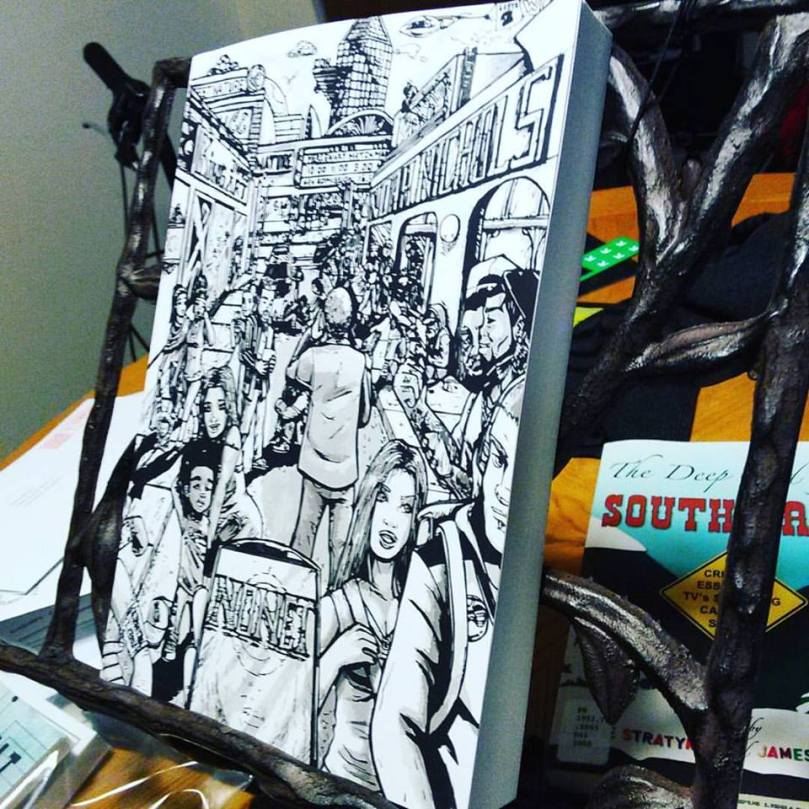
This is a collection of loosely connected fragments set to a sci-fi backdrop where the Internet is gone without explanation, and the book explores a series of events under the influence of the commodity’s sudden absence. Without the pacifying stream of information characters are subjected to chaotic conditions and society is compromised through violence. The opportunity for social criticism is abundant, and while the collection plays with different genres it is satire that stands out to me with the most clarity. The notion of a social problem as a result of Internet addiction is a motif that the narrator wants to expose. Nichols brings us characters who specialize, “in enabling each other’s deficiencies” (121), and those deficiencies are often expressed through the exposure of our addictive tendencies, and the anxiety of distance. It is the shock of sudden change that results in the chaos of impulsive reaction.

One condition of modernity is nostalgia. A collective longing for the good old days makes up a significant part of mainstream thought. Everyone my age wants to relive the 90s for the rest of their lives. Yet the idea that, “America would be ready to actually live in that nostalgia” (28-29) is met with the social chaos of sudden change.

Our character focus shifts between chapters, so the cast is grown quickly. What makes the stories special are the moments where we return to earlier characters, and delve further into the complexities of this small world. It is this novel-like quality that lends itself to a proper rising action and resolution through the scope of loosely connected short stories. Between the satire and haunting resolutions we’re faced with social critique and the consequences of familial bonds. It is the expression of character and conclusion that reveals the great takeaway that’s built upon the foundation of the earlier chapters. While the emotional payoff is delivered with the conclusion I don’t intend to take anything away from the earlier chapters. We are offered cause and effect, action and then tragedy. Nichols delivers the complication of our human condition upon removing that, which has, “separated us from people,” (295).

My Internet Done Up and Went Away

12743589_10204622300350957_5375134994606488930_n.jpg

The White Noise of Our Lives

I took my sweet time in reading White Noise by Don DeLillo. The aim of satire requires that I slow down, and this novel offers a great amount to reflect upon. DeLillo writes in a stream of consciousness style that rambles on occasion, but for the benefit of exploring the follies of his condition. The motifs of consumerism culture and fear of death are rampant and connected in a way that our narrator never identifies. While Jack Gladney doesn’t come to this conclusion on his own the text presents this connection just outside of his grasp. His thoughts repeatedly stumble through the process from fear to consumerism, “I am afraid… I am taking no calls… The supermarket shelves have been rearranged” (325). Long stretches of elegant and explanatory prose are interrupted by an advertisement or reference to consumer culture. The following segment breaks the ice on the lives and marriage of Jack and Babette,

“It isn’t that she doesn’t cherish life; it’s being left alone that frightens her. The emptiness, the sense of cosmic darkness.

MasterCard, Visa, American Express.

I tell her I want to die first” (100).

This interruption fails to cut the tension of the moment because it’s the idea of this ‘white noise’ that occupies the background of our lives that serves to reinforce our collective fear of want.

While Jack and Babette obsess over fear the novel begins with a confidence in lifestyle. Their middle class existence convinces Jack that he is above consequences reserved for those below the poverty line, “I’m the head of a department. I don’t see myself fleeing… That’s for people who live in mobile homes out in the scrubby parts of the county” (117). This is the second time that Jack expresses tragedy is for the poor. Once the catastrophe contaminates their lives secrets are revealed, and familial conflicts emerge at the surface. It is a book that suggests we are much more the products of the culture than we’d care to admit. Comfort is reassured by the belief that a, “slowly moving line (is) satisfying,” because it gives, “us time to glance at the tabloids” (326). He describes the comfort that the papers offer, “Everything we need that is not food or love is here in the tabloid racks. The tales of the supernatural and the extraterrestrial. The miracle vitamins, the cures for cancer, the remedies for obesity. The cults of the famous and the dead” (326). But these comforts are crafted through faith in a vain hope.

DeLillo made me uncomfortable with his truth. Such is the aim of good satire. These themes took me back to my teenage years when I was first introduced to the connection between the themes. This book has been a terrifying reminder that mainstream media is, “a campaign of fear and consumption… Keep everyone afraid, and they’ll consume” (Marilyn Manson). That is the culture of our lives, and DeLillo identified this fact with harmful clarity.

Novallo II: Portrait and Review

There’s a group of musicians I must acknowledge, for they’ve had my attention for some time and I find myself impressed by their efforts over and over again. The sheer talent to be heard from Novallo is nothing short of my unfair expectations, and their second release has something for everyone.

I’ll admit to a bit of a bias here, as I’ve known these guys for well over a decade. I met the individuals that make up Novallo over the course of my high school experience, and their continuation is something I deeply appreciate. But my bias is of no extended value; the material speaks for itself.

Brandon Johnson played guitar in my basement every Friday during the early years of our musical journey. More than that, he always brought a positive attitude to a place that was wrought with teen angst. Consistently the one to turn a dull moment into a party, Brandon had an endless personality that was supplied for the benefit of those around him. He’s pretty goofy, but in truth he’s got nothing on Salvatore.

Nicholas Salvatore is the only drummer I’ve ever convinced to haul his kit to my place for some duel drummer action. Some of it was messy, other moments memorable. He’s a top-quality metal drummer with an ear for funk. Aside from music he’s nothing, if not fun. He is the goof of the band, and it’s been a pleasure to watch him behind the kit all these years.

I first met Gino in an art class. When he took up the guitar I would hear him playing familiar riffs by System of a Down in some concrete basement setting. He had solid chops for the developing beginner, and these initial moments surfaced long before I would come to recognize the drive behind any potential thing to which Gino would set his mind. Never the one to settle on a singular endeavor Gino went to college for visual art/media (explaining one half of Novallo’s unique visual appeal), and buried himself into the obsessive hobby audio production. He’s truly the brains behind the operation, and his many hats have left him sought after by a multitude of artists seeking his production expertise, as he’s turned the hobby into his career.

As for Sam Gitiban, he was the dangerously quiet one. While the other three were high school peers they sought a vocalist on Craigslist, risking their lives in doing so. At the time Sam was majoring in art at Ohio State (the second half of their visual arts department), and while he’s the most reserved of the band (in a social setting), his vocals bring a sound to the music that stands out on the new EP. I’m relieved that this social experiment has resulted in their partnership, but I’m still not convinced he won’t up and kill the lot of ‘em.

When they first appeared Novallo did little more than ‘pay-to-play’ gigs, where they unloaded tickets to personal friends. Shows at the Newport were good for the ego, but did little else to generate a sense of belonging to a musical community. The early sound reflected their metal based influences of the time, but included a Middle Eastern flare that made the material stand out. It wouldn’t be until Gino took to experimenting with audio production that the vision for the band shifted to a more technical focus.

While Gino developed into an audio engineer of reputable merit, new material accumulated for a professional debut release. The initial EP was an attempt to do what most bands do on their first professional-level go-round: showcase their talents within the given parameters in an attempt to capstone the genre. And it was a fantastic collection of songs, but with time comes reflection and the desire to do other things. They’ve been thirsty to do something unique, and they required new methods of getting to the bottom of their well.

This is where the new EP comes into play. With three years between this release and the first EP, Gino has only advanced on the production side of things, and the band has progressed in both songwriting and tastefully deviating from the confines of genre. Novallo II still comes off as something I’d associate with metal and what some people call djent (is ‘djent’ still the word being used for technical metal?), but the means by which they digress from the norm is extraordinary. One major difference between this and the first EP is the lack of growl style screaming, making the music accessible to a wider audience. Guitar production surfaces as what I’m assuming to be Gino’s specialty, as the entirety of the EP substitutes synthesizers for guitars effects, and the primary rhythm guitar sounds go back and forth between a sharp biting metal tone, and a sound that represents the stabbing noise of EDM. There are swing, jazz, and pop segments that are downright danceable. If you’re considering some unique new music, I can’t do enough to adequately recommend Novallo II.

Novallo on Bandcamp

WAKE

The album opens with an intro track where I’m being lectured by a version of the Stephen Hawking voice that’s layered with a distortion. I believe the sound to have originated in nightmares. This takes place within some sort of ambient tunnel/vacuum soundscape. I’m not sure if it’s meant to be the fragments of a dream before awakening, but the choir of Sam’s vocals that come in at the end feels like opening my eyes to the following expedition.

BETTY PHAGE (Goes to Bronxton)

A jumpy hybrid of metal and swing is done in the most tasteful manner I’ve heard since Marilyn Manson’s Doll-Dagga Buzz-Buzz-Ziggety-Zagg, but with a greater emphasis on exploring the elements of swing. Yet the bridge nearing the second half of the track is of some of the hardest metal on the EP.

1 AM

Opens with that EDM guitar sound as though it were coming through an AM radio. Breaks into a straightforward segment that is held up by a sequenced undertone. Sam plays with rhyming vocal patterns that make me believe he’s from a different time before the track gives way to my favorite chorus on the EP. I feel the genuine groove of a perfect pop song, yet the chorus doesn’t compromise in bringing you this moment. I’d argue that the chorus offers the highest energy moment on the track, and that stands in the face of the heavy EDM sounding guitars of the bridge.

SIDEWAYS BIRD

What a kind way of wording what I’m interpreting to mean dead woman. This song isn’t new, as an official music video for this track was released shortly after the first EP in 2012. It’s probably one of the most solid tracks regarding adherence to genre expectations. It stands as a solid tech metal song in spite of the synth lead (actually played on guitars) that runs on and off throughout.

GIVE GRAVITY A CHOICE

This song contains my favorite verse on the EP. The mellow guitars aren’t trying to be overly technical here, and it makes for an atmospheric experience that conveys a welcomed change of pace for the rhythm section. The bridge in the second half of the song brings the distortion, but maintains the integrity of the piece. In terms of production and songwriting, I’m conflicted in declaring a favorite song between this track and 1 AM.

WHITE PHOENIX

Opens with an 8-bit riff that reminds me of a jumpier rendition of the intro to I Am. It’s as though I’m playing Zelda on speed, except I’m not waiting to die. Then the 8-bit morphs into the EDM style guitars as the rest of the band jumps in on a song that’s competing with ‘Sideways Bird’ for the title of heaviest song on the EP. The piano bridge takes the song in a calmer direction that allows for the most playful bass segment on the EP, before launching into an aggressive final stretch.

SLEEP

An orchestral string arrangement steps into the aftermath of White Phoenix in such a way as to have you believe this sleep will be peaceful. No such luck, as a distorted electronic noise surfaces to establish an uneasy atmosphere. This unsettling return to the vacuum of sleep is met with a fragmented clip of the ghostly Stephen Hawking voice. Then it all cuts off.

a2823426355_10

Of Sunshine and Bank Heists: A Review of ‘The Sunshine Cruise Company’ by John Niven

Niven delivers hilarious satire juxtaposed with genuine heartfelt moments. Such is typical from this writer; everything he has published is fantastic in one light or another, yet this most recent effort is his most commercially accessible as the emphasis has shifted away from a protagonist of deplorable merits. Empathy is established without the effort required for the typical vice figure. The Sunshine Cruise Company is Niven at his best, and I don’t offer those words lightly.

The book opens with Susan Frobisher preparing a violent moment for the stage. She has been working with her local theatre for a matter of years, and we meet her in the midst of creating a makeshift eyeball for the gouging scene in King Lear. This Shakespearian reference serves as a thin veil over the topic of aging, which is satirized throughout the novel.

Susan’s husband is an accountant, and they’ve been married thirty years. He’s the solitary overseer of their finances, and has a secret flat that has been converted into a sex dungeon of sorts to accommodate a secret lifestyle. When Susan is called by police and brought to the flat to identify the body of her husband under the glow of a blue neon sign that spells out the word ‘RAPIST’ she comes to find that his infidelity serves as the means to much larger problems. Barry had Susan convinced that their finances were of stable conditions, which couldn’t have been further from the truth. Surprise debt brought Susan into the reality that the bank sought to take her home.

Susan Frobisher and Julie Wickham have been the best of friends since adolescence. While Susan seemed to have had the good life with Barry, Julie can’t help but to feel some gratification that Susan’s misfortune has brought them closer to being equals in terms of monetary success. Julie works in an assisted living facility, and carries the regret of past failures dictating her contemporary circumstances. We met Julie at age sixty mopping up urine at work, wondering how such a low point has become her norm. The one friend she has made at work is the wheelchair bound Ethel. Ethel is crude, speaks her mind, and has the richest backstory that surfaces throughout the narrative in bits and pieces, “I was a singer… There was always work in the chorus line” (88). Ethel serves as the incarnation of Niven’s id (he always has a character to serve this indulgent/comic purpose). She says whatever she wants often to the disgust of her peers, and is damn funny in addition to the value of her insight. It’s when Ethel offers the advice, “it’s better to regret something you did do than something you didn’t” (89) that ultimately convinces Julie and Susan to go through with their plan to rob their small town bank and flee the country.

The episodes that follow are full of action, tension, comedy, and the tragedy of a past that is forever creeping into the present. Presented in third person, Niven highlights different characters in alternating chapters in order to present the parallel story of English police, as they make for consistent comic relief in clashing with their French counterparts. Again, the book delivers. I made the mistake of reading parts of the book in public, for I know I was caught laughing on more than one occasion.

61Qw+5LN1nL

An Evening with Saul Williams

A light rain brought forth little urgency while walking to the club. I arrived 90 minutes early, confused by the familiar. The Rumba Café turned out to be a place I had been once before. I failed to realize it until the interior of the bar had been recognized, and my thoughts wandered back toward that initial experience. The band of that evening has since dissolved, but such a moment was recalled with appreciation. Nostalgia doesn’t always sting, and I smiled.

The establishment was near vacant upon arrival, and I wasn’t sure how the crowd turnout was going to look, and feared our community wouldn’t accommodate a travelling poet. Would our general public misinterpret the notion of live spoken word? Would it be brushed off as a random hipster ode to my vegan bicycle? No. The people began to trickle in, business at the bar increased, and soon the place contained quite an audience for this intimate venue.

I’ve always associated quality spoken word to be most heavily impacted by delivery. Without backing music or gimmick, all that is left to impact beyond the literal word choice is the performativity of the speaker. Saul Williams often structures his words into narratives that blur the lines between philosophy and poetic grandeur, but it is his performative delivery that gives his words such appeal beyond logical musing. Much of his work is fraught with social commentary and complicated by personal reflections. Williams speaks on race, gender, misogyny, poverty, culture, society, and his considerations as it all fits into a narrative that begs an attempt at thoughtfulness and consideration.

Suddenly an entity appears on the stage in sunglasses, displaying a casual demeanor of calm as he rejects the humidity. His appearance brings the crowd to an instinctive silence, and without pomp or so much as an introduction he begins with the careful vigor of skilled aggression. The initial silence of the crowd bordered between respect and a collective hesitant tendency to break the ice with an artist.

Williams opened by reciting a selection of poems from his newest collection titled, US (a.), before moving on to singing, older poetic works, and even taking a few audience requests. He ran through an extended version of DNA, which included a great assortment of lyrics that were restructured for the musical compositions of his 2007 album, The Inevitable Rise and Liberation of Niggy Tardust. It seemed as though it were all for me, and I am selfish enough to consider it for just a moment.

There weren’t many words expressed by Saul that didn’t impact the crowd with the weight of their blunt force honesty. In exploring narcissism as the cultural norm he describes the problem as “not just consumerism, but self-consumerism” (Williams). This notion furthers another theory on fear and consumption, “keep them afraid, and they’ll consume” (M. Manson), and directs it toward the concept that the product we’re being sold is our own narcissistic satisfaction as a means to complacency. But such is a notion to reject. Progress is revealed to be stagnant in complacent waters, as the poet continued, “sometimes we stand on the shoulders of our ancestors, sometimes we must stand on their fucking necks” (Williams). There was a collective feeling that resonated in the audience of harmony through discord. Maybe that’s a bit much, but without bells, whistles, or even a beat… I felt something.

Danger exists when the problem is only acknowledged. An addict may be capable of admitting such a circumstance complicates their ability to associate, yet the vice may parallel with their sense of identity. Morbid pride forms when such flaws are embraced. Williams spoke near the end of his struggles with his view of women, which reminds me that acknowledgement of the defect is not equal to catharsis.

The delivery of Saul Williams comes second to his words. He is a poet, and such poets are dangerous. We should live to embrace such danger.

Marilyn Manson and the Developmental Crisis

I’ve spent the past month in a state of dishonest research. The publishing company 33 1/3 has declared they’re open to proposal submissions. With a late July deadline, I contemplated the albums that have had the largest impact on my life. Marilyn Manson came to mind, as I’m a fan, and from there I considered my favorite albums. With Holy Wood addressing the topic of social violence, I was drawn toward the exploration of that album, but 33 1/3 released a poll of albums that fans of the series wanted to read, and Antichrist Superstar was the only Manson album on the list. Without shame I shifted my focus to what most Manson fans consider to be the greatest critical work of the band. While I am of the opinion that the triptych (Antichrist Superstar, Mechanical Animals, and Holy Wood) is the best work, Antichrist is my least favorite of that collection. But I took the suggestion of the poll, and started collecting notes and ideas that I could construct into a proposal, and then into a 30,000 word project.

Picking up Manson’s autobiography, The Long Hard Road Out of Hell (co-written with Neil Strauss), I read through it for the first time in over a decade, because I remembered the final third of the book covers the production of Antichrist Superstar. Manson claims a good bit of the lyrical content came from dreams. Imagery such as, “Their jaws had been wired shut so that they wouldn’t bite” (215), was dropped into the song, Little Horn. The second single, Tourniquet is also composed of this nightmare imagery, “taking my own hair and teeth… ritualistically creating an artificial companion” (215) reflects the theory that the greatest attribute a man desires in a woman is his own reflection. Such was described in Renaissance depictions of a ‘good wife’ and the notion remains in contemporary criticism, as Tania Modleski states the same concerning her psychoanalytic interpretation Hitchcock films.

Four months into the production and cocaine is the excuse concerning lack of progress on the album. He tells of stagnant sessions leading to drug use, and being so wired from the drugs that progress became out of reach. It’s a troubling read, as Manson describes, “the only time anyone agreed with me was when I suggested we call (the cocaine dealer)” (227). The lowest moment comes with the realization that Manson, “was a rock and roll cliché” (235). The drugs would compromise the project to the edge of failure before any sort of rebound would set the pace for progress.

Before the ball is rolling Daisy Berkowitz (guitarist and last founding member aside from Manson) quits the band, Dave Ogilvie (a producer hired by Trent Reznor to assist on the project) is fired, and David Lynch gives film work to Reznor that Manson expects for himself. Ego based divisions dominates the narrative, and complicates the notion that this album could be possible at all. Oglivie is replaced by Sean Beavan, Twiggy Ramirez (bassist) takes on the majority of the guitar work, Manson claims to quit cocaine (for the moment), and from there the process is hardly written about as the focus of book centers on the chaos, neglecting what brought the production to life.

So I played with the idea of writing essays concerning the album (production, arrangement, lyrics, meaning, critical response, social response, etc.) or even a fictitious exploration of the story that carries this concept album. With the consideration that fans are still waiting for Manson to release his own novel based on Holy Wood, I knew that Antichrist Superstar would be the better fit for a fictional interpretation.

But the notes compiled, and I felt no closer to deciding which route to take. No more comfortable with the project, in spite of the enthusiasm I’ve carried since 33 1/3 announced they’re accepting proposals. Having a degree in music and now majoring in English writing about music feels like a given, but the anger and rage of Antichrist Superstar is not what’s in my heart at the moment.

It took the entire month before I decided to abandon the project. My favorite album by Marilyn Manson is Mechanical Animals, the glam rock concept album with a sleek production that differs from anything else the band has released. The theme of being numb complicated by a first experience with emotion, coupled with the unique sound of the record offers a calm and collected emptiness that would rather go with the apathetic flow than destroy the world.

With this in mind, I know that any proposal I could throw together by the deadline wouldn’t be of enough quality to be worth a contract, but I now know that I want to write about Mechanical Animals. I still plan to write out a solid proposal, but if it’s not ready in time, I’m more than happy to polish and perfect what it is I want to say, and wait for the next open call for submissions.

MechanicalAnimalsZimZum

Trenton Mays to Play Football at Hocking College

There are two parallel trains of thought when I think about Hocking College. The first is of fond memories. Of the three institutions of higher education where I’ve been a student, Hocking made up what I would call the ‘college experience’ years. I moved away from my hometown, studied abroad, interned at a high-end recording studio, worked at the school’s recording studio, and made lifelong friends in an ugly impoverished little truck stop of a town. Mistakes were made that would ruin my run at politics and defining experiences were had. It could’ve been Hollywood. This is not to diminish my time at Columbus State or Ohio State, but the essence of my experience at Hocking will always feel like a terrible fantasy world that was different from anything else.

The second train of thought concerns scandal and shame. April of 2007 presented the first murder in Nelsonville since the 1970’s. In 2008 I remember then Hocking president John Light having been investigated for embezzling funds for his own vacations. The following school year saw threats of violence concerning race. Student enrollment numbers are dwindling due to the consistent scandal and perceived quality of programs. Four presidents later and the financial situation still that of corruption, as they operate well below the standards of a responsible institution.

But it’s the most recent reason Hocking’s in the news that has prompted me to write this. Convicted rapist of Steubenville fame (yeah… fame…), Trenton Mays has been accepted with open arms to play for the newly established football team. I wonder if that sort of star power will move enough units to dig the institution out of their own financial mess. In truth, giving Mays the opportunity to play ball at the college level awards Hocking the title of ‘rape culture promoter’. His opprotunity to contribute to a college team serves as an award for bad behavior. Two years in a juvenile detention center and Mays has paid his debt to society. I’m simply not convinced.

This is the sort of shame I associate with my alma mater.