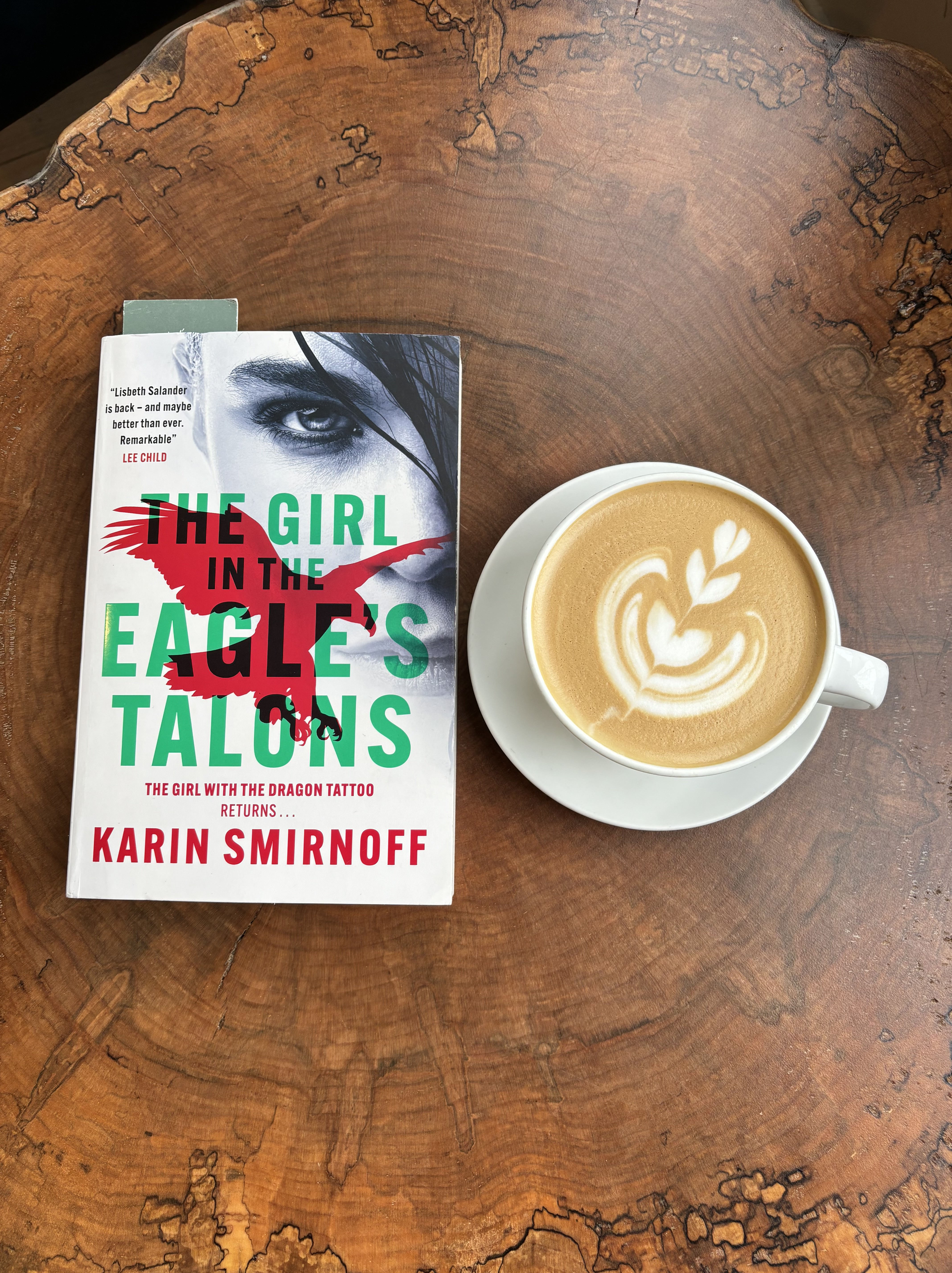
The Girl in the Eagle’s Talons:Rambling Review

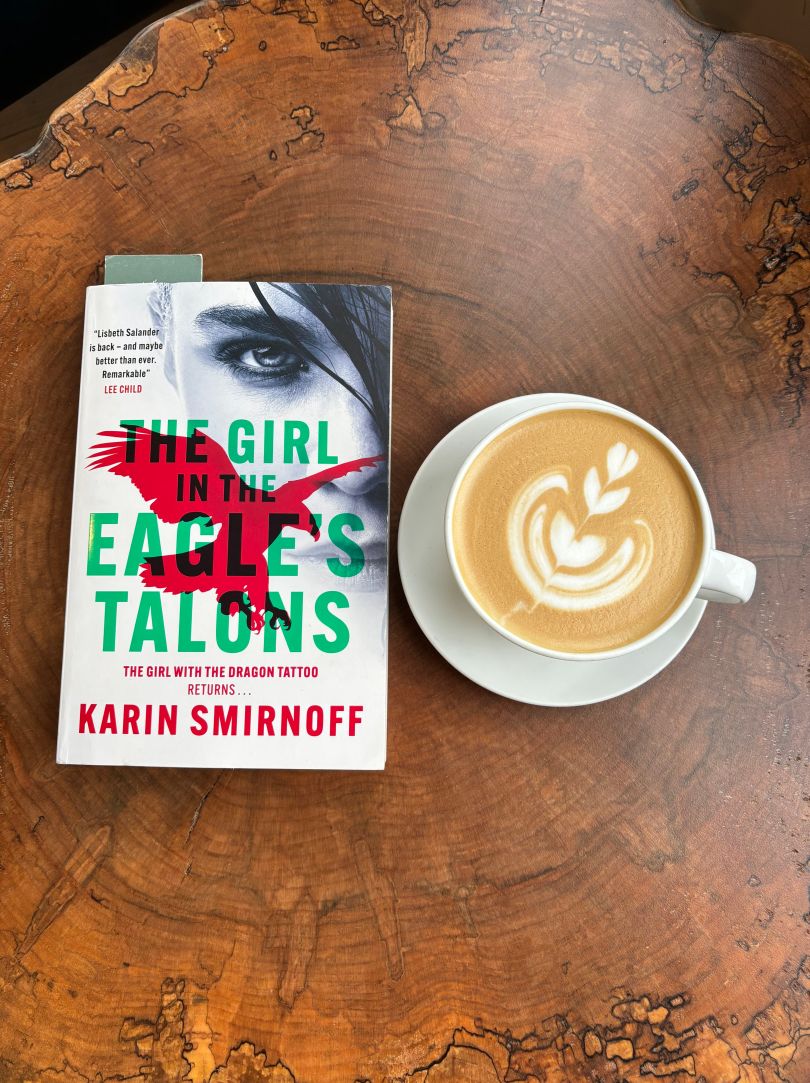
    The Millennium Series has reached book seven with The Girl in the Eagle’s Talons. A new author has taken the reigns, and Karin Smirnoff has gone beyond my expectations with her first contribution.

            Stieg Larsson’s initial vision for the series ran the course of ten novels, for which he had outlined. He turned in the initial trilogy to the publisher and died shortly thereafter. David Lagercrantz took up the series and ran a trilogy of his own, contributing more quality work that veered away from Larsson’s outlines. Karin Smirnoff offers a fresh take that maintains the quality storytelling while exploring critical analysis of characters that has resulted in growth. Lisbeth Salander has been seemed so human on the page, as Larsson and Lagercrantz sought to make her more of an enigma. Smirnoff’s interpretation of Salander has graced her with a personality (especially in her dialog, both internal and with other people) that had been lacking in previous novels for the sake of maintaining a persona shrouded in mystery.

            There are bits of humor where I hadn’t noticed any in previous novels. Smirnoff uses her narrative voice to amplify the internal dialog of whoever is on the page in a given moment/scene. When an unruly man presents violent intent, Lisbeth intervenes to protect a friend and makes an observation…SIDE NOTE-I’m sitting in my living room…end of the night…knee deep in reading this book. I’m wearing the singular pair of sweatpants I own…the only pair I’ve ever owned-a gift I’ve had for less than a month…when I come across this line, “thank you God for making sweatpants the uniform of men with defective genes” (178). These thoughts are peppered throughout the novel and add to the narrative quality that brings these characters to life.

            This more expressive Salander may be the result of a familial relationship where her bloodline isn’t out to kill her. Svala is a thirteen year old on the edge of being submitted to the foster care system in Sweden. Lisbeth is contacted and tasked with caring for the girl temporarily while the situation gets sorted out. It become clear Svala is in danger, and they’ve more in common than Lisbeth initially wants to admit. Lisbeth acknowledges that the relationship has upended her situation. “Before, she only had herself. Having another person in your life pushes other things to one side” (172).

            Another relationship that gets a closer examination than before is that of Mikael Blomkvist and his daughter, Pernilla. Blomkvist has always been a distant lackluster father. His excuse is the same as it was for all the women in his life-that his work as a journalist was blatantly more important. He’s a grandfather now, and his publication is no longer in print…this identity crisis allows him to make room in his life for other people, but it seems a little late to mend these bridges, as Pernilla struggles to accommodate an absent father who suddenly cares…if only a little bit more than before. Old hurt is made new once the action of the story puts stress on these characters, and I’m here for it.

    The quality of the narrative voice is what makes this novel. While analyzing the motives of a would-be volunteered killer the narrative voice reflects a self-awareness that still chooses to do wrong, as Peder Sandberg considers that, “An individual always has choices. The destructive ones present themselves most readily because they do not require mutual understanding…whereas unconditional love, altruism and general compassion are acquired, and also take more energy” (324). Another favorite observation focuses on a vulnerable moment with Svala. It’s shown to a voyeuristic audience the way she cries, “In silence so nobody can hear. A valve that opens, lets the excess pressure hiss out and then closes again” (124). These excursions through the thoughts other people can’t quite express is a highlight of this book. A cleaner tasked with killing for hire, has a crisis of conscience as he, “pours himself another drop of whisky and gathers his words. He has never said them out loud. But they have always been playing, like a record that never ends” (279). Whether it’s a matter of choice, sorrow, or selective words, there’s a performative aspect to the things people can’t do in front of others that is shown in a way that reveals the humanity of everyone who is subject of this narrative voice.

            I fell in love with the characters and story world. It’s kept me coming back, and I tend to prefer standalone novels. I’ll occasionally check out a sequel or series, but this is the only series of this length I’ve read, and will continue to read…especially if Smirnoff continues to be at the helm. This is a fun read, full of quality.
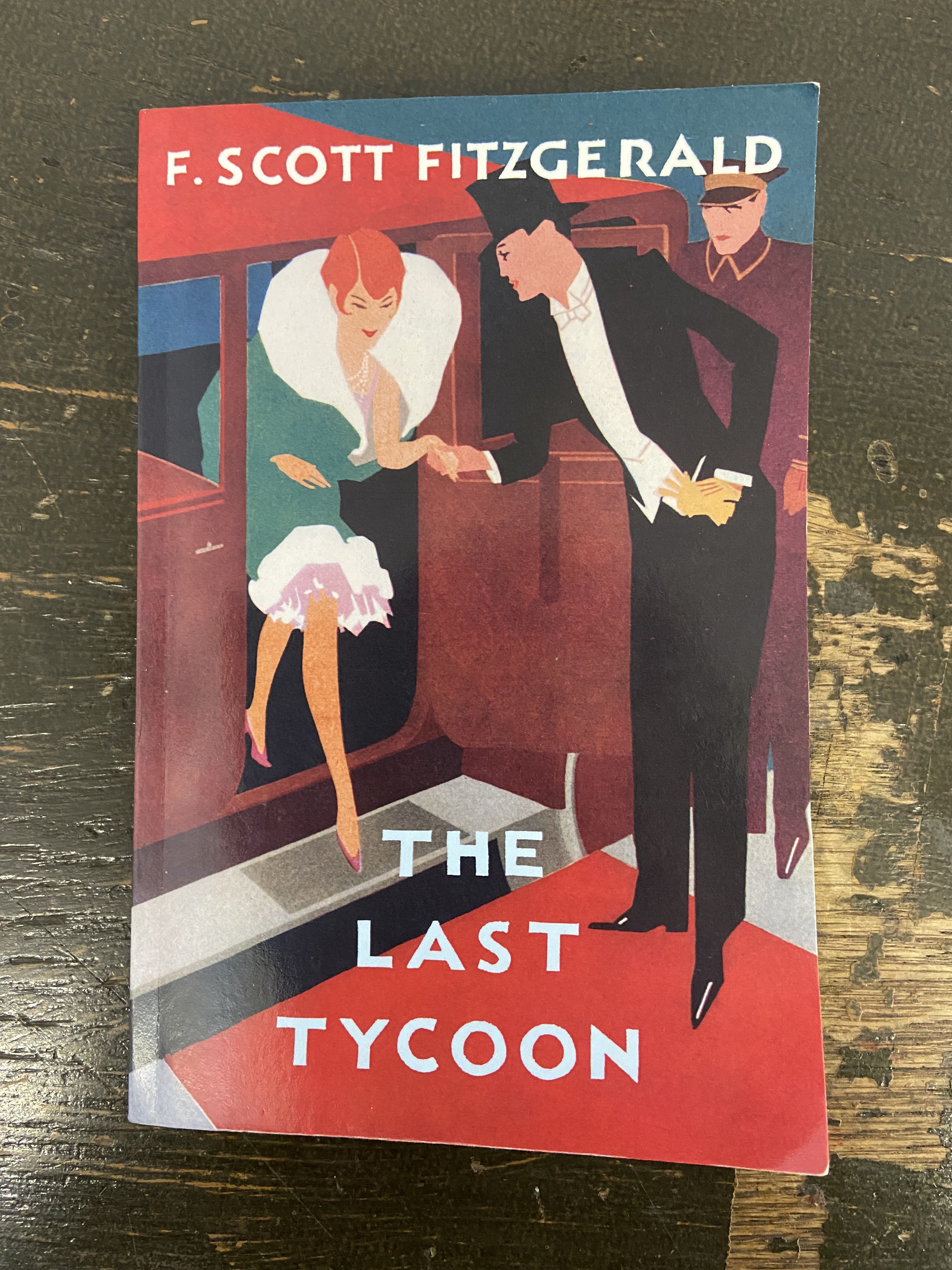
The Last Tycoon:Fitzgerald, Nostalgia, and Writing

The prose of F. Scott Fitzgerald is intoxicating. It’s been a decade since I studied The Great Gatsby at Ohio State, and for the time being I’ve decided to put off rereading that novel until the 100-year anniversary of its initial publication. The Last Tycoon appeals due to the lure of a final novel, one last attempt to satisfy an itch with something new. The unfortunate truth is that the unfinished novel reads like a draft. It jumps on a dime between first and third person, and seems so rough in the early pages that I contemplated whether or not to finish it.

            Monroe Stahr is an elite Hollywood producer who meets Kathleen Moore about halfway through the novel. The trademarked romance of Fitzgerald’s style captivates from that point onward, in spite of the questionable motives that attracts Stahr to Moore in the first place (her looks remind him of his deceased wife). Though the romance fizzles out as Kathleen is to marry another, Monroe carries on and the novel ends rather suddenly due to the death of the author and editorial overreach to reel in the narrative while maintaining a sense of conclusion while there is still quality material.

            Stahr carries the weight of terminal illness, and pushes himself to keep working at the pace he maintained while healthy. It reminds me of a hyper-masculine work culture that romanticizes burnout and exhaustion over questioning why one lives in such a way. “Fatigue was a drug as well as a poison and Stahr apparently derived some rare almost physical pleasure from working lightheaded with weariness…a perversion of the life force he had seen before but he had almost stopped trying to interfere with it…a hollow triumph of killing and preserving the shell,” (110) seems all too commonplace in modern workplace culture. It isn’t ‘rare’ at all in the sense that keeping oneself preoccupied prevents them from critically looking inward. And yet, it’s romantic escapism that reminds one that they are alive…as, “the little trip they made was one of the best times he had ever had in life. It was certainly one of the times when, if he knew he was going to die, it was not tonight.” (112)

            The theme of nostalgia runs through the work of Fitzgerald in such a way as to indulge in the waters in which one will inevitably sink, and reveal it for the comforting lies it tends to offer. The notion that one could have, “passionate loyalty to an imaginary past.” (119) defines Fitzgerald’s work and life. Reconstructing the past seems to be the only future a great many of us can imagine. How good was it really…? And yet…

            One thing literature does is serve as a reminder how much or little things change over time. The tension between Hollywood producers and writers has brought on two writers’ strikes in the twenty-first century. All the conflict about living wages and being able to simply make ends meet while the profits of their labor makes others rich seems to be as old as the establishment of film making as big business. A line from The Last Tycoon shows how much the same it was then, “Writers…they’re the farmers of this business…They grow the grain but they’re not in at the feast. Their feeling toward the producer is like the farmers’ resentment of the city fellow.” (121)

            Again, The Last Tycoon felt like a draft and not a complete novel, but it still managed to contain traces of magic that made it worth the read. I would’ve preferred a world where Fitzgerald lived long enough to finish this one to his standards, but I’m grateful for this glimpse into his process, as it reminds me of Trimalchio.

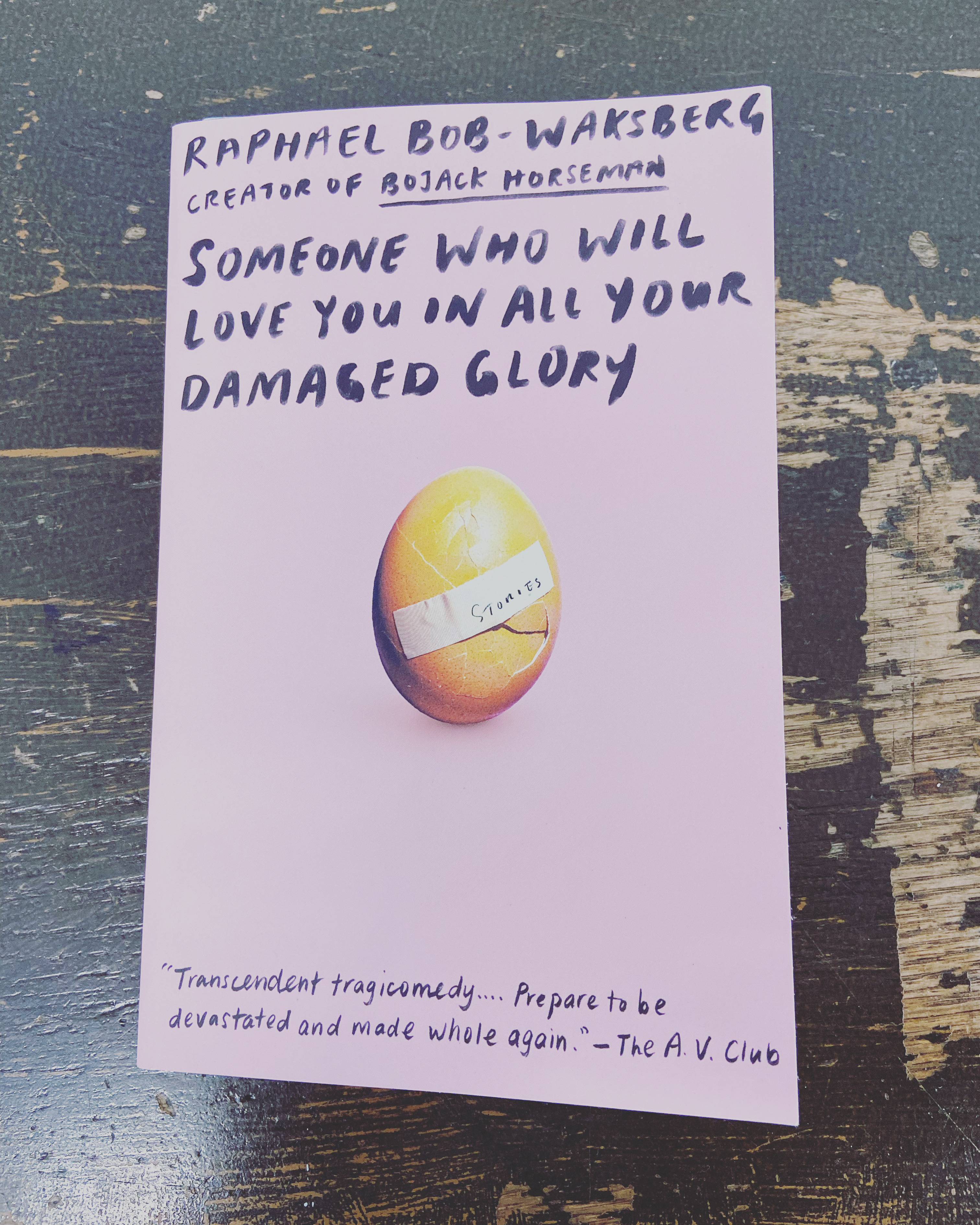
Someone Who Will Love You In All Your Damaged Glory:Rambling Review

I stumbled upon this book because I’m a fan of Bojack Horseman. It’s difficult to tell people, “No, seriously…it’s my favorite show.” I gave it a chance when it first came out, and checked out after two episodes. I thought it was funny, but maybe it was just another run of the mill raunchy animated adult comedy. It wasn’t until the fourth season had dropped that someone recommended it and I gave the show another spin. Had I just kept watching the first season I would’ve been hooked. The quality storytelling just kept getting better right up until Netflix does what Netflix takes joy in doing…you know…cutting a show down before it’s done. I’m eternally grateful that the writers were given a heads up and wrapped up the story as best they could with the time they had. But I digress, those six seasons of television remain among my favorite, and I don’t see anything coming close.

            So when I heard that the creator of Bojack Horseman, Raphael Bob-Waksberg, had published a collection of short stories, I jumped at the opportunity for something more. Someone Who Will Love You In All Your Damaged Glory stands on its own as something wholly independent and special, as I had expected it to be. It’s described on the back cover as an, “offbeat collection of short stories about love-the best and worst thing in the universe.” The subject of love is woven throughout each story through different angles. I initially believed I was in for a ride that explored romantic love and romantic love only, as the first 100 pages consist of narratives exploring exactly that. We break from the romantic variety with Rufus, a touching narrative from the perspective of a noble dog who loves his ‘Manmonster.’ While the manmonster engages with romantic partners and other various friendships, the story fixates on the relationship between the dog and person. You Want to Know What Plays Are Like? is a personal favorite that explores the complexities of family through the scope of frayed sibling relationships where our protagonist tells us about seeing a show written by her brother…that happens to be about a vacation they took. Their deceased sibling has her drug issues addressed in the play, a departure from the burden of their shared reality.

            Rewind a bit…I fell for this book immediately. I took my daughter to her weekly dance lesson, saw her into the studio, and went to a chair in the waiting room with the intent to break the ice. The first story is two little pages. A quick snippet of style and substance titled Salted Circus Cashews, Swear to God had me laughing in front of strangers as it broke my heart on the same page.

            These stories vary in length, ranging from a couple of pages to over 40. The collection isn’t tied to one approach, as we’re offered first, second, and third person accounts throughout. To circle back to the beginning, at a multitude of points I’m reminded of Bojack Horseman and the writing styles used to drive the narratives of the show, specifically, the internal dialog utilized in a day in Bojack’s life from an episode called Stupid Piece of Shit. It’s absurd at times, departing from cultural norms entirely to establish different imagined worlds…like how many goats should be sacrificed at a wedding? This was a lovely read that I truly enjoyed. For fans of the show, or readers who simply want to read about love with weighted nuance, Someone Who Will Love You In All Your Damaged Glory is worth the read.

Josie Pace:Rambling Album Review

Social media hasn’t been all bad. Sure, it’s disrupting the wide world and our little communities in dangerous ways that undermine our collective goods, but on occasion it connects people with quality art, so I’ve stuck around. I was wasting a bit of my life on one of those wretched platforms when I scrolled past a recommended artist. Josie Pace stood on a stage. She sported a mohawk, dark makeup, and a facial expression that told me I’d likely get punched in the mouth if I made eye contact. Her aesthetic appealed to me, and in the post she used hashtags like #postindustrial…so I searched for her music on the streaming service of my choice and went to bed. I wasn’t on board at that point, as image doesn’t always equate to good music.

My daily commute to work is forty-five minutes one way, so I tend to save new music for these routine car rides. It’s the most alone time I get in any given day. I went to put on some music before pulling out of the driveway and saw the record I had saved the previous evening, and knew I had to give it a spin.

lv0x10v5 kicked off with I’m Begging You-an absolute heavy hitting electronic song that had me convinced this was an excellent opening song. If the rest of the album kept up in quality, I knew I’d be hooked. Pace utilizes electronics in a way that I’ve wanted to hear but have never quite found until now. The record continues with booming hooks on every track. The songwriting style is authentic and incredibly human. Her voice is powerful beyond measure and compliments the music without overshadowing it. Mechanical synthesizers don’t rely on distorted guitars to fill the void…there is no void, as space is used with fluctuating precision. I’m utterly impressed with the production.

It’s hard to pin down a few tracks that stand out, as there are no bad songs on this record. There’s no filler. After multiple listens, I’m convinced that this is going to be a long-term favorite.

Josie Pace has revealed that she’s back in the studio, working on new material in 2023, and I’m excited. She’s earned my fandom. If you’re into industrial music with rock elements, check out Josie Pace. This is exciting and dangerous music.

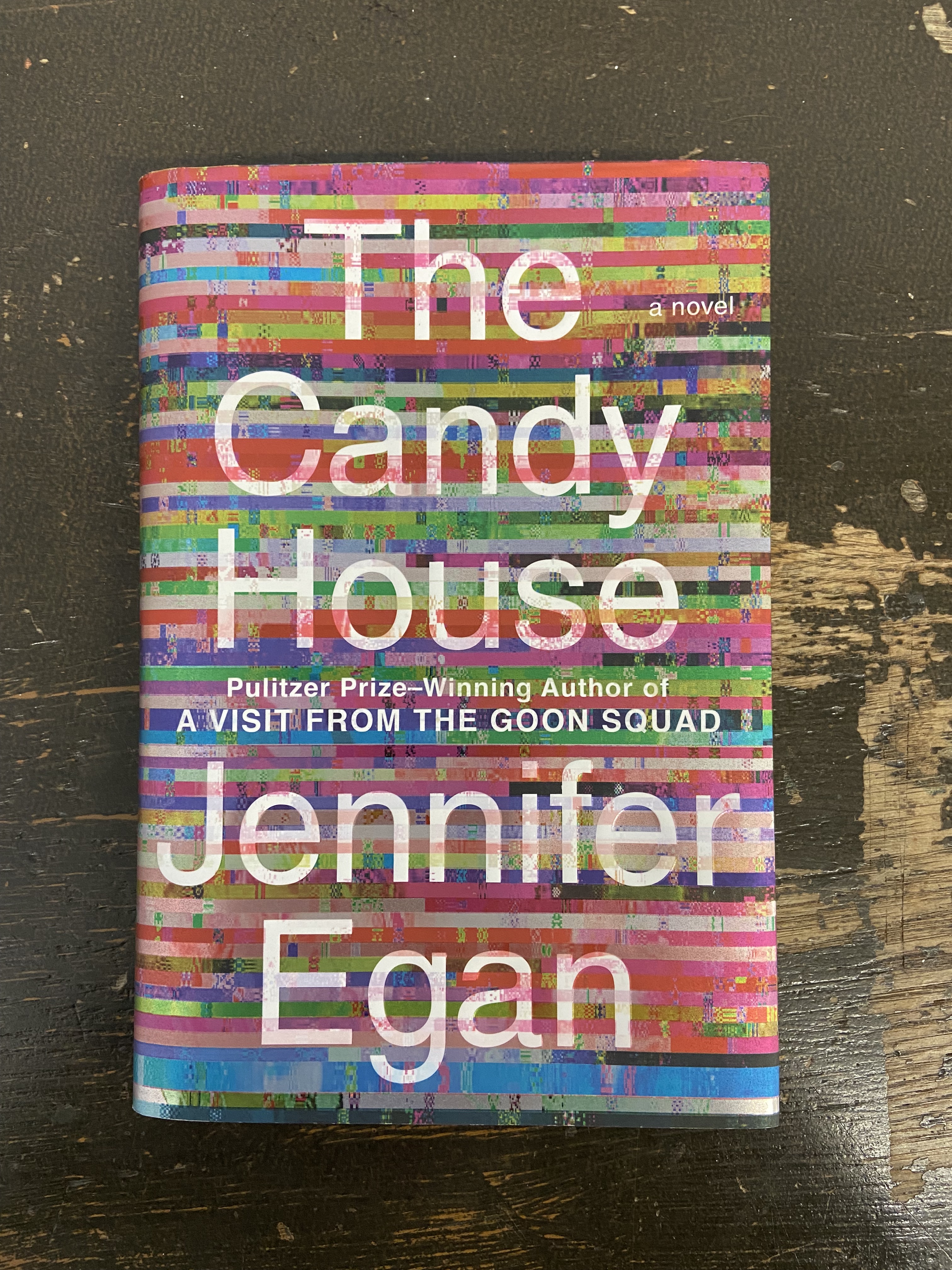
The Candy House:Rambling Book Review

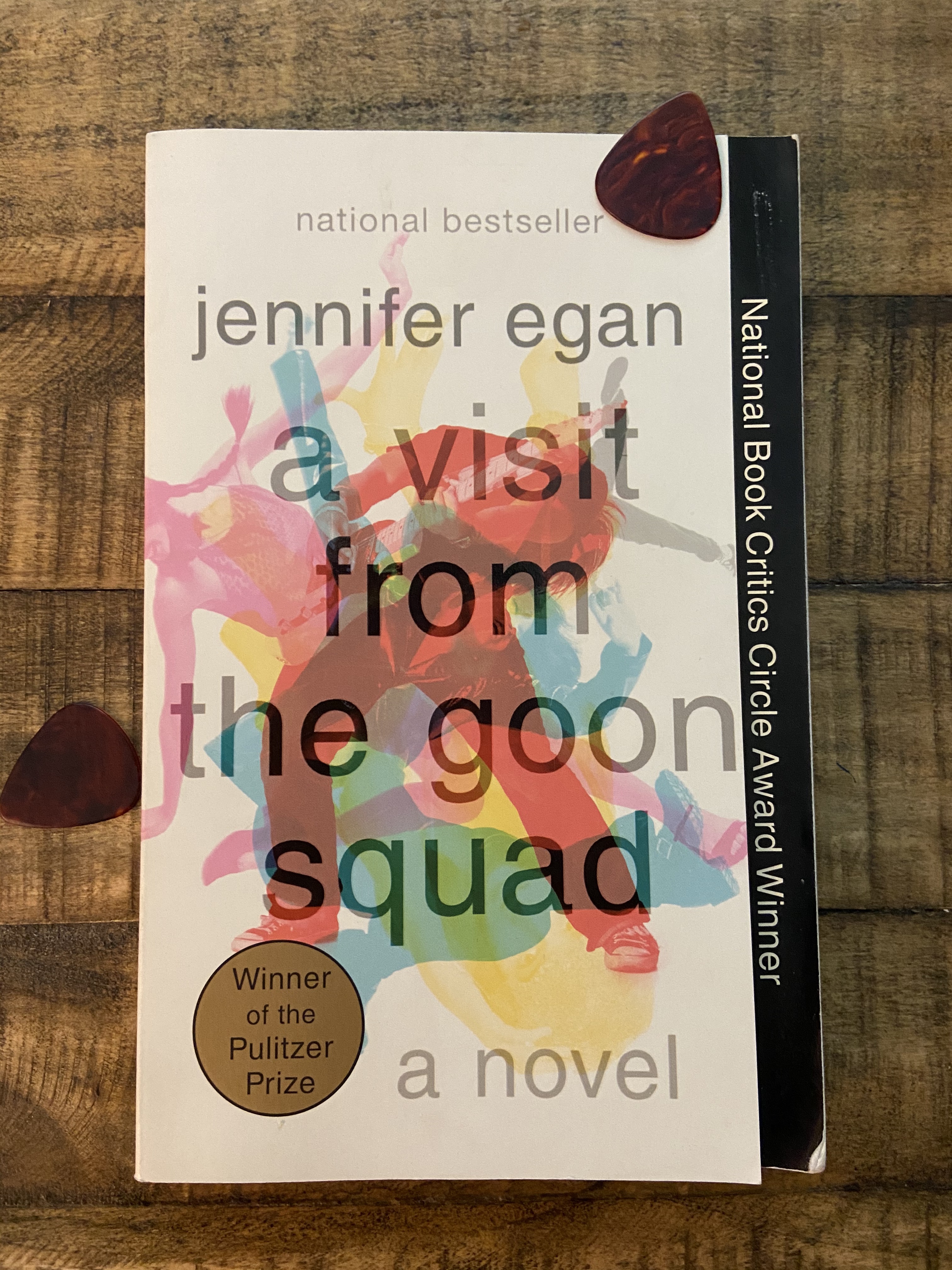
Hesitancy kept me from Jennifer Egan’s work for far too long. I’d been introduced to various chapters of A Visit from the Goon Squad at the Ohio State University in 2014, and didn’t glance back until a peer told me it was his favorite novel. I bought a paperback copy of the Pulitzer winner, put it in my bookcase, and let it ferment until the day came that I needed it…and when that day came I was so grateful for it. I was angry with myself, too, for having neglected it in the abyss of my hypothetical TBR pile. It helped to spark a project I’m still working on.

A follow-up/companion novel was published in 2022. The Candy House revisits some characters from A Visit from the Goon Squad, introduces others, and spans through lifetimes. This novel has similar features in that the narratives are fractured, jumping from characters and through time, all while crafting a cohesive world where the focus is no longer on the human follies that take shape in the music industry, but on a piece of science fiction where individual psychology forges a connection between the reader and every person on the page. Egan’s prose had me placing the book down at times to allow a line to linger over my thoughts. Its brokenness is a feature, not a bug, and as art, it’s a most beautifully written piece of work.

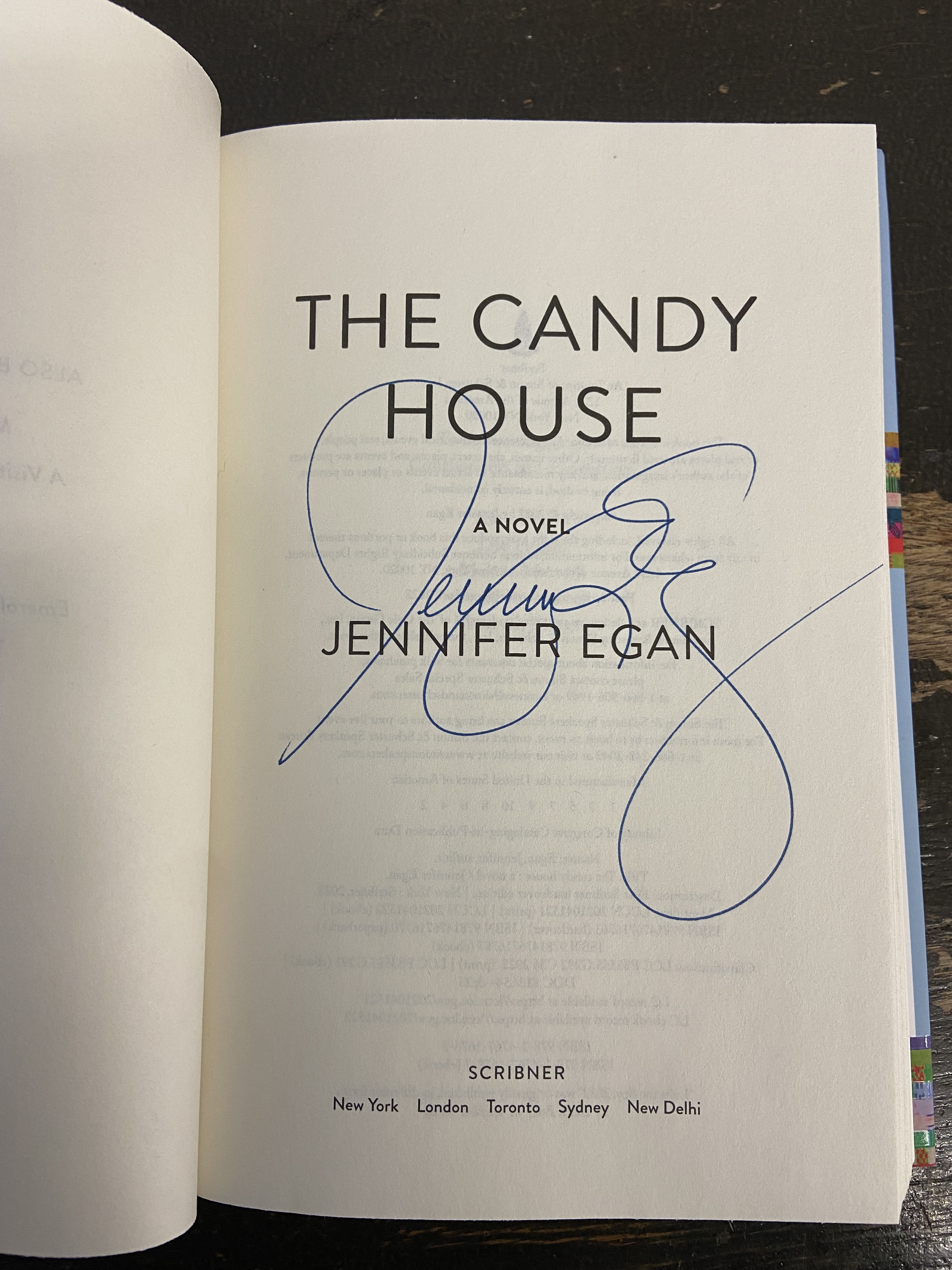
Depression had taken me away from reading in 2022. I sought to purchase The Candy House the day it was released, but my local bookstore didn’t have it on hand. I went to Twitter and made some noise about it. I wasn’t sure what this would accomplish, but Jennifer Egan personally reached out to me to ask which store didn’t have it. I felt as though I’d gotten someone in trouble, but gave the details anyway. She sent autographed copies to my local shop, and the shop reached out to me since I had inquired about it. I was so excited that I took it home, sent pictures and the story to my friends, and let it sit in my bookcase until December. Once I had found the wherewithal to read it, I felt revitalized by the first chapter/story. It’s all so rich with human honesty. Tension and drama I associate with familial ties are woven throughout, all with a drop or two of science fiction that doesn’t overcompensate…no; it drives the story forward without being over the top. It’s a modest vehicle for that which alienates us and brings us together in the same sweeping gesture/function.

I’m sorry if this seems rambling. It’s hard to pin down that feeling when literature makes you feel alive, but this book has done it for me. I can’t recommend The Candy House enough. I hope I’m not going too far in saying this, but it was better than Goon Squad…on that note…read them both.

Sometimes you need a wake up call. My goodness, life has been so complicated this last year…good stuff, but nonstop. Alexander was born in November of ‘21 with extensive complications that had him flighted to the NICU where he resided for the better part of the following month. After much physical therapy and the attention of watchful eyes, he’s approaching his first birthday as though nothing ever bothered him.

During his stint at the NICU, we stayed at the Ronald McDonald House in Columbus. I tried to pick up a novel, but found myself unable to entertain such a distraction at that time. I all but stopped reading. 

I started to see a therapist, which was nice for a bit. It took six months on a waiting list to start seeing someone, and now every session gets canceled by the other party…so I’ve accepted the system isn’t there to help me. Healthcare is broken in this place. 

I tried to start writing again around the new year…and for a little bit, it worked. I plotted out a story that I’d been preparing to compose, and drafted about 25k words before I had a shakeup at the day job that took away the bit of writing time I was able to carve out for myself. It included a promotion and bit more of a work/life balance, so I’m in no position to complain about it, but I’m hoping to get back to this novel as it gets cold outside. 

We bought a house, too. That was exciting. With Alex entering our lives, we needed more space than our apartment afforded us. This event wouldn’t have taken place without significant help from family, as grinding our bodies against the corporate machine in this bootstrap culture is simply not enough. 

All things considered, life has been good…so of course I slipped into a moderate depression. My wife has gone through the ringer with the complicated birth and the postpartum depression. It’s all been so…difficult. But dare I say it’s getting better? I’d like to think so. 

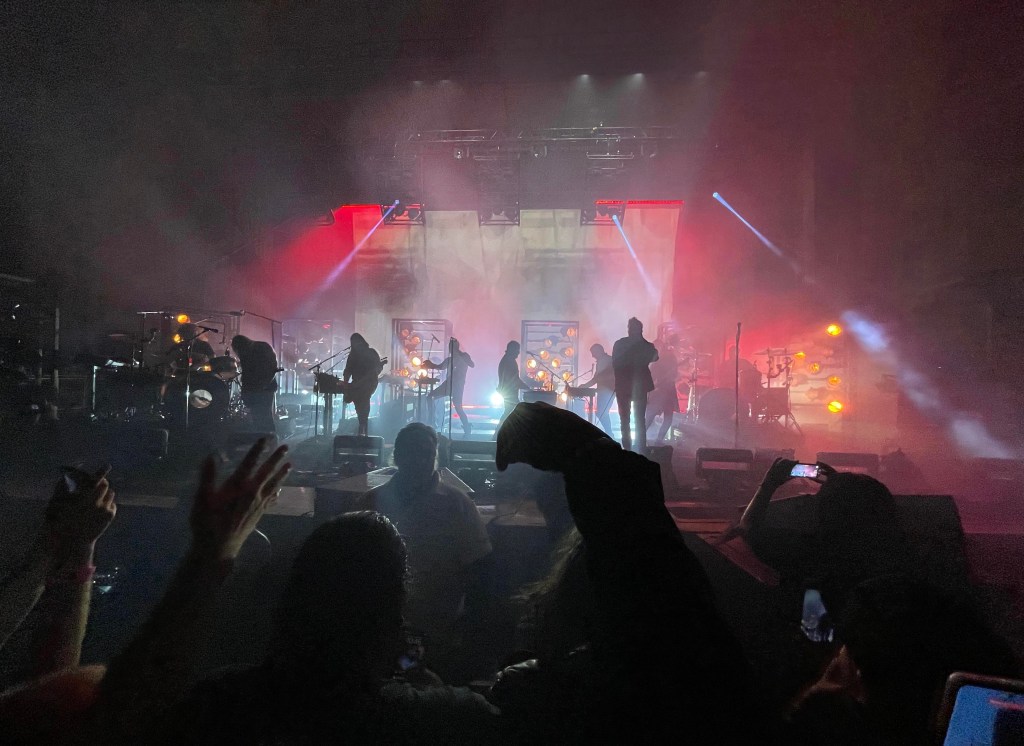
In September I took Lydia to see our first live music experiences since the pandemic removed that occasional joy from our lives. Father John Misty was such a delightful treat and the band was so sharp, they exceeded my expectations and I felt as though I’d returned to a long abandoned well to find it still held the capacity to sustain these broken yet loving hearts. Twelve days later we saw Nine Inch Nails in Cleveland. That too, brought a peculiar and wretched sort of joy that isn’t exclusive to me. 

Father John Misty in Columbus, Ohio

I’m less than a week away from my birthday. Last year I conjured a list of goals to complete by the time I turn 40, and in the first year of the list I accomplished nothing…and yet…

The growing family with good health…the purchase of our first home…reminders of how art impacts our lives…how good do I have it? I’m waking up to find all the quality life has to offer in my possession. I’ll try to not let it slip through my fingers, but any attempt to control/retain a solid grip is in vain. Life will continue to take me up and down, and I’ll make do with any given moment, as I always have. This post is meant to be a personal update. This insight to personal matters is how I explain my absence beyond the occasional noise I make on social media. Still here…hoping to make something happen. 

Nine Inch Nails in Cleveland, Ohio

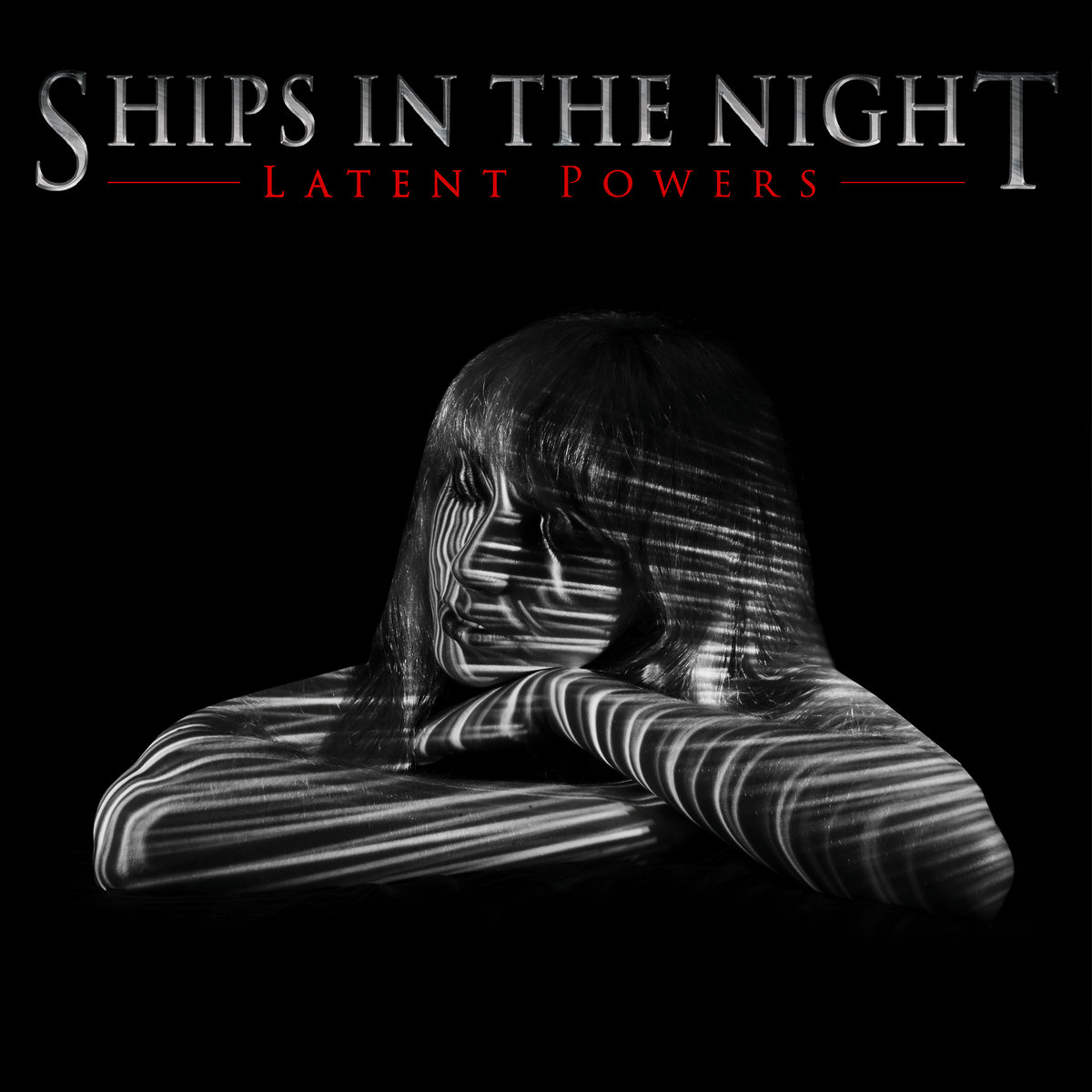
Ships in the Night:Latent Powers:Album Review

Comforting electronic beats direct a ship of dreamy synths through the night in a way that convinces me I’ll live to see the sun again. I found ‘Latent Powers’ by Ships in the Night on a whim. Random scrolling on social media brought me to a record label that tends to deliver material I enjoy, and Cleopatra Records is one of those hubs. I saw a post, and followed my typical streaming routes to a record that’s been on repeat since it’s release. 

Every song offers the kind of quality promised on the official twitter account:music to cry and/or dance to. Medium tempos run the gauntlet of ten tracks, stimulating an atmosphere of blacklight, mist, and a lonely dance. It feels like a singular journey through a story of love and loss that you can apply to whatever narrative you want to give to these wonderfully delivered lyrics. The first three tracks that open the record are my favorite. ‘First Light’ breaks the ice with my heart and piqued my curiosity for more, as I felt something familiar in this new song. ‘When I Was Found’ and ‘Lost Times’ continued the trend of breaking my heart with each line, as the songwriting hits close to home with my own personal troubles. ‘The Fire’ utilizes a pulsating bass line that carries the song in a way that almost deviates from the dark wave sound and borders on what I’d call industrial, without abandoning the overall sound of the record. ‘It Goes Down’ offers an atmospheric tour of sorrow that builds a wall of sound off of pure minimalism, an impressive feat of audio production. The Echo & the Bunnymen cover of ‘The Killing Moon’ caught me off guard in the best kind of way. It edges on the conclusion of the record and once the chorus triggers that nostalgic reaction, a lovely reworking that stays true to the original captivates me. 

‘Latent Powers’ by Ships in the Night is a lovely dark wave record that deserves attention. For fans of Switchblade Symphony, Crying Vessel, or the new Halsey album, give this record a spin.

My Visit with the Goon Squad:Book Review

In 2014 I was assigned the first five short stories (chapters) from Jennifer Egan’s A Visit from the Goon Squad. Having been involved with music, I found one instance in the text that I didn’t think was historically accurate, finished my studies, and moved on. It wasn’t until I had started playing with a band on campus that a peer redirected me toward Egan’s novel that I opted to give it another chance…and by another chance I mean I bought a copy and let it reside in my bookcase for a few years. I’ve since moved, got married, had a child, and have read quite a few other books. In 2021 I’ve started thinking about music again, and as I consider my options I decided it was time to give Egan’s Pulitzer Prize winner the chance it deserves.

On one hand, I wish I hadn’t waited so long. On the other hand, I needed this read now. It’s a moving book that captures the human element in a way that tends to be background noise in stories in orbit around the music business. A lineal narrative is withheld for time jumping aesthetics. Each short story is centered on a specific character during a particular moment in history. Some of these characters are vessels for highlighting someone else’s trajectory, and aren’t referenced again, but it’s through the glimpse each story offers that provides this point of contact that makes the world so real. Music producers and A&R people are more than two-dimensional figures for satirical abuse. Hopes and fears are presented through the veil of toxic personalities, and I find myself relating to these characters because of it. They’re imperfect people who ache with want, and I see myself in them. Between each fragmented chapter, I found myself taking a breather. I’d put the book down, sigh, and think, ‘damn…that’s good literature.’ I don’t feel that way with every book, so forgive my abuse of the five star system(it just so happens that I enjoy reading)…this novel is nothing short of absolutely fantastic.

With this read, I’m breaking the ice on a project that I’ve been considering for quite some time. This research is a starting point from which I hope to craft a novel, or possibly a series if I can make that much happen. It feels good to be inspired…that’s how good Egan’s novel is. I’m looking forward to her followup, scheduled for release in April, 2022, The Candy House.

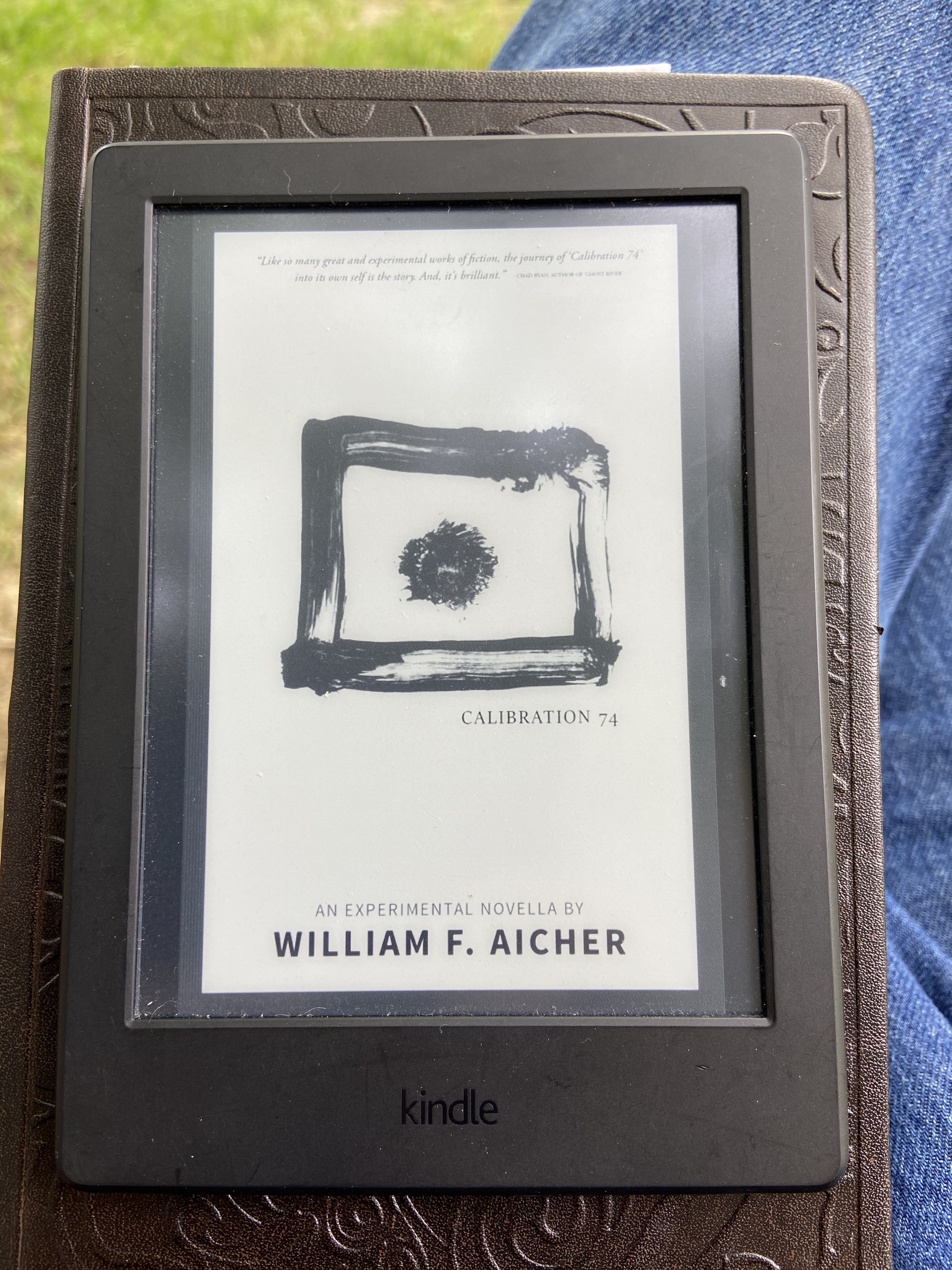
Book Review: Calibration 74

This short book by William F. Aicher is a quick read if you opt to treat it as such. On the other side of the same coin, we find something dense that is better digested in smaller pieces over time. The later is how I decided to approach this work. Aicher takes us through a narrative of a mind that is haunted, though it seeks a closure that can never be found. Short chapters, or ‘calibrations’ offer 74 separate segments over 186 pages. It’s an uncompromising romp through psychological terrain of the damaged variety, right up my ally. Calibration 74 is a harrowing exploration of experimental fiction that is worth a deeper dive, so give it the time of day. 

            Rich in thought provoking prose and vivid imagery, I take solace in relatable poetry, if such a thing should be admitted. Our narrator is unreliable in direct ways that relate to numerical obsession, in the moments where he miscounts. It happened on one occasion where he’s counting large numbers, making big picture statements/asking big picture questions between the numbers, 

[One billion four hundred twenty-eight million two hundred sixty-three five hundred and nine. 

The soul is indistinguishable from the body. 

One billion four hundred twenty-eight million two hundred sixty-three five hundred and nine. 

Where do we go when we die?]

Numerical obsession and the fallacy of the human mind is the vessel that moves the story forward. Before and after this hiccup, the count progresses as expected. This break from the logical pattern is enough to suggest the blur is intentional. 

I found solace in the rhythmic use of language. It’s a scattered collection of ashes and even at my slow pace I struggled with authorial intent, so I placed my own meaning where I saw fit. Between the covers, Aicher’s philosophical background is in full view. Direct answers are elusive, but that’s the fun of this kind of read. I definitely recommend Calibration 74. Give it a read.

Skold delivers with ‘Dies Irae’

After 2019’s industrial release ‘Never is Now’ the 2020 release of the “Not My God” record with Nero Bellum, it comes as no surprise that the new Skold solo record would incorporate a healthy dose of metal guitar riffs and intricate leads. ‘Dies Irae’ is broken up in a back-and-forth pattern of guitar centric rock/metal tracks juxtaposed with the trademark heavy electronic/industrial sound I’ve come to expect from more current projects from Tim Skold. This parallel mixing of musical styles keeps the record moving in such a way as to never feel stagnant. The constant change up results in a refreshing album. While it may be the honeymoon period talking, I’m confident in feeling that ‘Dies Irae’ is my favorite Skold record yet.

The album opens with hard hitting ‘Dirty Horizon.’ This track has crisp sounding guitars that sound both contemporary, yet familiar in a nostalgic way. A scathing chorus hooked me, and I knew I was in for something fun. The guitar solo is a solid tell of things to come, and sets the tone for more metal aggression. That expectation is subverted when the second song starts up. ‘Unspoken’ breaks the ice with some of the more electronic elements I had expected. There’s a guitar solo in this one that shows off the best of Skold’s vast talent, which shouldn’t surprise me at this point, but it’s so good.

My favorite track is ‘Love is a Disease.’ There’s drum programming in the chorus that has this haphazard hi-hat pattern that is percussive icing that coats a bigger wall sound. The lyrical part of the chorus hits in a way that has lost zero impact after multiple listens. It feels like a confession, and I’m here for that kind of honesty. Another authentic confession is offered up in the atmospheric song ‘Terrified’ where Skold sings, “I’m not afraid of dying…I’m fucking terrified.”

Another track with intricate electronic drum programming is ‘Silicon Dreams.’ It’s made clear that Skold isn’t comfortable falling back on old habits when producing new material. The rhythmic work on this track reflects the coexisting grit and shine of trap music with hopeless undertones, and sparse guitar work that makes use of dynamic range.

The album ends with ‘Goodbye.’ This leans more toward elements of a metal track, and was released early as the album’s teaser. It rings as a highlight for me, as this final track was the first one I heard. It gave a good impression regarding the direction of the album, without revealing all of the tricks Skold deals out over the course of this record. This effort feels like one cohesive work, while showcasing an impressive variety and range Tim Skold brings to the table.