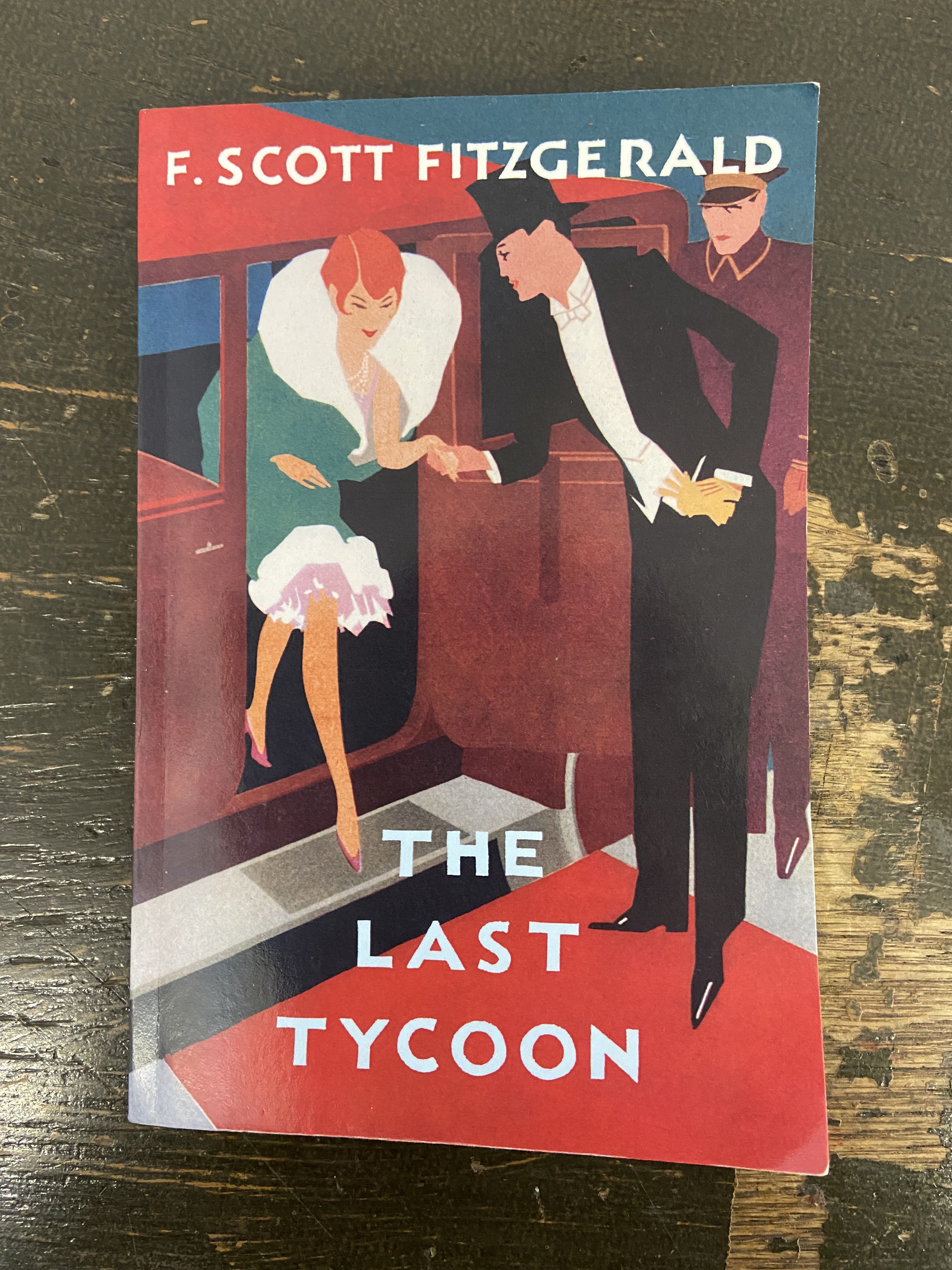
The prose of F. Scott Fitzgerald is intoxicating. It’s been a decade since I studied The Great Gatsby at Ohio State, and for the time being I’ve decided to put off rereading that novel until the 100-year anniversary of its initial publication. The Last Tycoon appeals due to the lure of a final novel, one last attempt to satisfy an itch with something new. The unfortunate truth is that the unfinished novel reads like a draft. It jumps on a dime between first and third person, and seems so rough in the early pages that I contemplated whether or not to finish it.
Monroe Stahr is an elite Hollywood producer who meets Kathleen Moore about halfway through the novel. The trademarked romance of Fitzgerald’s style captivates from that point onward, in spite of the questionable motives that attracts Stahr to Moore in the first place (her looks remind him of his deceased wife). Though the romance fizzles out as Kathleen is to marry another, Monroe carries on and the novel ends rather suddenly due to the death of the author and editorial overreach to reel in the narrative while maintaining a sense of conclusion while there is still quality material.
Stahr carries the weight of terminal illness, and pushes himself to keep working at the pace he maintained while healthy. It reminds me of a hyper-masculine work culture that romanticizes burnout and exhaustion over questioning why one lives in such a way. “Fatigue was a drug as well as a poison and Stahr apparently derived some rare almost physical pleasure from working lightheaded with weariness…a perversion of the life force he had seen before but he had almost stopped trying to interfere with it…a hollow triumph of killing and preserving the shell,” (110) seems all too commonplace in modern workplace culture. It isn’t ‘rare’ at all in the sense that keeping oneself preoccupied prevents them from critically looking inward. And yet, it’s romantic escapism that reminds one that they are alive…as, “the little trip they made was one of the best times he had ever had in life. It was certainly one of the times when, if he knew he was going to die, it was not tonight.” (112)
The theme of nostalgia runs through the work of Fitzgerald in such a way as to indulge in the waters in which one will inevitably sink, and reveal it for the comforting lies it tends to offer. The notion that one could have, “passionate loyalty to an imaginary past.” (119) defines Fitzgerald’s work and life. Reconstructing the past seems to be the only future a great many of us can imagine. How good was it really…? And yet…
One thing literature does is serve as a reminder how much or little things change over time. The tension between Hollywood producers and writers has brought on two writers’ strikes in the twenty-first century. All the conflict about living wages and being able to simply make ends meet while the profits of their labor makes others rich seems to be as old as the establishment of film making as big business. A line from The Last Tycoon shows how much the same it was then, “Writers…they’re the farmers of this business…They grow the grain but they’re not in at the feast. Their feeling toward the producer is like the farmers’ resentment of the city fellow.” (121)
Again, The Last Tycoon felt like a draft and not a complete novel, but it still managed to contain traces of magic that made it worth the read. I would’ve preferred a world where Fitzgerald lived long enough to finish this one to his standards, but I’m grateful for this glimpse into his process, as it reminds me of Trimalchio.
 Justin Bauer